
Why the World Needs Better Relationships With Food
Introduction: The Paradox on Our Plates
The world has never produced so much food—yet we’ve never felt more confused, disconnected, or dissatisfied by what we eat.
Supermarkets overflow. Delivery apps promise instant gratification. New products launch every week, each louder than the last. And still, many of us feel anxious at mealtimes, unsure what’s “healthy,” what’s “ethical,” or what even tastes good anymore.
This isn’t a supply problem.
It’s a relationship problem.
Food has become something we consume, not something we understand. Something to optimise, hack, or replace—rather than something to respect, learn from, and build a relationship with.
When Food Became a Product, Not a Practice
For most of human history, food was intimate.
You knew where it came from.
You knew how it behaved in the kitchen.
You understood its seasons, its limits, its strengths.
Modern food systems slowly broke that bond.
We outsourced cooking, then farming, then responsibility. Ingredients became abstractions. Meals became transactions. Convenience quietly replaced curiosity.
And when relationships weaken, misuse follows:
Overproduction without appreciation
Overconsumption without nourishment
Waste without consequence
We didn’t lose flavour.
We lost connection.
More Choice Didn’t Make Us Better Eaters
Paradoxically, abundance has made food harder, not easier.
When everything is available all the time, nothing feels special. When food arrives pre-assembled, we stop learning how it works. When flavour is engineered, we forget how to build it.
This is why confusion thrives:
Protein anxiety
Diet tribalism
Ingredient fear
Endless “superfood” cycles
We keep asking: What should I eat?
Instead of: How do I relate to what I eat?
The result is the exhausted eater—mentally drained by choice, conflicting advice, and constant self-correction. Eating becomes stressful rather than grounding.
Tofu as a Case Study in Reconnection
Tofu is often misunderstood because it asks for something modern food culture rarely rewards: participation.
Tofu doesn’t shout.
It doesn’t pretend to be something else.
It responds to how you treat it.
Press it gently; it firms.
Season it thoughtfully, and it carries flavour.
Cook it with patience; it rewards texture.
Tofu teaches a quiet lesson:
Good food isn’t magic. It’s relational.
When people say tofu is “bland,” what they often mean is:
No one taught me how to listen to it.
This is food literacy in action—understanding how an ingredient behaves, rather than following rigid rules or chasing novelty.
The Cost of Disconnection (Beyond the Plate)
Our strained relationship with food doesn’t just affect taste—it ripples outward.
🌍 Environmental strain
We grow too much of the wrong things, in the wrong ways, for the wrong reasons. Perfectly edible food is discarded while land, water, and energy are squandered.
🧠 Cultural erosion
Traditional food knowledge fades when ingredients are reduced to macros and marketing claims.
🐾 Ethical distance
When food is anonymous, responsibility becomes abstract—making harm easier to ignore.
🍽️ Personal burnout
Decision fatigue replaces joy. Eating becomes something to manage, not something to experience.
Rebuilding connection isn’t a lifestyle trend. It’s a systemic necessity.
What a Better Relationship With Food Actually Looks Like
A healthier relationship with food isn’t about stricter rules.
It’s about literacy.
It means:
Understanding how ingredients behave
Cooking with curiosity, not fear
Choosing fewer foods, but knowing them deeply
Valuing nourishment over novelty
Importantly, reconnection doesn’t have to mean longer cooking. For many people facing time poverty, it can mean simpler meals, fewer ingredients, and skills that reduce effort over time rather than add to it.
This reframing matters. A better food relationship is not elitist—it’s adaptable.
Tofu fits this future beautifully—not because it’s trendy, but because it’s patient, versatile, and honest.
Why “More Food” Isn’t the Answer
We don’t need:
More ultra-processed substitutes
Louder health claims
Faster meals
Infinite choice
We need:
Clearer skills
Fewer, better ingredients
Confidence over confusion
Respect over replacement
The future of food isn’t bigger.
It’s wiser.
Final Takeaway 🌱
The world doesn’t need more food.
It needs better relationships with food.
When we reconnect—with ingredients, with cooking, with the quiet intelligence of foods like tofu—we don’t just eat better. We waste less. We stress less. We nourish more.
One meal at a time, that relationship can be rebuilt.
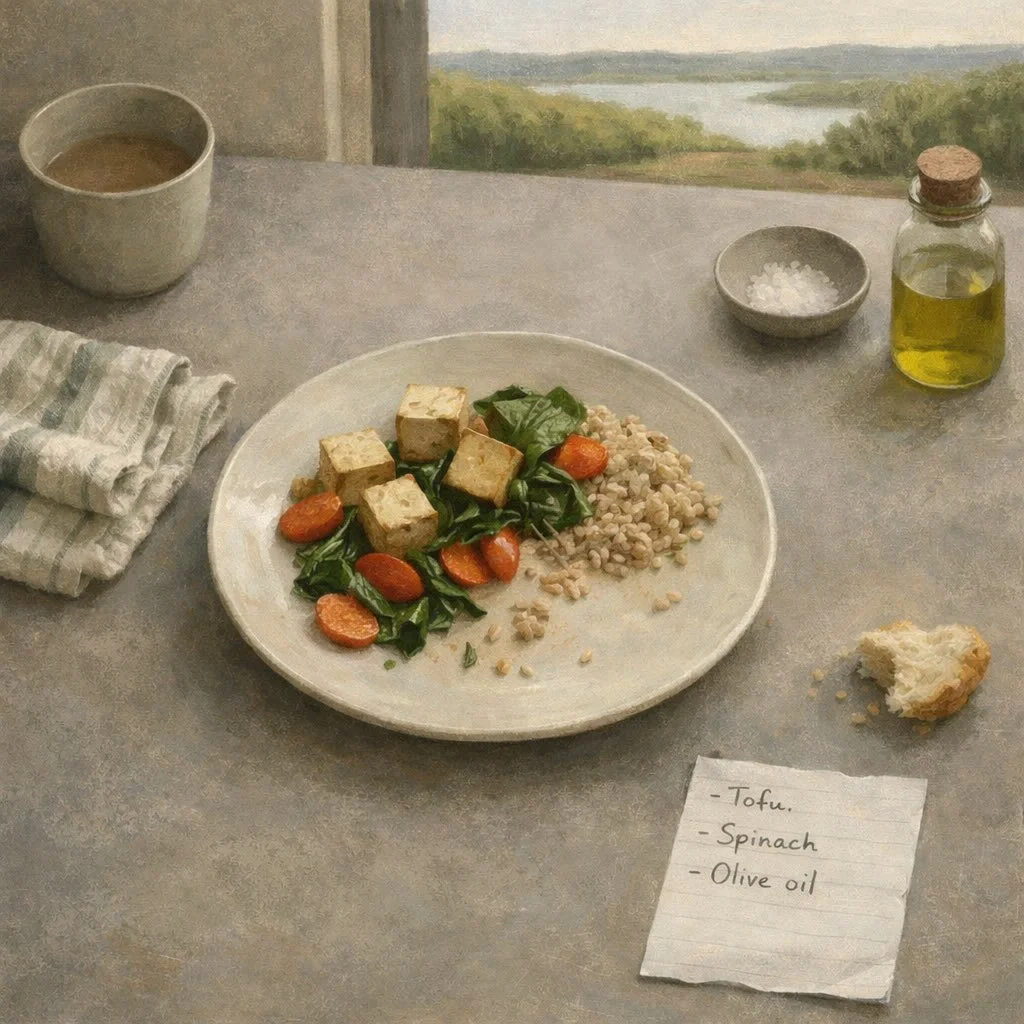
And sometimes, it starts with the simplest block on the plate.
