
Chickpea Tofu – The Soy-Free Tofu with Burmese Roots
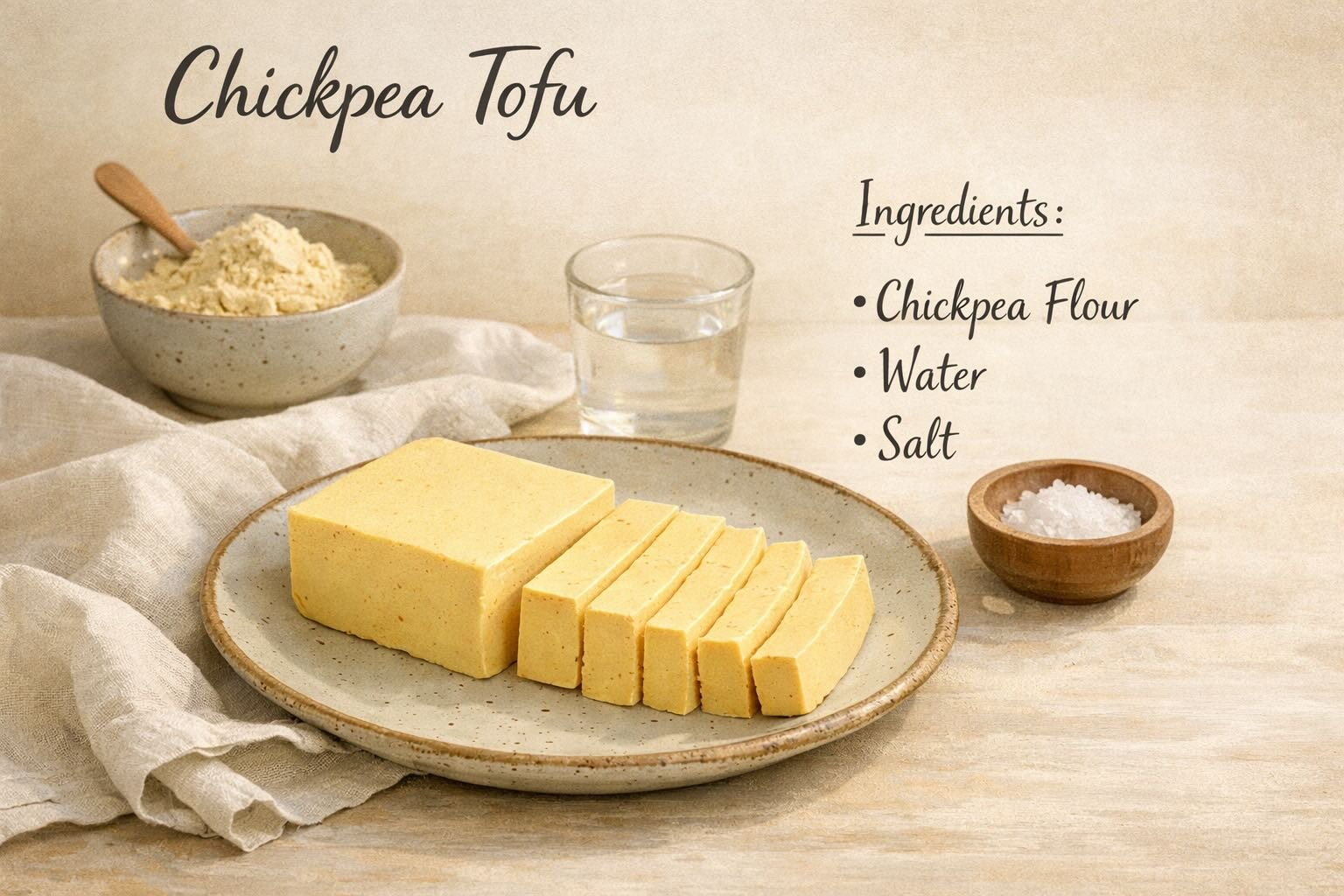
Chickpea Tofu, Explained Simply
Chickpea tofu—often known as Shan tofu—is not a modern invention. It’s a traditional Burmese staple, made for generations using nothing more than chickpea flour, water, and heat.
There’s no soy milk.
No coagulant.
No curdling step.
Instead, chickpea tofu relies on the natural starches and proteins in chickpeas, cooked gently until they set into a smooth, sliceable block.
The result is a soy-free tofu with a custard-like interior, clean edges, and quiet strength—proof that tofu has never belonged to one bean alone.
Why Chickpea Tofu Sets (The Food Science Bit)
Chickpea tofu is a starch-set gel, not a protein curd.
When chickpea flour is hydrated and heated:
Starches gelatinise, forming structure
Proteins denature, adding body
Water becomes locked into a stable matrix
This process gives chickpea tofu its defining qualities:
It sets without agar or additives
It slices cleanly once chilled
It softens gently when reheated instead of breaking
It’s simple chemistry—refined through tradition.
A Brief Cultural Note: Burmese Roots
In Myanmar, chickpea tofu is not a substitute food—it’s a foundational one.
It’s eaten:
Warm and spoonable with turmeric oil
Chilled and sliced into salads
Pan-fried and dressed with chilli, garlic, and lime
Understanding this matters. Chickpea tofu isn’t trying to replace soy tofu. It exists alongside it, shaped by local crops, climate, and culinary logic.
At Tofu World, this is exactly the kind of food we celebrate: practical, plant-based wisdom passed down quietly.
Nutritional Strengths: What Chickpea Tofu Offers
Chickpea tofu is naturally nourishing, without relying on fortification or processing.
Key strengths:
Plant protein from chickpeas
Naturally gluten-free by ingredient
Moderate dietary fibre
Low fat
Slow-digesting carbohydrates
A small but important note: while chickpeas themselves are gluten-free, chickpea flour can be cross-contaminated with wheat if processed in shared facilities. Those with coeliac disease or severe gluten sensitivity should choose certified gluten-free chickpea flour when making chickpea tofu at home.
This preserves both safety and confidence—without changing the recipe.
Flavour & Texture: What to Expect
Chickpea tofu is calm, not bland.
Texture:
Silky when warm
Firm and sliceable when chilled
Creamy inside, never rubbery
Flavour:
Mildly nutty
Gently earthy
Naturally savoury
This makes it ideal for:
Spiced oils
Acidic dressings
Aromatic sauces
Crisp pan-searing
It absorbs flavour readily—but never disappears.
How to Cook Chickpea Tofu (Without Fighting It)
Chickpea tofu prefers medium heat and intention.
Best methods:
Pan-frying with oil until golden
Grilling on a well-oiled surface
Serving warm and spoonable with sauces
What to avoid:
Heavy pressing
Very high heat from cold
Treating it like firm soy tofu
Because it’s a homogeneous gel, pressing will collapse the structure, not improve it.
Thanks to its starch content, chickpea tofu browns beautifully at medium heat through caramelisation and gentle Maillard reactions, developing a crisp exterior without drying out.
Chickpea Tofu vs Soy Tofu: A Clear Comparison
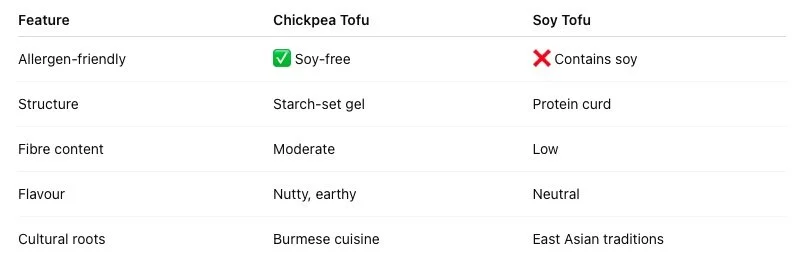
This isn’t imitation—it’s parallel evolution.
Who Is Chickpea Tofu For?
Chickpea tofu is ideal for:
People avoiding soy
Plant-based eaters wanting whole-legume proteins
Curious cooks interested in food traditions
Anyone tired of ultra-processed alternatives
It’s especially valuable for kitchens that value simplicity, heritage, and technique over novelty.
Final Takeaway 🌱
Chickpea tofu reminds us that plant-based food doesn’t need reinvention—it needs remembrance. When we look beyond trends and toward tradition, we discover that tofu has always been adaptable, regional, and generous. Sometimes, the future of food has been quietly setting on the stove all along.
