
The Five Elements of Tofu – Earth, Water, Fire, Air & Time
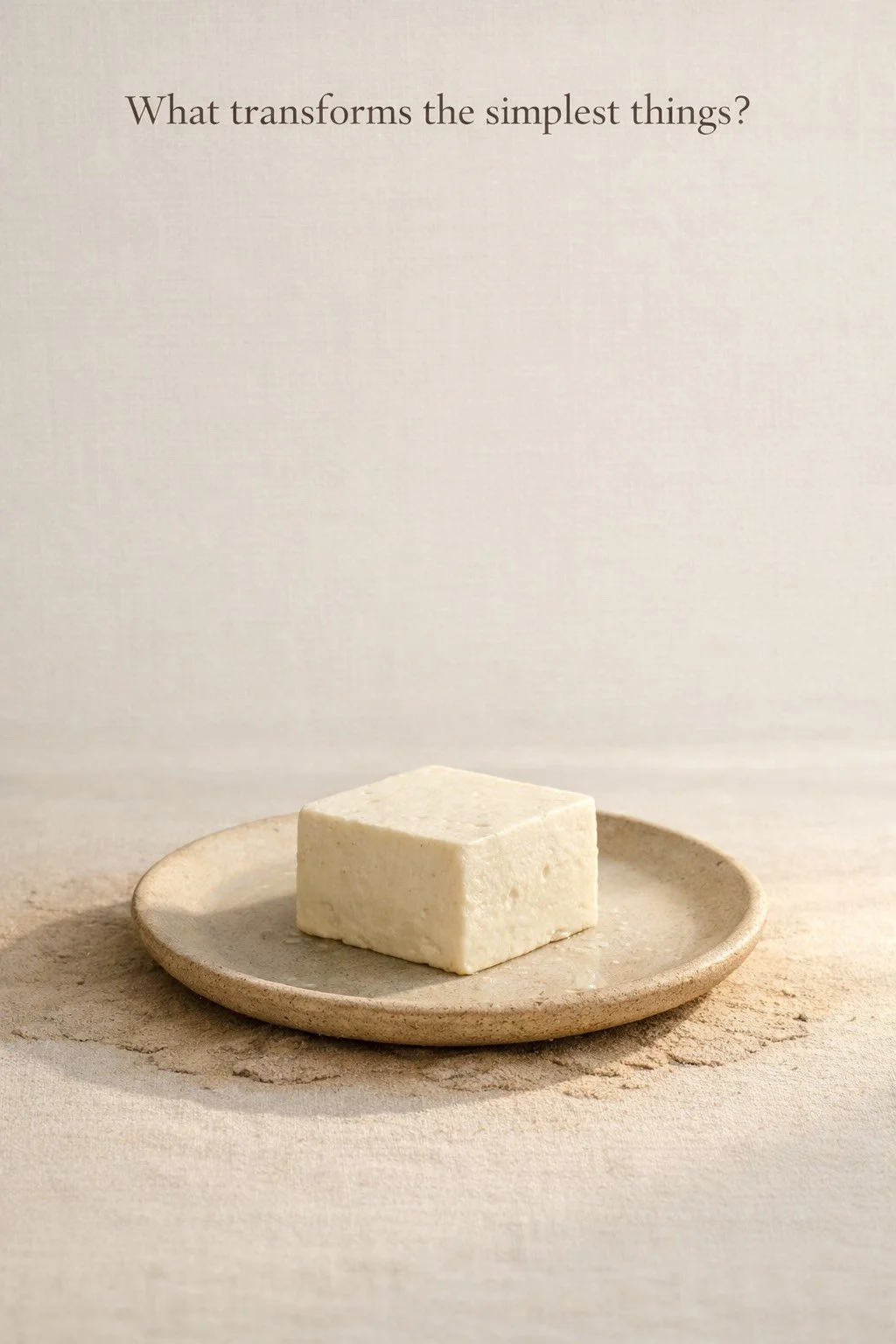
Introduction: Tofu as a Material, Not a Product
Tofu is often treated as a static thing—something you buy, drain, and cook.
But tofu is better understood as a material shaped by forces.
Like clay, bread, or cheese, tofu only becomes what it is through interaction with its environment. Minerals in the soil. Water quality. Heat. Exposure to air. And, above all, time.
Across cultures, tofu traditions evolved not from recipes but from elemental logic—working with what was available, controllable, and repeatable.
These are the five elements that shape every tofu you’ve ever eaten:
Earth. Water. Fire. Air. Time.
1. Earth – Where Structure Begins
Earth defines tofu before tofu exists.
Soybeans are not neutral raw materials. Their protein density, oil content, and mineral balance are shaped by:
Soil composition
Climate and rainfall
Farming methods
Harvest timing
Mineral-rich soils produce beans that set firmer gels. Poor soils produce softer, more fragile tofu. This is why regional tofu styles historically emerged where they did, not by accident.
Earth also gives us coagulants—calcium sulfate, magnesium chloride, plant acids—each imprinting a different structural logic onto soy proteins.
Earth decides the potential.
Everything else works within that limit.
2. Water – The Silent Architect
Tofu is mostly water—but not all water behaves the same.
Water determines:
Protein extraction efficiency
Gel strength
Mouthfeel
Sweetness and bitterness perception
Soft water allows for delicate silken tofu. Hard water encourages firmer curds. Even the temperature of water changes how proteins unfold and bind.
Water isn’t filler—it’s structural.
In tofu, water is held inside a protein lattice. Remove it carelessly, and the structure collapses. Manage it well, and tofu becomes elastic, tender, or resilient on demand.
Tofu doesn’t absorb water like a sponge.
It integrates water into its structure.
3. Fire – Transformation Through Heat
Fire is not about browning first—it’s about change.
Heat controls:
Protein denaturation
Moisture migration
Surface sealing
Textural contrast
Low heat preserves delicacy. High heat creates crusts. Uneven heat fractures the structure.
This is why tofu fails when rushed.
Fire demands patience and intent.
In frying, roasting, steaming, or boiling, fire must match tofu’s internal water state. Dry tofu meets heat differently from wet tofu. Cold tofu behaves differently from warm.
Fire does not forgive imbalance—but it rewards understanding.
4. Air – The Forgotten Element
Air is the most overlooked element in tofu cooking.
Yet air controls:
Drying
Crust formation
Oxidation
Fermentation pathways
Exposing tofu to air, and moisture escapes.
Limit air, and softness remains.
This is why resting tofu uncovered improves frying. Why yuba forms at the air–milk boundary. Why fermentation requires airflow at first, then exclusion later.
Air creates edges.
Edges create contrast.
Contrast creates pleasure.
To ignore air is to flatten tofu’s potential.
5. Time – The Element That Changes Everything
Time is not optional.
It is the element that reveals intention.
With time, tofu becomes:
Firmer (through pressing or resting)
Crispier (through drying)
Softer (through marination equilibrium)
Deeper (through fermentation)
Time allows water to move, proteins to settle, and flavours to integrate.
Fresh tofu is clean and gentle.
Aged tofu is complex and expressive.
Rushed tofu tastes hollow.
Patient tofu tastes complete.
Time doesn’t add flavour—it allows flavour to arrive.
How the Elements Work Together
Great tofu is never about one element alone.
Earth sets the limits
Water defines structure
Fire transforms texture
Air creates contrast
Time completes the process
Remove one, and tofu feels unfinished.
This is why tofu traditions across Asia are so precise—not because they are rigid, but because they respect balance.
Why This Matters (Especially Today)
Tofu is often dismissed as bland because it’s treated as inert.
But tofu isn’t blank—it’s responsive.
When you understand its elements, tofu stops needing disguises. It doesn’t need fake meat or heavy sauces. It needs alignment.
This is why tofu has endured for centuries.
Not because it imitates something else—but because it responds beautifully to the world around it.
Final Takeaway
Tofu is not cooked.
It is shaped.
By earth, water, fire, air, and time.
When we cook tofu with awareness, we don’t force it—we collaborate with it. And in doing so, we reconnect with a slower, kinder way of eating—one that honours materials, patience, and balance.
A small shift.
One block at a time. 🌱
