
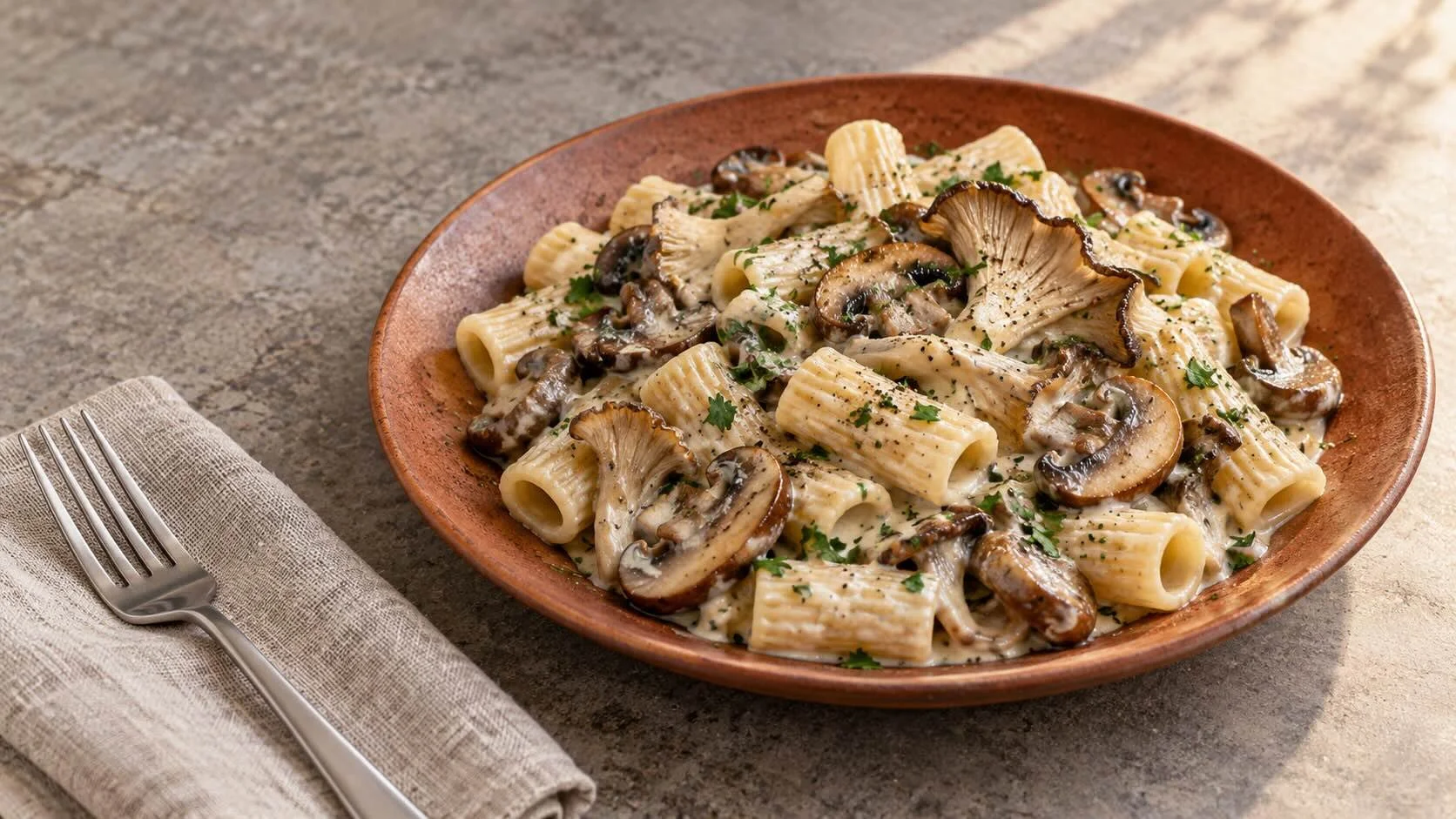
A spoonful of mushroom gravy can give a simple tofu dinner a savoury depth that keeps you coming back for another bite. Yet mushrooms can also disappoint: pale slices, watery sauce and very little flavour.
The difference often comes down to choosing the right mushroom and understanding what you want it to do. Fresh mushrooms bring texture and flavour; dried mushrooms can season an entire dish. Used thoughtfully, both help make plant-based meals feel satisfying in their own right.
What Makes Mushrooms Taste So Savoury?
Umami is the savoury basic taste associated with foods such as ripe tomatoes, miso and a well-made broth.
Mushrooms contain naturally occurring glutamate, which contributes to umami. Dried shiitake are also a notable source of guanylate, another compound involved in savoury taste. Fresh and dried mushrooms differ in their umami compounds, so drying does more than simply remove water.
The useful part is how these compounds work together. Guanylate can strengthen the umami taste of glutamate. This helps explain why dried shiitake work so well with miso, tomatoes or kombu.
However, umami is only part of mushroom flavour. Their earthy aromas, tender or chewy textures, and browned surfaces all contribute to the eating experience. A mushroom does not need to taste like meat to deserve a place on your plate.
Choose Mushrooms for the Job
You do not need an expensive mixed selection to begin.
Button mushrooms and Swiss brown mushrooms (also called cremini) are useful everyday choices for pasta, gravy and finely chopped fillings. Let them cook beyond the watery stage when you want browning.
Fresh shiitake bring a distinctive aroma and a firm bite. Remove tough stems before slicing the caps; sound, clean stems can flavour a stock that you strain.
Oyster mushrooms offer broad surfaces and delicate edges that suit pan-frying or roasting.
Dried shiitake or porcini are useful when you want flavour throughout a broth or sauce. Their aromas differ, so choose according to the dish rather than treating them as interchangeable.
Cook both fresh and rehydrated shiitake thoroughly: eating them raw or undercooked can cause an itchy skin reaction.
For Browned Mushrooms, Manage the Moisture
Mushrooms release water as they cook. That is normal. The important question is whether you want that liquid in a broth or want it to evaporate before browning.
For a browned topping:
Clean and prepare. Brush or wipe away dirt, or rinse briefly if needed, then dry the surface. Cut into reasonably even pieces.
Use a wide pan. Heat a little oil over medium-high heat. Arrange the mushrooms in a loose single layer; cook in batches if they pile up.
Let the liquid evaporate. Stir occasionally. If water collects, keep cooking uncovered and adjust the heat so it evaporates without scorching the mushrooms.
Give them contact time. As pooled liquid disappears and bubbling gives way to sizzling, leave pieces undisturbed briefly between turns so browned patches can develop.
Finish the seasoning. Add garlic towards the end, then a little soy sauce or other seasoning. Reduce wet additions briefly if you want a coating rather than a puddle.
Browning adds roasted flavour alongside the mushrooms’ umami taste. You can also start mushrooms with a little water, let it evaporate, then add oil and brown them. An initial steaming stage does not prevent later browning.
Use Dried Mushrooms as a Flavour Ingredient
Rinse dried mushrooms to remove surface dirt, then rehydrate according to their packet instructions in a clean container, using enough water to cover them. Room-temperature soaking should generally last no more than two hours; use the refrigerator for longer soaks.
Once softened throughout, lift the mushrooms out, remove tough parts and chop as needed. If using the soaking liquid, pass it through a coffee filter or a fine sieve lined with a clean cloth. Filtering removes grit; the liquid still needs to be cooked with the dish. Cook the mushrooms thoroughly and use them promptly.
Try replacing part of the water in a tofu stew or noodle broth with this liquid. Begin with a modest amount: a strong mushroom flavour can dominate a delicate dish.
Make Mushrooms and Tofu Work Together
Mushrooms and tofu offer different pleasures. Mushrooms contribute savoury flavour and varied textures; tofu provides a gentle centre that works with many seasonings.
Choose the combination that suits the meal:
For creamy pasta: brown sliced mushrooms, then combine with pasta and a smooth sauce made from blended silken tofu. Keep some mushrooms visible on top for contrasting colour and texture.
For a lighter broth: simmer rehydrated shiitake, their filtered soaking liquid and vegetables until the mushrooms are thoroughly cooked. Add tofu and heat through, then season with miso towards the end, tasting before adding extra salt.
For contrasting textures: pan-fry oyster mushrooms and firm tofu separately, then bring them together with a small amount of sauce. This makes it easier to brown each ingredient without overcrowding the pan.
Finally, taste for balance. A little lemon juice or rice vinegar can brighten a rich mushroom dish; herbs or spring onion add freshness. More umami is not always the missing piece.
Common Mistakes
Adding every savoury ingredient at once. Mushrooms, miso, soy sauce and concentrated stock can produce an overly salty or muddled result. Choose a few ingredients and taste as you go.
Expecting all mushrooms to behave alike. Thin oyster edges cook differently from thick shiitake caps. Adjust the cut and cooking time.
Throwing away flavour—or keeping grit. Suitable soaking liquid can enrich a dish, but filter it before use.
Final Takeaway
Mushrooms earn their umami reputation through both their natural taste compounds and their versatility. Brown fresh mushrooms for a flavourful topping, use dried mushrooms to enrich a sauce, and pair either with tofu. A small change to a familiar meal can make plant-based eating more inviting.
