
How to Pan-Fry Tofu for a Crisp Outside and Creamy Inside
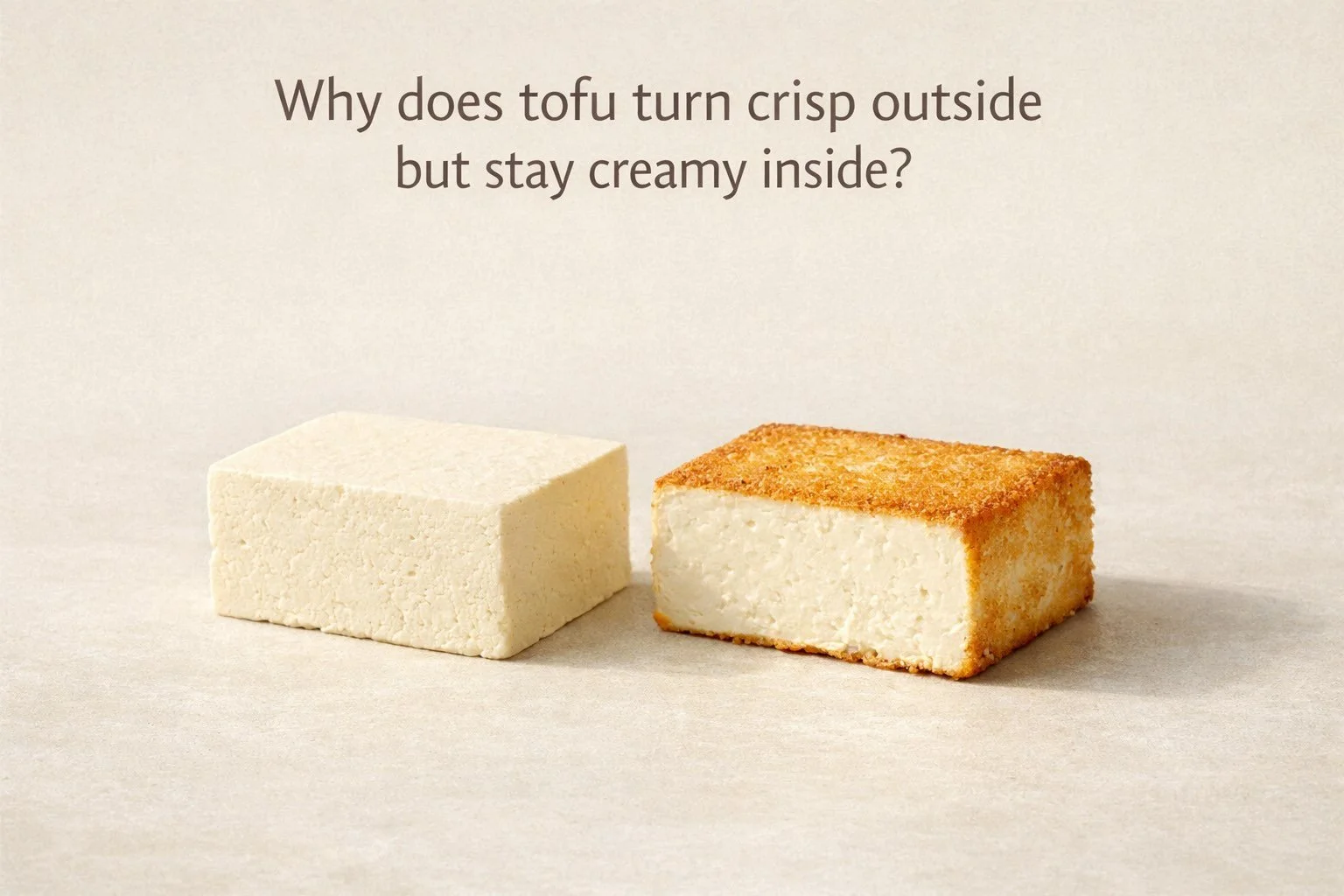
Pan-fried tofu should not be dry, rubbery or hidden beneath a heavy coating. At its best, it has a thin golden crust surrounding a moist, creamy centre. That contrast comes from choosing the right tofu, removing surface water and giving each piece enough heat, oil, space and time.
Small decisions make the difference. Here is how to create a crisp crust without cooking away the tenderness.
Start With Firm Tofu
Firm tofu offers the most reliable balance: sturdy enough to turn but moister and more tender than many extra-firm products. Extra-firm also works, especially for dishes requiring vigorous tossing, although its centre may be denser.
Avoid regular silken tofu for this method. Its custard-like gel breaks easily. Specialist dishes fry silken or soft tofu successfully, but usually require careful handling, a coating or deeper oil.
Brands vary, so judge the block as well as its label. Choose tofu that feels cohesive, moist and resilient—not already dry or crumbly.
Surface Drying Matters More Than Hard Pressing
Water on the surface cools the pan, encourages sticking and spits when it meets hot oil. Drain the tofu, wrap it in a clean tea towel or paper towel, and pat every exposed face dry.
Frying research describes crust formation as coupled heat and moisture transfer: the surface loses water while the interior heats more gradually.
If the block seems very wet, press it gently for 10–15 minutes. A chopping board with a light, even weight is enough. Aggressive pressing removes internal moisture, working against a creamy centre. Some vacuum-packed firm tofu needs little or none.
Cut the block into slabs or rectangles about 1.5–2 centimetres thick. Very thin pieces dry out before they develop a satisfying crust; uneven pieces brown at different rates.
Should You Add Starch?
You can pan-fry tofu either plain or lightly coated.
Plain tofu develops a delicate, chewy-golden skin and lets the character of the tofu remain clear. It is ideal when the pieces will be eaten immediately or simmered briefly in a sauce.
A thin dusting of cornflour or potato starch creates a crisper shell. Season dried tofu lightly, then toss with enough starch to leave a dry, translucent film—about 1–2 tablespoons for a standard block. Brush away chalky patches. Excess starch can detach or turn gummy under sauce.
Do not coat tofu in a wet marinade before frying if crispness is the priority. Soy sauce, sweeteners and minced aromatics add moisture and can scorch. Build flavour with dry seasoning first, then add sauce after browning.
Choose the Pan, Oil and Heat
A well-seasoned cast-iron, carbon-steel or dependable non-stick pan can work. It needs enough surface for one uncrowded layer.
Use a neutral oil suitable for frying, such as canola, rice-bran, grapeseed or peanut oil. Add enough to coat the base generously—usually 1–2 tablespoons in a large pan. This is pan-frying, not deep-frying; the tofu does not need to float.
Preheat the empty pan over medium to medium-high heat. Add the oil and wait until it flows easily and shimmers, without smoking. A merely warm pan delays browning and encourages sticking; excessive heat can burn the exterior before a crust develops.
Pan-Fry Without Fussing
Place the tofu in the oil away from you to reduce splashing. Leave gaps between pieces. If cooking in batches, let the pan and oil regain heat before adding more tofu. Crowding traps steam and lowers the pan temperature, weakening the crust.
Once the tofu is down, leave it alone. Depending on its thickness, coating and your pan, the first side may need about 3–5 minutes. Watch the edges: the base will turn golden, the surface will look drier, and the piece should release with gentle encouragement. If it grips the pan, give it more time rather than scraping it loose.
Turn each piece with a thin spatula or tongs and brown the second side for another 3–4 minutes. For rectangles, briefly sear the narrow edges if you want all-over colour, but do not keep turning them until the centres become tough.
Transfer the tofu to a rack, or briefly to an absorbent towel. A rack lets residual steam escape instead of collecting underneath and softening a starch-coated crust. Season while hot.
Sauce at the Right Moment
Crisp tofu and saucy tofu require a trade-off: liquid begins softening a crust as soon as they meet. For maximum crunch, serve sauce underneath, alongside or drizzled on just before eating.
If you want a glazed finish, remove the crisp tofu, cook the sauce separately until slightly thickened, then return the tofu and toss for only 20–30 seconds. This gives the pieces flavour without simmering away the texture. Prepare vegetables first or cook them separately; leaving finished tofu in the pan while other ingredients release water is a common route to sogginess.
Common Mistakes—and Their Fixes
Pale and soft: The tofu was wet, crowded or added before the pan was hot. Dry it thoroughly and fry fewer pieces at once.
Stuck to the pan: The pan or oil was not hot enough, the surface was damaged, or the tofu was turned too soon. Let a crust form before testing it.
Burnt before crisp: Reduce the heat and avoid sugary marinades before frying.
Powdery or gummy: Use less starch and apply it only to well-dried tofu.
Crisp but rubbery: Choose firm rather than very dense extra-firm tofu, cut thicker pieces and stop cooking once golden.
Crispness disappears: Keep sauce separate until serving and avoid covering hot tofu, which traps steam.
Final Takeaway
Great pan-fried tofu is controlled dehydration, not total dehydration. Dry the outside while protecting moisture within; use a hot, lightly oiled, uncrowded pan; and wait for the crust to release naturally before turning. Starch can add crunch, but sound technique matters more.
Once you understand that balance, crisp-edged, creamy-centred tofu becomes a dependable foundation for rice bowls, salads, noodles, sandwiches and stir-fries—an easy way to make more plant-forward meals genuinely inviting.
