
The Physics of Frying – Achieving Crisp Without Greasiness
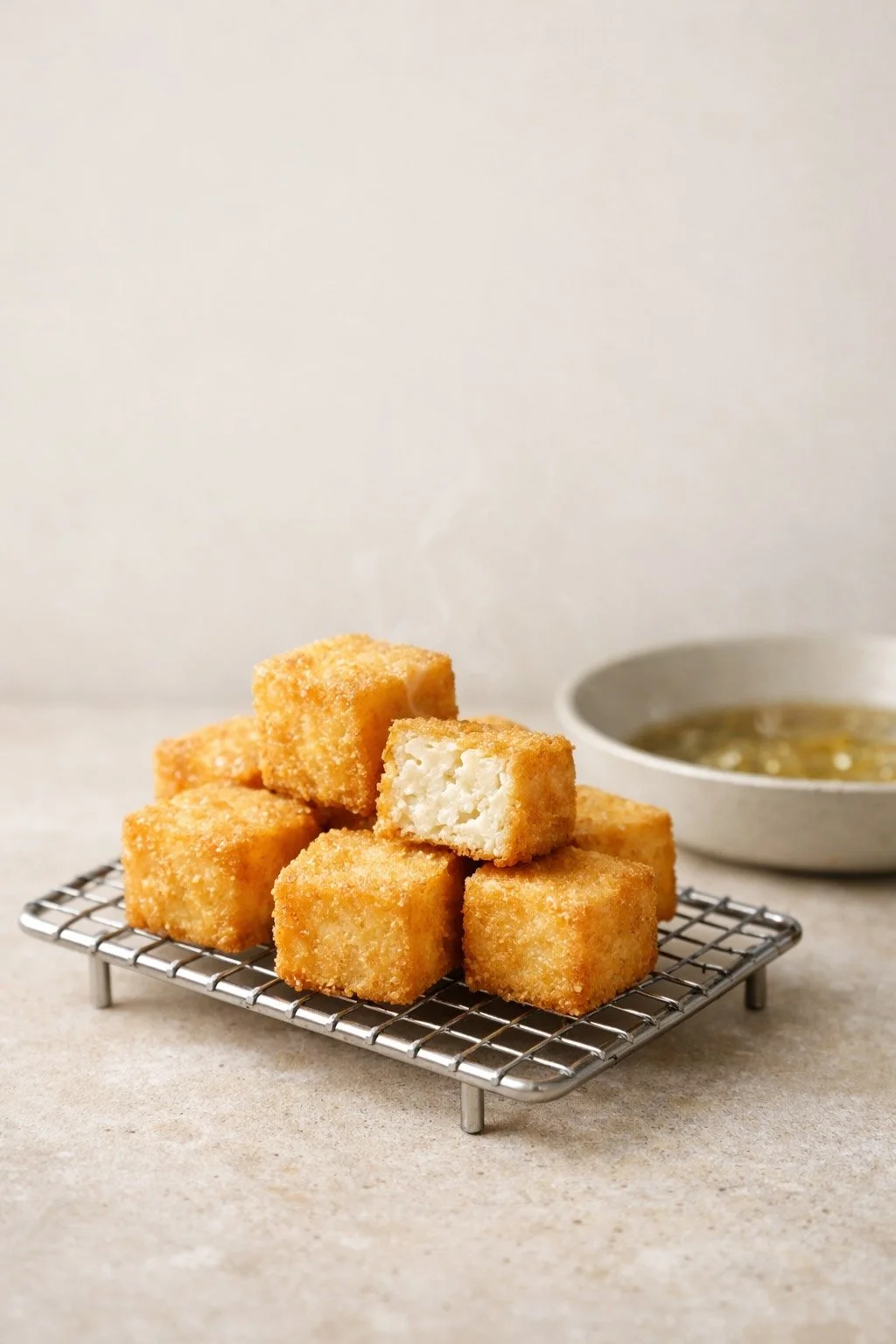
Frying has a reputation problem.
For some, it means heavy, oily food. For others, it means irresistible crunch.
But frying—especially when it comes to tofu—isn’t about excess oil. It’s about physics.
At Tofu World, we treat tofu not as a meat substitute, but as what it truly is: a three-dimensional protein–water gel.
When you understand how heat, water, and oil interact with that structure, crispness becomes predictable. And greasiness becomes avoidable.
Let’s break it down.
1. The First Rule: Water Controls Everything
Tofu is mostly water.
As long as surface water remains, its temperature cannot exceed 100°C. That’s the boiling point of water.
This matters because browning—the Maillard reaction—doesn’t meaningfully begin until around 140°C.
So if your tofu is pale and oily, here’s why:
The surface stayed wet
The temperature stayed low
The crust never properly formed
Oil doesn’t cause crispness.
Dryness plus heat does.
That’s the first shift in thinking.
2. The Steam Shield Effect
Here’s something counterintuitive:
Proper frying can actually reduce oil absorption.
When tofu hits hot oil (around 170–190°C), surface water rapidly vaporises. That escaping steam:
Pushes outward
Creates internal pressure
Forms a temporary barrier
Limits oil from moving inward
This is called the steam barrier effect.
If the oil is too cool?
Steam escapes slowly
Oil seeps into pores
The tofu becomes greasy
So paradoxically, hotter oil often means less oil inside the tofu.
Temperature is not the enemy. Poor temperature control is.
3. Why Pressing Helps (But Isn’t Always Mandatory)
Pressing tofu removes free water from between protein strands.
Less surface moisture means:
Faster temperature rise
Faster crust formation
Less time sitting in oil
However, pressing isn’t about squeezing tofu dry like a sponge. It’s about structural balance.
Extra-firm tofu → light pressing improves efficiency
Firm tofu → moderate pressing helps
Silken tofu → frying is structurally risky
Understanding structure lets you decide—rather than blindly following habit.
4. Surface Engineering: The Role of Starch
A light coating of cornstarch or potato starch changes everything.
Why?
Starch:
Absorbs surface moisture
Gelatinises under heat
Forms a micro-crust
Accelerates dehydration
This allows the surface temperature to exceed 100°C faster.
The result:
Thinner crust
Audible crunch
Lower oil uptake
Cleaner finish
It’s not about thick batter.
It’s about micro-architecture.
5. Oil Temperature Ranges (And What They Do)
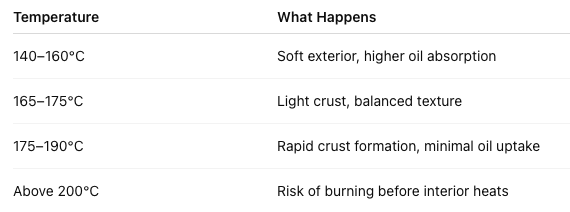
For tofu, the sweet spot is usually 175–185°C.
That’s where steam escapes quickly enough to protect the interior, but not so aggressively that the crust scorches.
6. The Resting Phase: The Overlooked Step
Crispness continues after frying.
When tofu is removed from oil:
Steam redistributes internally
Surface moisture equalises
Crust firms further
Placing tofu on a rack (not paper towel) prevents trapped steam from softening the base.
Airflow matters.
Even after the pan is off.
7. Why Tofu Often Feels Greasy at Restaurants
Common causes:
Oil temperature too low
Overcrowded fryer
Insufficient draining
Excess batter trapping oil
But the biggest issue?
Extended frying at moderate heat instead of short frying at the correct heat.
Time in oil matters as much as temperature.
8. Shallow Fry vs Deep Fry: Which Is Better?
For tofu:
Shallow frying offers control and even browning
Deep frying creates a uniform crust rapidly
Both can work beautifully.
What matters is:
Oil temperature stability
Surface dryness
Not moving tofu too early
Disturbing tofu before the crust forms tears the surface and increases oil absorption.
Patience is structural.
9. A Sustainable Perspective
At Tofu World, we care about more than texture.
When frying is done correctly:
Less oil is absorbed
Less oil is wasted
Food feels lighter
Satisfaction increases
Understanding physics means we use less, not more.
Crispness becomes intentional, not indulgent.
That’s how technique supports sustainability.
Practical Frying Blueprint
If you want consistent, crisp tofu:
Choose firm or extra-firm tofu
Pat dry (press lightly if needed)
Optional: light starch dusting
Heat oil to 175–185°C
Do not overcrowd
Let the crust form before flipping
Drain on a rack, not paper
No excess oil.
No guesswork.
Just structure and heat.
Final Takeaway: Crisp Is a Temperature Event
Greasiness isn’t caused by oil.
It’s caused by insufficient heat and prolonged exposure.
Crispness happens when:
Surface water leaves
Temperature rises
Proteins tighten
Steam protects the interior
When you understand frying as physics rather than indulgence, everything changes.
Tofu doesn’t need more oil.
It needs better timing.
And when timing meets structure, you get that clean, golden crunch — light, confident, and never heavy. 🌱
