
The Stir-Fry Survival Guide: Tofu, Tempeh, and Yuba
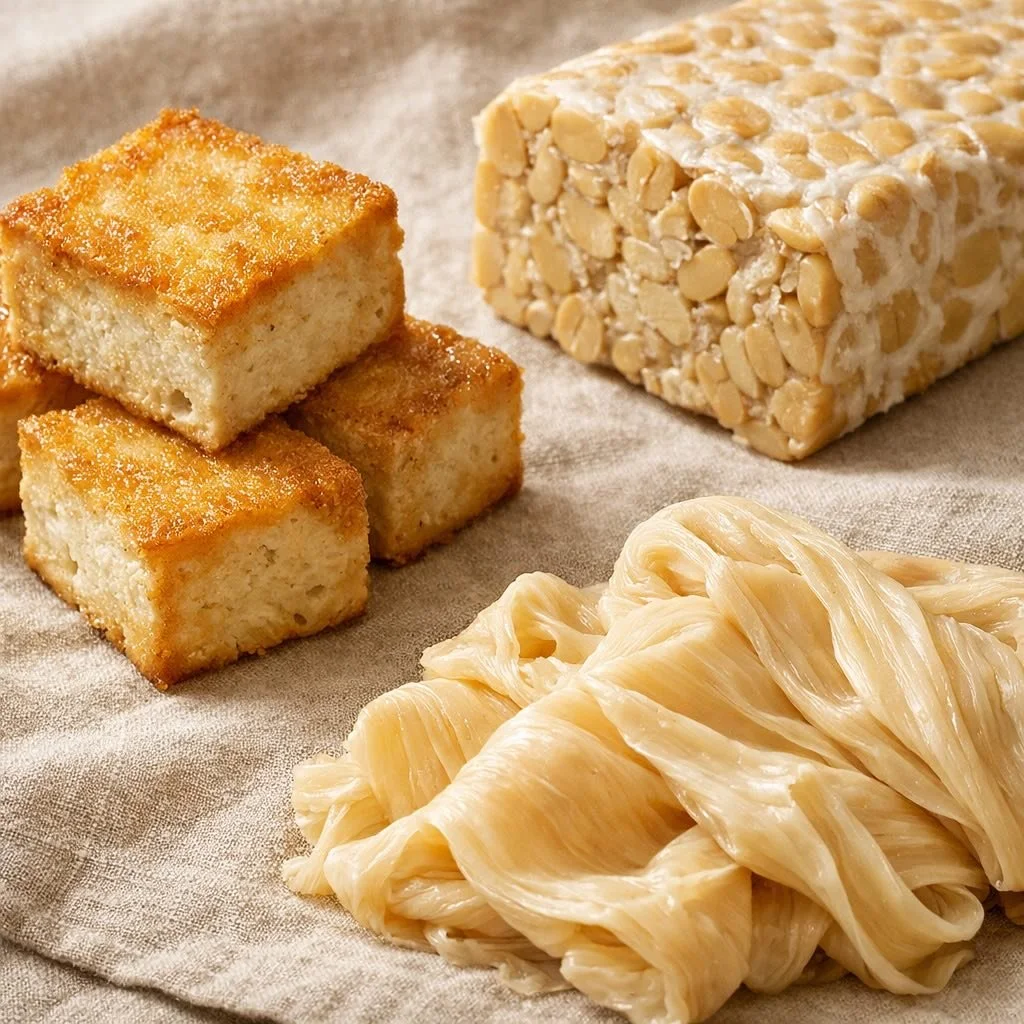
Why Stir-Fries Fail (And How to Fix Them)
Stir-fries move fast. High heat, short cooking times, and constant motion leave little room for error—especially with plant proteins.
The most common complaints?
Soggy tofu
Bitter or dry tempeh
Torn, gluey yuba
The truth: these ingredients don’t fail because they’re difficult. They fail when we treat them the same. Each one has a different structure, and stir-frying rewards cooks who respect that.
This guide breaks down what each protein needs to survive the wok—and come out better for it.
Tofu: Crisp on the Outside, Tender Within
Best types: Firm or extra-firm tofu
The Science
Tofu is a hydrated protein gel, not a sponge. In a stir-fry, excess surface moisture is the enemy—it prevents browning and causes steaming instead of searing.
Survival Rules
Dry the surface thoroughly (air-dry or pat dry; pressing is optional, not mandatory).
Cut into generous pieces—small cubes overcook and collapse.
Use hot oil, then wait. Don’t stir too early; let a crust form.
Timing Tip
Sear tofu first, remove it from the wok, then add it back at the end with the sauce. This preserves texture and prevents dilution.
Best Pairings
Garlic, ginger, chilli
Soy sauce, black vinegar, sesame oil
Vegetables with crunch: snow peas, capsicum, wombok
Tempeh: Nutty, Savoury, and Bold
Best types: Traditional soy tempeh
The Science
Tempeh is fermented whole soybeans, bound together by fungal mycelium. It’s dense, low-moisture, and naturally bitter to some palates.
Survival Rules
Slice thinly—tempeh shines when it caramelises.
Pre-steam or blanch (optional) to mellow bitterness.
Oil generously. Tempeh absorbs fat, which carries flavour.
Timing Tip
Tempeh can handle heat. Stir-fry it early and aggressively, building colour before vegetables go in.
Best Pairings
Sweet-savoury sauces (hoisin, kecap manis)
Tamarind, lime, palm sugar
Aromatics and hearty veg: onion, green beans, broccolini
Yuba: Delicate, Luxurious, and Fast
Best types: Fresh yuba or rehydrated dried yuba
The Science
Yuba (tofu skin) forms when proteins and lipids coagulate on hot soy milk’s surface. It’s thin, flexible, and fragile—closer to pasta sheets than tofu blocks.
Survival Rules
Rehydrate gently if using dried yuba; never soak too long.
Cut into ribbons—they fold and coat beautifully.
Minimal stirring. Toss, don’t churn.
Timing Tip
Yuba goes in last, often after the heat is lowered. It needs seconds, not minutes.
Best Pairings
Light soy, mushroom stock
Ginger, spring onion
Silky vegetables: mushrooms, baby spinach, Chinese greens
One Wok, Three Proteins: How to Combine Them
Cooking more than one plant protein together? Use staggered timing:
Tempeh first – build colour and depth
Tofu second – crisp and set aside
Vegetables + sauce
Yuba last – fold through gently
Return tofu – final glaze, quick toss, done
Think of it as choreography, not chaos.
Common Stir-Fry Myths (Busted)
❌ “Marinate everything.”
→ Marinades add moisture. In stir-fries, surface seasoning works better.❌ “Stir constantly.”
→ Browning needs stillness.❌ “High heat fixes all.”
→ Timing matters more than temperature.
Final Takeaway: Stir-Frying Is Respect, Not Force
Stir-frying tofu, tempeh, and yuba isn’t about tricks—it’s about listening to structure. When you let each ingredient behave as itself, the wok stops being intimidating and starts feeling alive.
Every successful stir-fry is a small act of confidence.
And every confident plant-based meal is a step toward a kinder, more delicious world. 🌱
