
The Chemistry of Tofu & Acid – Mastering Citrus & Vinegar
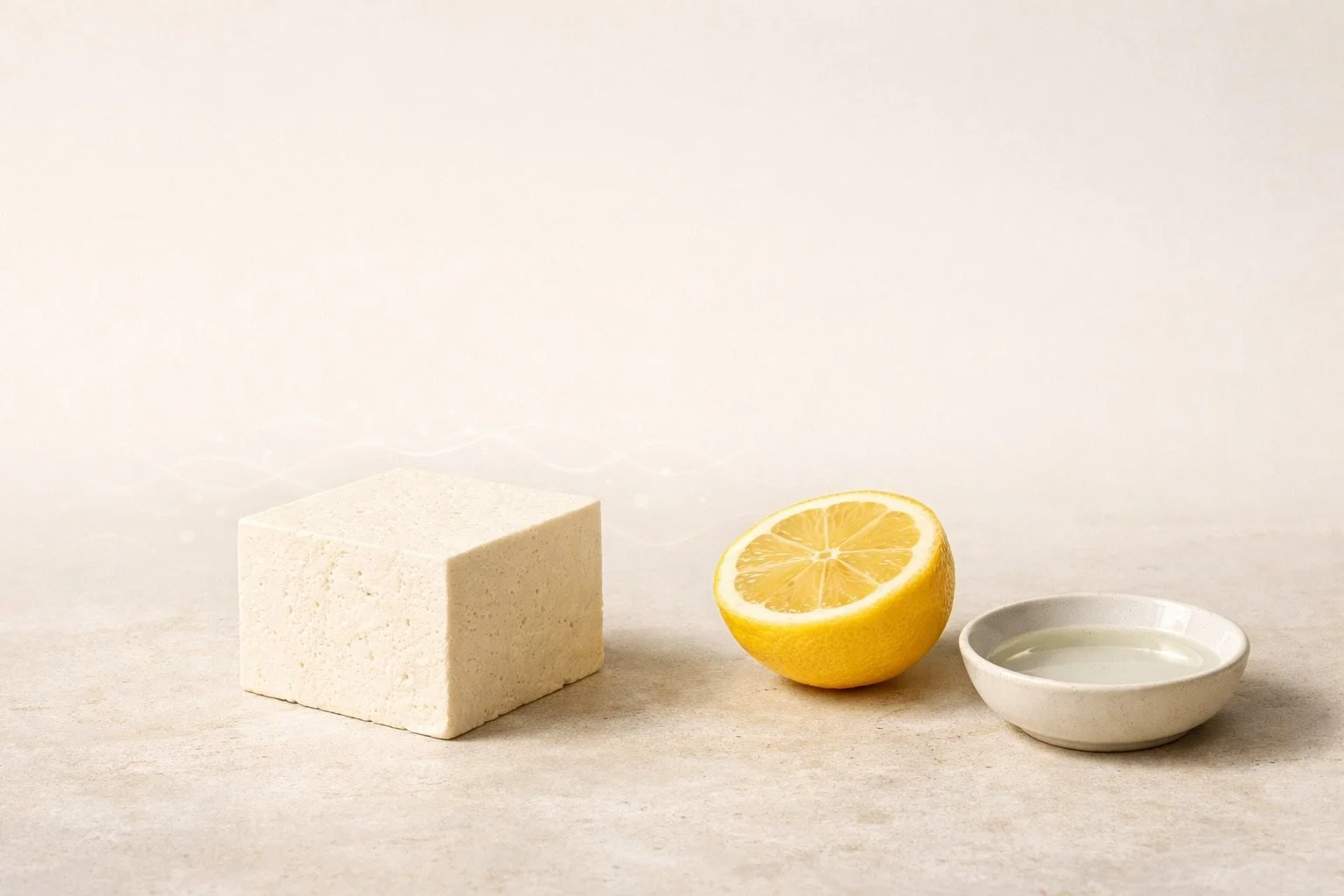
Why Acid Feels Tricky With Tofu
Acid is one of the most powerful tools in cooking. It sharpens flavour, balances fat, and wakes up the palate.
But with tofu, acid behaves differently than it does with vegetables, meat, or dairy.
That’s because tofu isn’t fibrous muscle or plant tissue.
It’s a protein–water gel—a delicate three-dimensional network of soy proteins holding moisture in place.
When acid enters that system, it doesn’t just season.
It changes the structure.
Used with intention, acid gives tofu clarity and lift.
Used carelessly, it weakens the gel, releases water, and turns clean slices into crumbles.
This is the chemistry that decides whether tofu holds—or fails.
Tofu’s Protein Network (The Quiet Foundation)
Tofu is formed when soy proteins unfold and bond into a network during coagulation. That network traps water, creating tofu’s familiar firmness or softness.
Two things keep this network stable:
Protein charge balance
Internal pH equilibrium
Acid interferes with both.
Lower the pH too far, too fast, and proteins lose their ability to hold water evenly. The gel tightens in some places, collapses in others, and moisture leaks out.
This is why tofu doesn’t “marinate like meat.”
And why acid timing matters more than acid quantity.
What Acid Actually Does to Tofu (At a Molecular Level)
When you add citrus juice or vinegar to tofu, three things begin happening:
1. pH Drops
Acids donate hydrogen ions, lowering pH. As pH approaches tofu’s isoelectric point, soy proteins lose their electrical repulsion and begin to clump.
2. Water Is Released
As proteins contract, the gel network squeezes out loosely bound water. This shows up as puddling, weeping, or surface slickness.
3. Texture Shifts
Gentle acid → firmer surface, brighter flavour
Aggressive acid → chalky bite, broken edges, crumbly interior
This is not flavour chemistry alone.
It’s structural chemistry.
Citrus vs Vinegar: Not the Same Tool
All acids are not equal—especially with tofu.
Citrus (Lemon, Lime, Yuzu)
Contains citric acid plus sugars and aromatics
Acts more gently on proteins
Best used after cooking or right at the end
Citrus adds lift without aggressively destabilising structure—if you respect timing.
Vinegar (Rice, Apple Cider, Black Vinegar)
Acetic acid is sharper and more direct
Penetrates faster
Can destabilise tofu quickly if used raw
Vinegar is powerful.
It belongs in sauces, glazes, or brief finishes, not long soaks.
Why Acidic Marinades Often Fail
A common mistake: marinating tofu in lemon juice or vinegar “to add flavour.”
What actually happens:
Acid penetrates before the heat sets the surface
Proteins tighten unevenly
Water escapes
Flavour sits around the tofu instead of inside it
Result: sour, wet tofu with a fragile texture.
This isn’t a seasoning issue.
It’s a sequencing issue.
The Golden Rule: Cook First, Acid Second
If you remember one principle, make it this:
Acid belongs after structure is set.
Heat strengthens tofu’s protein network by driving off surface moisture and stabilising the gel.
Once that structure is established, acid can safely enhance without collapsing it.
Best moments to add acid:
After pan-searing
At the end of baking
In a finishing glaze
As a dipping sauce
This single shift turns acid from a liability into a precision tool.
When Acid Does Work Before Cooking
There are exceptions—when acid is diluted, buffered, or brief.
Examples:
Small amounts of vinegar balanced with oil and sugar
Fermented acids (miso, sufu, aged black vinegar)
Light citrus zest (not juice)
In these cases, acid acts more as an aromatic or flavour accent than a structural disruptor.
Practical Acid Guidelines (Tofu World Rules)
Never soak tofu in straight acid
Set texture with heat first
Use acid as a finish, not a base
Balance acid with fat or sweetness
Think surface, not penetration
Acid should polish tofu—not rewrite its structure.
Why This Matters Beyond Technique
Understanding tofu and acid isn’t about restriction.
It’s about control.
When you respect tofu’s chemistry, you stop fighting it.
You stop hiding it under sauces.
You let its clean, quiet structure carry flavour with confidence.
This is how tofu becomes satisfying—not by imitation, but by mastery.
Final Takeaway
Tofu doesn’t resist acid.
It responds to it—precisely, predictably, and honestly.
When you learn when to add citrus or vinegar, tofu stops collapsing and starts shining.
Not louder.
Just clearer.
And clarity, in cooking, is where confidence begins. 🌱
