
The Magic of Tofu-Based Sauces – Creamy Without the Dairy
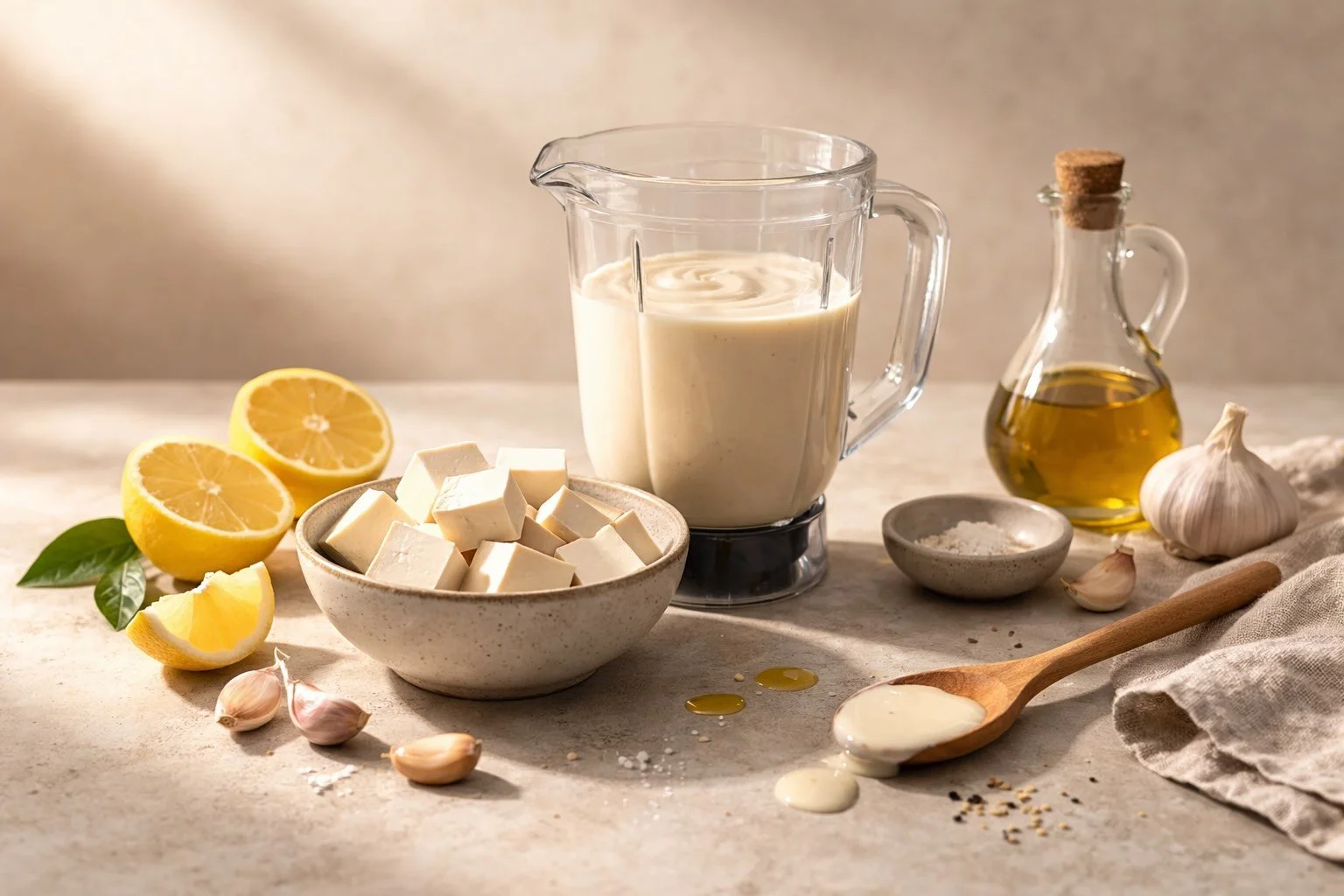
Creaminess isn’t a flavour.
It’s a texture.
And texture is structure.
For decades, Western cooking has relied on dairy — cream, butter, cheese — to create richness. But tofu can build that same luxurious mouthfeel using an entirely different mechanism.
Not imitation.
Design.
Let’s break down why tofu works so beautifully in sauces — and how to use it properly.
Why Tofu Creates Creaminess
At a molecular level, tofu is a protein–water gel.
It’s a three-dimensional network of soy proteins (primarily 7S and 11S globulins) holding water in a delicate matrix. When blended, that matrix breaks down into microscopic particles that disperse evenly through liquid.
The result?
A stable, smooth suspension that feels creamy on the tongue.
Unlike dairy cream, which relies on fat globules, tofu creates creaminess through:
Fine particle dispersion
Natural emulsification
Protein thickness
Water-binding capacity
This gives tofu sauces three powerful advantages:
Lower saturated fat
High protein content
Remarkable stability when heated
Creaminess — without heaviness.
Which Tofu Works Best?
Not all tofu behaves the same.
Silken Tofu
Best for:
Salad dressings
Chocolate mousse
Cold dips
Smooth dessert sauces
Silken tofu blends into a completely uniform texture. It has high water content and very delicate structure, so it creates ultra-smooth sauces without graininess.
Soft Tofu
Best for:
Creamy pasta sauces
White sauces
Light spreads
Slightly more structure than silken, but still smooth when blended.
Firm Tofu
Best for:
Heavier savoury sauces
Baked dips
Sauces that need heating
Firm tofu contains less water and more protein density, resulting in thicker sauces.
The choice isn’t about “better”.
It’s about structural intention.
The Science of Blending
When you blend tofu, three things happen:
The protein network fractures
Water redistributes
Air incorporates
The finer the blend, the silkier the result.
For best texture:
Use a high-speed blender where possible
Blend longer than you think
Scrape down the sides
Add liquid gradually
If your sauce feels chalky, it’s under-blended — not flawed.
How Tofu Replaces Dairy Functionally
Let’s compare structure, not sentiment.
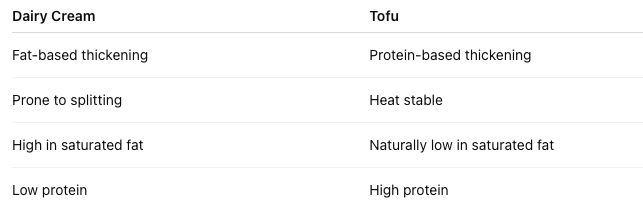
Tofu doesn’t behave like cream.
It behaves like a stable protein emulsion.
And that makes it incredibly versatile.
Flavour Architecture: Avoid the “Blank Paste” Problem
Plain tofu tastes neutral.
That’s its strength — but also its risk.
If you blend tofu without layering flavour, you’ll get a thick, pale paste.
To avoid that:
1. Add Acid
Lemon juice
Apple cider vinegar
White wine vinegar
Acid brightens and sharpens the protein structure.
2. Add Fat
Olive oil
Tahini
Cashew butter
Even a small amount improves mouthfeel dramatically.
3. Add Umami
Nutritional yeast
Miso
Soy sauce
These provide depth and savoury complexity.
4. Add Aromatics
Garlic
Roasted onion
White pepper
Mustard
Creaminess needs contrast to shine.
Heat Stability: A Hidden Advantage
Dairy sauces can split if overheated.
Tofu-based sauces are far more stable because they rely on plant proteins rather than milk fat globules.
However:
Avoid boiling aggressively
Heat gently
Stir regularly
High heat can cause water separation if pushed too far.
Gentle heat preserves structure.
Where Tofu Sauces Shine
Tofu-based sauces excel in:
Creamy pasta
Lasagne layers
Caesar-style dressings
Savoury dips
Vegan mac and cheese
Stuffed vegetables
White pizza bases
They provide body without greasiness.
And they leave you feeling nourished — not weighed down.
Common Mistakes
Too thick?
Add warm water or stock gradually.
Too bland?
Increase salt and acid first.
Too chalky?
Blend longer.
Too thin?
Use firmer tofu or reduce liquid.
Most tofu sauce failures are structural — not ingredient problems.
The Bigger Picture
At Tofu World, we’re not trying to “replace” dairy.
We’re exploring alternative culinary systems.
Tofu-based sauces demonstrate something important:
Creaminess is not owned by dairy.
It’s created by understanding structure.
Once you see that, your cooking opens up.
Final Takeaway: Creaminess Is Designed
Creamy food doesn’t require cream.
It requires structure, balance, and intention.
Tofu gives you:
Stability
Protein
Adaptability
Gentleness
When you stop asking tofu to imitate dairy and start using it for what it truly is — a responsive protein system — you unlock something more powerful than substitution.
You unlock design.
And design is how we tofu-fy the world. 🌱✨
