
Why Tofu Feels Different in Every Country
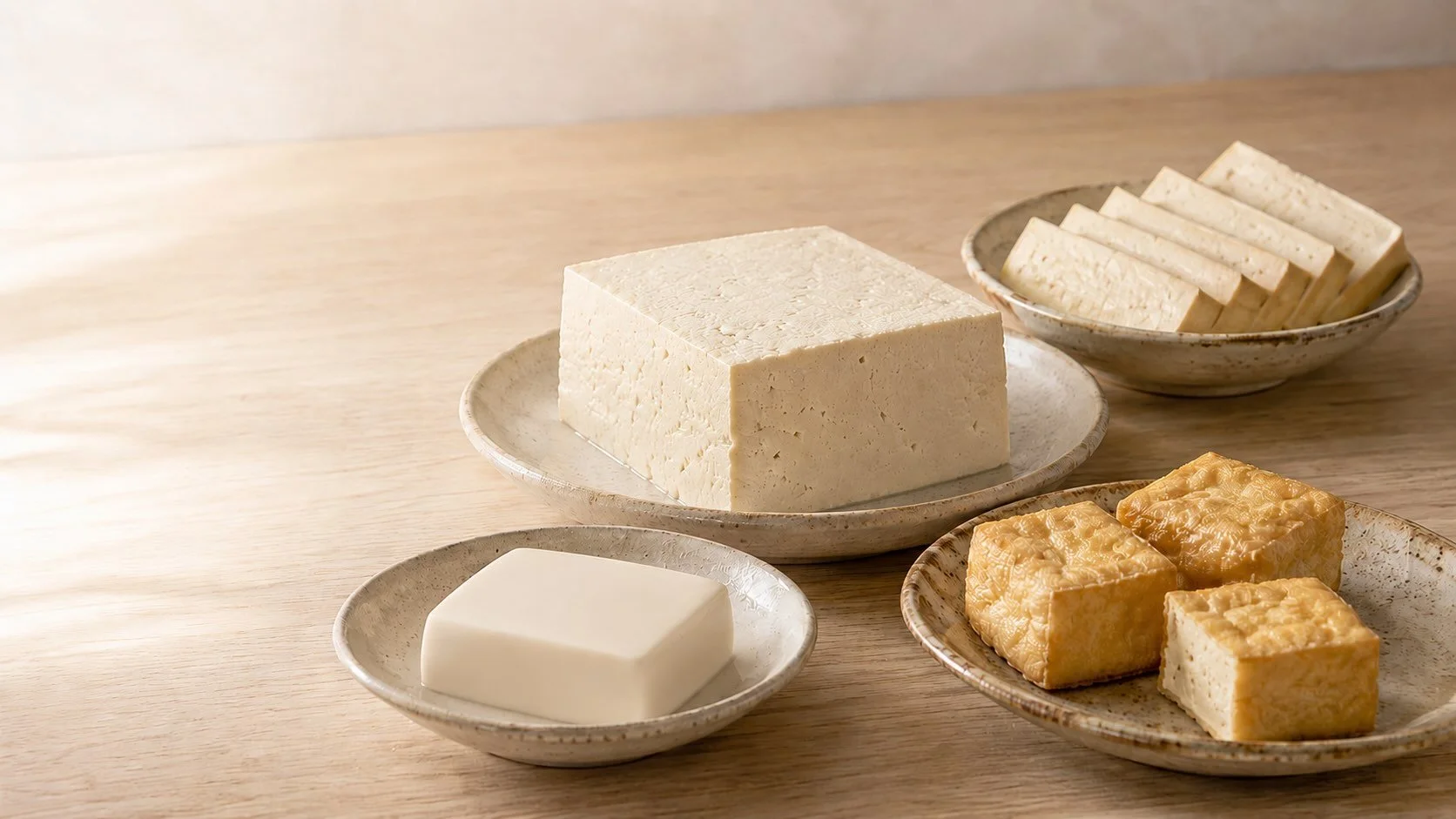
Buy a block labelled “firm tofu” in Sydney, Tokyo or Hanoi, and you may receive three noticeably different foods. One might be dense and springy, another tender enough to break under chopsticks, and another freshly fried into an airy golden shell.
These differences are not simply matters of national taste—and no country has only one tofu style. Tofu varies between regions, makers and products within the same country. Yet local ingredients, production methods, cooking traditions and retail systems have helped particular forms become familiar in particular places.
Understanding those influences makes unfamiliar tofu easier to choose, cook and appreciate.
Tofu Is a Family, Not a Fixed Product
Most tofu begins with the same transformation: soybeans are soaked and ground with water, the resulting soy milk is heated, and its proteins are coagulated into a gel or curds.
That basic process leaves makers with many decisions:
Which soybean variety should they use?
How concentrated should the soy milk be?
Which coagulant and setting conditions should they choose?
Should the gel remain intact or be broken into curds?
How much liquid should be drained or pressed away?
Should the tofu be sold fresh, fried, frozen, dried or fermented?
Every choice can alter the finished food. A scientific review of tofu coagulants shows that coagulant type, concentration, temperature and other processing conditions interact to shape gel structure and water retention. Soybean composition matters too: studies have found relationships between particular soy proteins and tofu firmness, although results also vary with growing location and processing.
What feels like a cultural difference therefore has a physical foundation.
China: Many Textures, Many Traditions
It is misleading to speak of one “Chinese tofu”. China’s tofu traditions include delicate douhua, tender fresh tofu, sturdy pressed bean curd, dried tofu, frozen tofu and numerous fermented forms.
These are not merely different points on one firmness scale. They are ingredients suited to different jobs. Soft tofu may quiver in a sweet or savoury bowl. Pressed tofu can be sliced, stir-fried or braised without readily collapsing. Freezing creates larger cavities that take up broth, while fermentation turns tofu into an intensely flavoured accompaniment or seasoning.
Preferences and dishes vary enormously across China, but together they demonstrate a central lesson: tofu texture is not a ladder from weak to strong. It is a collection of useful qualities.
Japan: Tenderness Is Not a Flaw
Japanese shops commonly distinguish between kinugoshi-dōfu and momen-dōfu. Kinugoshi, often translated as silken tofu, is smooth, cohesive and moisture-rich. Momen, or cotton tofu, is made from curds that are drained and pressed, yet it can remain softer than the “firm” tofu familiar to many Western shoppers.
These names do not map neatly onto English-language firmness labels.
Fresh tofu is often used in dishes where its own aroma and mouthfeel remain noticeable: served chilled as hiyayakko, warmed in hot pots or accompanied by restrained seasonings. For these uses, delicacy is an advantage. Japan also produces grilled, fried, frozen and freeze-dried tofu, so its tofu culture extends far beyond soft white blocks.
Korea: From Delicate Curds to Firm Slices
Korean tofu culture similarly moves between soft and shape-holding forms. Fresh sundubu has loose, delicate curds suited to bubbling stews, while firmer dubu can be sliced for pan-frying, simmering or serving with seasoned soy sauce.
Their structures change how they meet other ingredients. Soft curds mingle with broth and contrast with chilli and fermented seasonings. Firmer slices provide broad surfaces for browning and sauce while retaining a moist centre.
Neither form is simply a substitute for another protein. Each already has established roles in soups, stews, side dishes and shared meals.
Southeast Asia: Frying Adds Another Dimension
Across Southeast Asia, tofu-making traditions introduced through Chinese migration and trade developed alongside local ingredients and cooking practices. The results differ both between and within countries.
In Vietnam, freshly fried tofu can have a thin golden exterior surrounding a soft, almost custardy centre. It appears with herbs, noodles, tomato-based sauces and pungent dipping sauces.
Indonesia offers white tofu alongside a wide variety of fried forms. Some remain dense; others develop hollow or porous interiors that work well with sweet soy sauce, chilli, garlic, tamarind or peanut-based dressings. Tofu may be stuffed, braised, fried again or sold as a snack.
In the Philippines, silky tahô is served with syrup and sago pearls, while firm tokwa is commonly fried for savoury dishes. These are not interchangeable treatments of one standard block. They are distinct foods connected to different meals and occasions.
Historically, tofu sold through local markets could be eaten soon after production or fried to create a different, more resilient product. Refrigeration and sealed packaging have expanded distribution, but established preferences still shape what makers produce.
Australia, Europe and North America: Firmness for Flexibility
In many Western supermarkets, tofu is marketed primarily as a versatile plant protein. Firm and extra-firm blocks are prominent because they are easy to cube, fry, bake and grill, while also tolerating packaging, transport and handling.
This has encouraged useful creativity, but it can narrow our idea of good tofu. Recipes frequently tell cooks to press every block, even when it is already dense or when a tender texture would better suit the dish.
Western manufacturers also make excellent soft, smoked, marinated and speciality tofus. As more regional Asian products become available, shoppers are encountering a broader tofu vocabulary.
The Common Mistake: Shopping by Name Alone
“Soft”, “firm” and “extra-firm” are useful descriptions within a brand’s range, but they are not universal measurements. One company’s firm tofu may resemble another’s medium or extra-firm product.
Look at the tofu and consider its intended use. Protein per 100 grams can provide a rough clue when comparing similar water-packed blocks: a higher figure often suggests less water and a denser product. It is not a direct measurement of firmness, because ingredients and production methods also matter.
Silken tofu requires particular care. It is set as an intact gel rather than formed from pressed curds, so its protein figure does not indicate the same handling strength. Even a product labelled “firm silken tofu” may crack or shatter if treated like a pressed block.
Choose delicate tofu for blending, steaming and gentle soups. Use moist medium or firm tofu for braising and pan-frying. Select a genuinely dense block when you need clean cubes, vigorous handling or a chewier result. Treat fried, frozen, dried and fermented tofu as distinctive ingredients rather than substitutes of last resort.
Final Takeaway
Tofu feels different around the world because people have never asked it to perform only one role. Soybeans and production choices create its structure; cooks, markets and everyday meals give that structure meaning.
There is no universally superior tofu. A delicate curd, a springy block and a porous fried piece can each be exactly right for their purpose.
Approach unfamiliar tofu with curiosity. Notice whether it is smooth, fragile, compact, springy or already transformed. Then cook for the tofu you have—not merely the label you expected.
The more forms of tofu we learn to appreciate, the easier it becomes to place this nourishing plant food at the centre of more meals—and make each meal a little kinder.
