
Why Tofu Skin is a Game-Changer in Plant-Based Cooking
What Is Tofu Skin, Really?
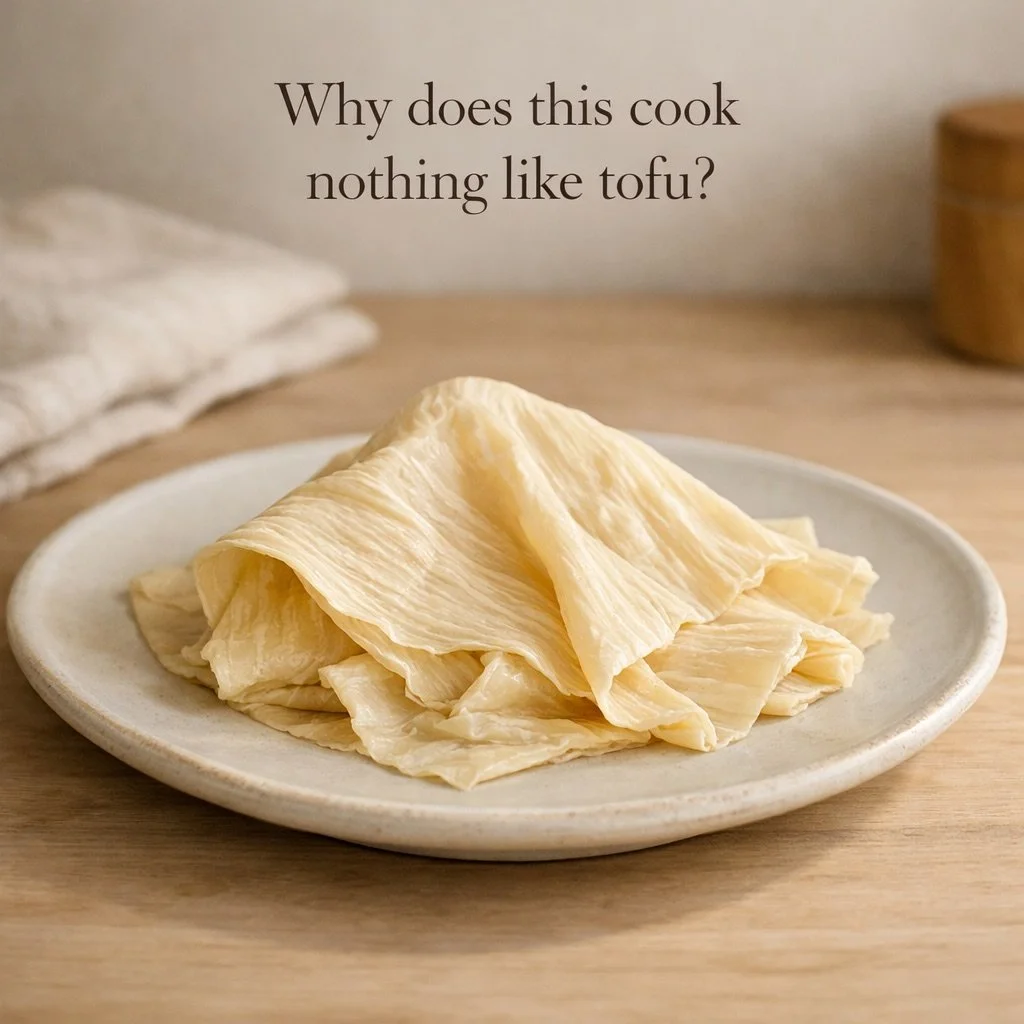
Tofu skin—also known as yuba—is formed when hot soy milk is gently heated. As it simmers, a thin, protein-rich film naturally develops on the surface. This film is carefully lifted and dried or used fresh.
Unlike tofu, which is a set protein gel, tofu skin is a laminated soy protein sheet. That difference changes everything.
Where tofu is soft and water-bound, tofu skin is:
Naturally dense
Low in free moisture
Structurally fibrous
This gives it a texture closer to meat, noodles, or pastry than a typical soy product.
Historically, tofu skin has been used for centuries across China, Japan, and Vietnam, long before modern plant-based cooking trends existed.
Why Tofu Skin Behaves So Differently from Tofu
Tofu skin is a dehydrated protein–lipid network, not a water-heavy gel. That means:
It browns faster
It absorbs flavour without becoming soggy
It holds its shape under heat
From a cooking perspective, tofu skin skips many of tofu’s common problems.
You don’t need to:
Press it
Freeze it
Pre-dry it obsessively
It’s already primed for texture.
Texture: The Silent Superpower
Texture is where tofu skin truly shines.
Depending on how you prepare it, tofu skin can become:
Chewy and meaty (braised or stewed)
Crisp and flaky (fried or baked)
Silky and noodle-like (thinly sliced, gently simmered)
Because the protein strands are aligned during formation, tofu skin tears and folds in a way that mimics muscle fibres—something standard tofu can’t naturally do.
This makes it ideal for:
Plant-based “duck” or “chicken” style dishes
Dumpling fillings and rolls
Crispy wraps and layered bakes
Flavour Absorption Without Dilution
One of tofu’s biggest limitations is water saturation. Marinades often sit on the surface or get diluted.
Tofu skin behaves differently.
Because it contains less internal water:
Flavours penetrate faster
Sauces cling rather than slide off
Seasonings taste clearer and more defined
This makes tofu skin especially effective with:
Soy sauce and tamari
Mushroom-based broths
Spices and aromatics
Fermented pastes
It doesn’t mute flavour—it amplifies it.
A Sustainability Win (Without Trying)
Tofu skin isn’t a byproduct in the wasteful sense—it’s a co-product of soy milk production.
That means:
No extra soybeans are required
No additional processing steps
Minimal energy input beyond heating
In traditional tofu kitchens, tofu skin is harvested daily as part of the natural workflow. From a sustainability lens, it’s an ingredient that makes full use of what’s already there.
At Tofu World, this kind of ingredient matters. It reflects a philosophy of using more, wasting less, and finding value in what’s already abundant.
Fresh vs Dried: Choosing the Right Form
Fresh tofu skin
Soft, pliable, slightly creamy
Best for wraps, rolls, and gentle simmering
Dried tofu skin
Shelf-stable, concentrated flavour
Needs rehydration
Ideal for braising, shredding, and frying
Both forms are powerful—it’s about choosing the right one for the job.
Why Western Kitchens Are Only Just Catching On
For decades, plant-based cooking in the West focused on:
Imitation meats
Isolated proteins
Ultra-processed textures
Tofu skin offers something different:
Minimal processing
Clear culinary identity
Cultural depth
It doesn’t pretend to be meat—it cooks like its own ingredient, with logic and integrity.
As more cooks move away from heavy processing and toward technique-driven plant-based cooking, tofu skin feels less like a novelty and more like a missing piece.
How Tofu Skin Changes the Way You Cook
Once you understand tofu skin, your approach shifts.
You start thinking in terms of:
Folding instead of crumbling
Layering instead of blending
Texture first, seasoning second
It invites intention. It rewards patience. And it opens doors that tofu alone sometimes can’t.
Final Thought: A Quiet Ingredient with Big Impact
Tofu skin doesn’t shout. It doesn’t come pre-seasoned or shaped like something else.
But that’s exactly why it matters.
In a world chasing louder, more engineered plant-based foods, tofu skin reminds us that good texture, thoughtful technique, and simple ingredients are often enough.
One sheet at a time, it shows how plant-based cooking can be both deeply traditional and quietly revolutionary.
Sometimes, the most powerful ingredients are the ones already floating on the surface—waiting to be noticed. 🌱✨
