
From Burgers to Stir-Fries: Easy Tofu Swaps for Daily Meals
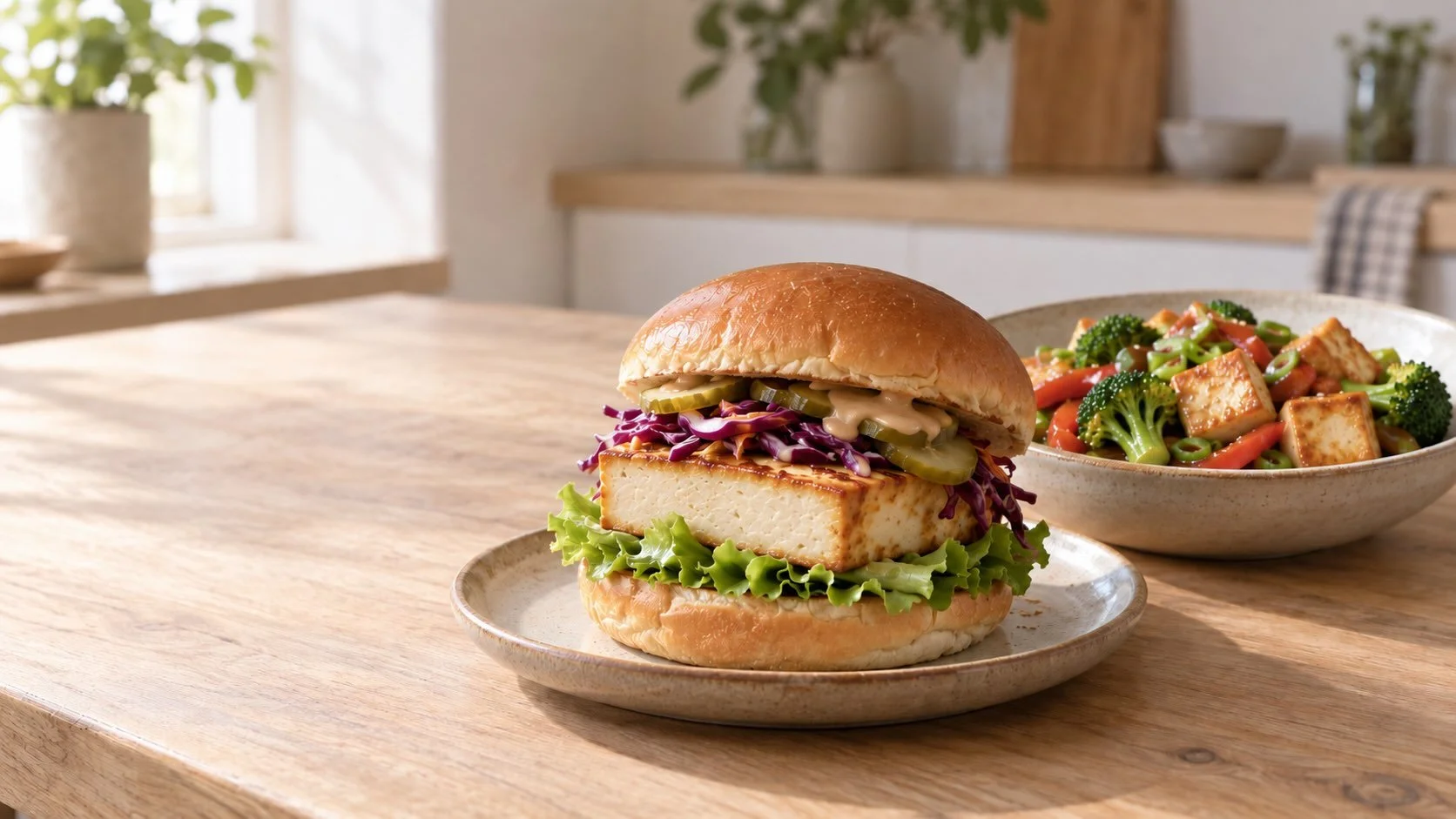
Replacing meat with tofu does not mean learning a completely new way to cook. Start with a meal you already know: a Friday-night burger, a quick stir-fry or tacos assembled at the table.
Rather than making tofu imitate meat, ask what the original ingredient does. Does the meal need a crisp centre, browned crumbles or tender pieces that carry sauce? Identify that job and the swap becomes much simpler.
Start With the Right Tofu
Firm or extra-firm tofu is the most forgiving choice for slicing, cubing, tearing or crumbling. Medium tofu suits gentle curries and scrambles. Silken tofu is better blended into creamy sauces or dips than fried as a solid piece.
Firmness labels vary between brands. Drain the tofu, then blot its surface. Pressing can help when you want drier surfaces and a denser texture, but it is not compulsory; a quick pat with a clean kitchen towel is often enough.
1. Burgers: Build Crispness and Contrast
For the simplest tofu burger, cut extra-firm tofu into a broad slab. Just before cooking, season both sides, lightly dust with cornflour (cornstarch) and pan-sear until golden. A soft bun, crunchy slaw, pickles and a punchy sauce provide satisfying contrast.
For a formed patty, crumble firm tofu and add a binder such as mashed beans, breadcrumbs or oats. Keep some texture instead of making a paste. Build savoury depth with miso, mushrooms, smoked paprika, garlic or soy sauce.
2. Stir-Fries: Cook the Tofu First
Tofu struggles to brown if vegetables release water into a crowded pan. Cube or tear firm tofu, blot it dry and cook it first in a little oil. Give the pieces space and leave them undisturbed long enough to colour. Transfer them to a plate, cook the vegetables, then return the tofu when the sauce is nearly ready.
Adding sauce near the end helps the surface stay firmer, and the sauce cling rather than steam. Use the ginger, garlic, chilli or sesame flavours you already enjoy.
3. Tacos, Bolognese and Chilli: Think in Crumbles
When a meal normally uses minced or ground meat, squeeze firm tofu into crumbles and brown them in a wide pan. Avoid constant stirring: contact with the hot surface creates more colour and flavour.
Season for the dish, not for a generic “meaty” taste: cumin, paprika and oregano for tacos; garlic, herbs and tomato paste for pasta; or chilli, beans and warm spices for a hearty bowl. Cook down watery ingredients and taste before serving.
A half-swap can make the change feel familiar. Replace part of the meat with tofu, then increase the plant-based share over time if everyone enjoys it.
4. Curries and Braises: Let Sauce Do the Work
Firm tofu works well in coconut curries, tomato sauces and braises. Sear the cubes first for resilient edges or add them directly for a softer result. Keep them fairly large and stir gently.
Flavour does not need to travel to the centre: a well-seasoned surface provides flavour in every bite. Torn pieces give sauce more edges to catch. Frozen–thawed tofu develops larger cavities and a chewier texture that holds broth—it is different, not automatically better.
5. Wraps, Sandwiches and Lunch Bowls: Use Slices or Torn Pieces
Replace sliced chicken or deli meat with marinated, baked or seared tofu. Thin slices cook quickly and spread seasoning over more surface area; torn tofu gives dressings plenty of edges to cling to.
Balance matters more than imitation. Pair tofu with something crisp, fresh and sharp: cucumber, leafy greens, pickles, lemon, mustard or a tangy dressing.
6. Breakfasts: Crumble Instead of Cube
For breakfast, crumble medium or firm tofu into a lightly oiled hot pan with mushrooms, spinach, tomatoes or leftover vegetables. Turmeric adds colour; nutritional yeast, pepper, herbs or a little black salt add savoury character. Aim for a satisfying scramble, not a perfect copy of egg.
Keep the Whole Meal in Mind
Tofu contributes protein, but its protein, calcium, sodium and energy content varies with the style and how it is made. Check the nutrition label when a particular nutrient matters to you rather than assuming every block is equivalent. Vitamin C-rich foods such as broccoli, capsicum, tomatoes and citrus can help the body absorb iron from plant foods. Tofu is not a dependable source of vitamin B12 unless the label says it is fortified, so anyone eating a fully plant-based diet needs a reliable source of B12 from fortified foods or an appropriate supplement.
Keep tofu refrigerated, follow the storage directions on the pack and promptly chill opened or cooked tofu in a clean, covered container. The World Health Organization advises refrigerating cooked and perishable food promptly, preferably below 5°C; keeping cooked food above 60°C when held hot before serving; and not leaving cooked food at room temperature for more than two hours. Follow any stricter directions on the package or from your local food-safety authority.
Common Mistakes to Avoid
Choosing silken tofu when the meal needs pieces that hold together.
Crowding the pan, which encourages steaming instead of browning.
Adding a wet sauce before the tofu has formed a golden surface.
Depending on a long marinade to flavour the centre of a dense block.
Forgetting contrast such as crunch, acidity or fresh vegetables.
Expecting tofu to reproduce meat exactly.
Final Takeaway
The easiest tofu swap begins with a meal you already love. Change the shape, heat and seasoning to suit the role tofu needs to play, then keep everything else familiar. Start with one burger, stir-fry or taco night—not as a test of perfection, but as one practical step towards a kinder, more plant-forward routine. Small changes become meaningful when they are easy enough to repeat.
