
The Truth About Plant Protein: Why You’re Getting Enough
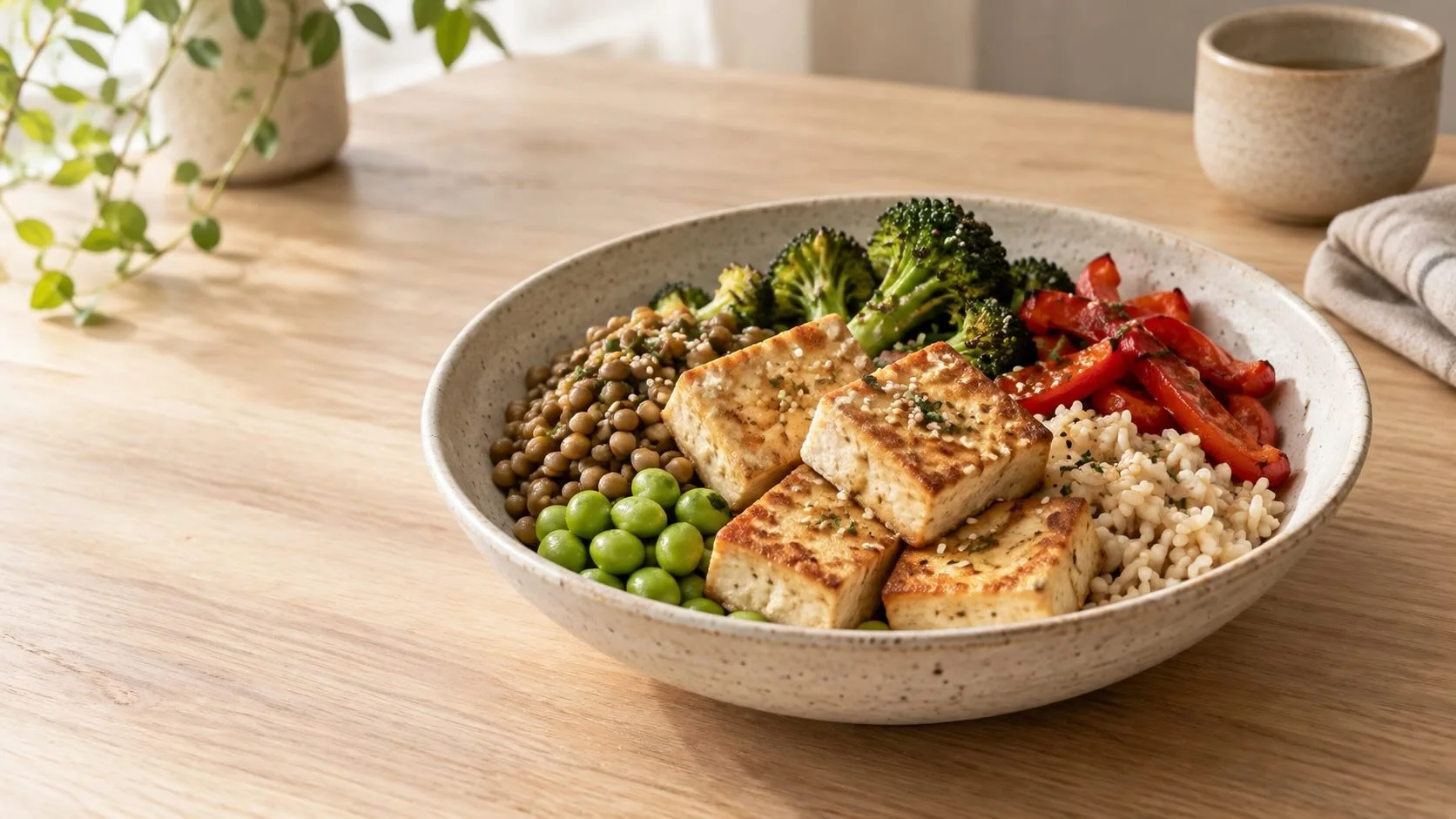
Protein has become a number to chase. Food labels advertise it, powders promise more of it, and social media can make an ordinary meal seem incomplete without a large protein target.
The quieter truth is more reassuring: most healthy adults do not need extreme amounts. If you eat enough food and regularly include tofu, legumes, whole grains, nuts or seeds, you are probably already much closer to your needs than you think.
How Much Protein Do You Actually Need?
Protein helps build and repair tissues and supports enzymes, hormones and many other processes. But more is not automatically better.
International reference standards are remarkably similar. A joint report from the World Health Organization, Food and Agriculture Organization and United Nations University sets a safe intake for healthy adults at 0.83 grams per kilogram of body weight per day. The European Food Safety Authority uses the same figure, while some national guidelines round it to about 0.8 grams.
For someone weighing 60 kilograms, 0.83 grams per kilogram is about 50 grams a day; at 75 kilograms, it is about 62 grams. These are reference values designed to cover the needs of nearly all healthy adults—not personalised targets or a ceiling. Your needs can change with age, activity, pregnancy, illness and other circumstances.
Plant Protein Is Not “Missing” Protein
Protein is made from amino acids. Nine are essential because our bodies cannot make them, so food must supply them.
Plants are sometimes described as “incomplete”, but that label is easily misunderstood. Plant foods contain all nine essential amino acids; the proportions simply vary. Legumes tend to be lower in methionine, for example, while many grains are lower in lysine. Soy foods such as tofu have a particularly well-balanced amino acid profile.
You also do not need to combine rice and beans—or any other pair—perfectly at every meal. The body draws on amino acids from foods eaten across the day. A varied diet containing legumes, soy foods, grains, nuts and seeds usually provides a useful balance. A major review of vegetarian diets concluded that protein and amino-acid needs can be met by plant foods, while noting that people who eat very little or avoid protein-rich plant foods need more care.
Protein Quality Matters—But So Does the Whole Diet
Some plant proteins are digested a little less completely than animal proteins, and individual foods can be relatively low in one essential amino acid. That difference is real, but protein-quality scores assess foods in isolation. People eat meals and dietary patterns, not laboratory samples.
Quantity, variety and enough total energy work together. Tofu, tempeh, lentils, beans, chickpeas, edamame, soy milk, peas, nuts, seeds and whole grains can all contribute. Tofu is especially practical because it provides concentrated protein without demanding a large portion and fits easily into many cuisines.
See How Quickly It Adds Up
You do not have to count every gram. Instead, give each main meal a clear protein anchor:
breakfast: soy milk with oats, plus nuts or seeds;
lunch: lentils, chickpeas, beans, tofu or tempeh;
dinner: a generous serving of tofu, edamame or legumes; and
snacks, if wanted: hummus, roasted chickpeas, nuts or a fortified soy drink.
Grains and vegetables add smaller amounts in the background. Across three meals, those contributions matter. There is no single worldwide serving size, and tofu can vary considerably in protein content. As a practical starting point, build a main meal around a substantial portion of tofu or roughly one cup of cooked legumes, then adjust for your appetite and needs. Check the nutrition panel if you have a specific target.
Common Mistakes That Can Leave a Gap
Plant-based eating does not guarantee enough protein. Problems are more likely when someone:
eats too little food overall;
replaces meat with vegetables alone rather than tofu, beans or another substantial alternative;
relies heavily on refined snack foods;
uses plant milks with very little protein; or
eats the same narrow range of foods every day.
The solution is usually not a supplement. It is a more substantial meal: add tofu to a stir-fry, lentils to a soup, beans to a grain bowl, or edamame to noodles. Choose soy milk when you want a plant milk that contributes meaningful protein, and compare labels because products differ.
When “Enough” Needs More Attention
Needs change with age, body size, pregnancy, breastfeeding, training load and health. Older adults and athletes may benefit from more protein than the general adult reference, while people with low appetite, eating disorders, digestive conditions, recent illness or highly restrictive diets may need more deliberate planning.
If this sounds like you, a qualified dietitian or doctor can assess the whole picture. People with kidney disease or another medical condition should seek individual advice before deliberately increasing protein.
Final Takeaway
Plant protein does not need to be perfect, complicated or packaged as a powder. For most healthy people, enough food, a sensible variety and a reliable protein source at each main meal will do the job.
Let tofu, legumes, grains, nuts and seeds share the work. That simple pattern can nourish you while making more room for meals that are kinder to animals and gentler on the planet—one ordinary choice at a time.
