
Tempeh Truths – Why It's Loved, Hated and Worth Mastering
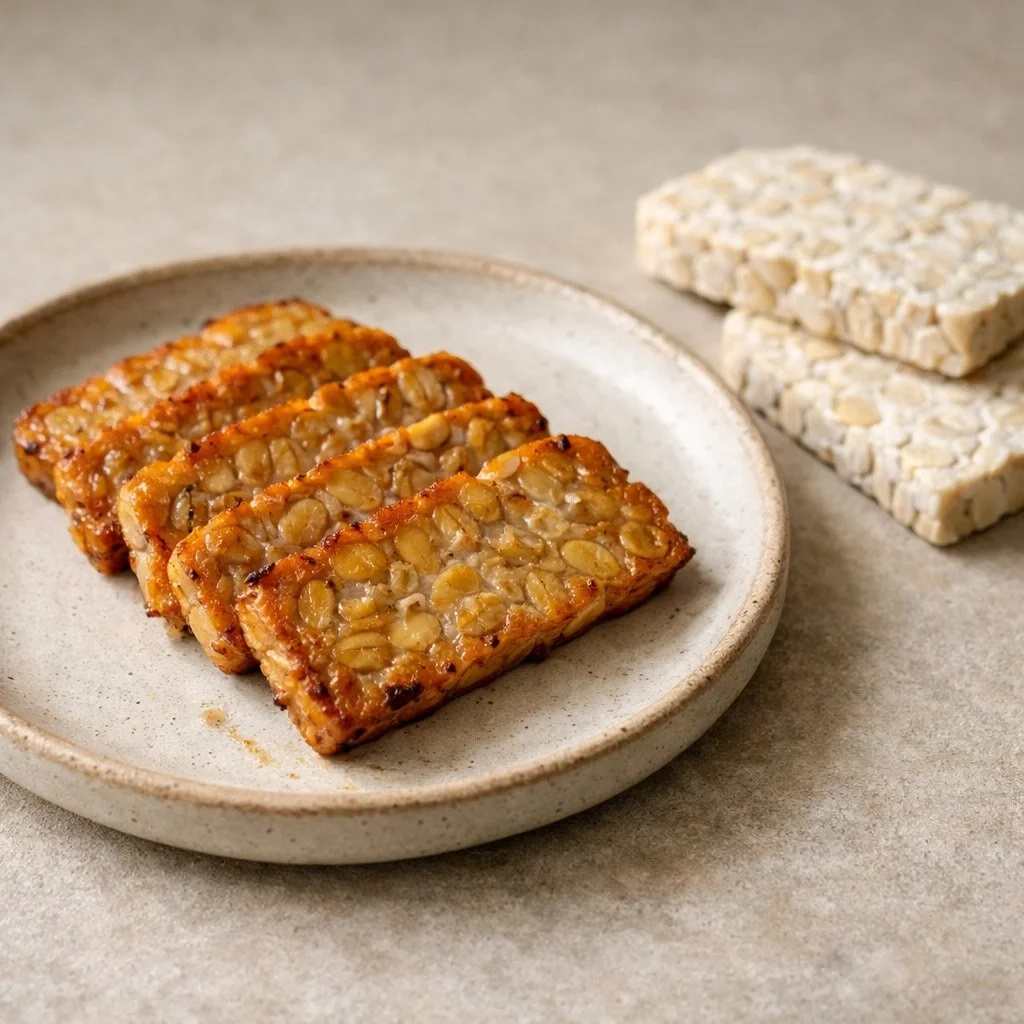
Tempeh: The Most Misunderstood Soy Food
If tofu is the diplomat of plant-based proteins, tempeh is the philosopher—dense, complex, and unapologetically itself.
Originating in Indonesia, tempeh is made by fermenting whole soybeans with a living culture of Rhizopus. The result is a firm, sliceable cake where each bean remains visible, bound together by delicate white mycelium.
And yet, tempeh is one of the most polarising foods in the plant-based world.
Some people love it instantly.
Others try it once… and never again.
To understand why, we need to unpack both the love and the hate.
Why People Love Tempeh
1. It Tastes Like Food, Not a Substitute
Tempeh doesn’t pretend to be meat.
Instead, it offers a naturally savoury, nutty, mushroom-adjacent flavour that feels grounded and real. Unlike heavily processed alternatives, tempeh announces itself honestly—no smoke flavour tricks required.
For many, this makes tempeh feel adult, substantial, and deeply satisfying.
2. It’s One of the Most Nutrient-Dense Plant Proteins
Because tempeh is made from whole soybeans, it retains fibre, healthy fats, and micronutrients that are removed in tofu production.
Thanks to fermentation:
Proteins are partially pre-digested
Antinutrients like phytic acid are reduced
Minerals become more bioavailable
Tempeh is also one of the few plant foods to naturally contain vitamin B12-like compounds (though not a reliable sole source).
This is why tempeh is often beloved by athletes, gut-health enthusiasts, and whole-food purists alike.
3. It Holds Its Shape Beautifully
Tempeh doesn’t collapse, crumble, or melt away.
You can:
Slice it thin
Cube it boldly
Grill it
Skewer it
Crumble it like mince
For cooks who crave structure and chew, tempeh offers the confidence that tofu simply can’t replicate.
Why People Hate Tempeh (Usually Fairly)
1. It Can Taste Bitter or “Too Fermented”
This is the number one deal-breaker.
Fresh tempeh contains natural fermentation by-products—organic acids and alcohols—that can register as bitter or funky, especially to first-time eaters.
But here’s the truth:
👉 Tempeh is rarely meant to be cooked straight from the packet.
A brief steam or simmer before cooking neutralises bitterness and resets the flavour canvas. Skipping this step is the most common reason tempeh gets rejected forever.
2. People Expect It to Behave Like Tofu
Tempeh is not a sponge.
It doesn’t absorb marinades the same way tofu does, and soaking it in liquid overnight often leads to disappointment rather than flavour.
Tempeh shines when:
Flavours are layered after cooking
Sauces are thick, fatty, or glaze-like
Seasoning happens on the surface, not deep inside
Treating tempeh like tofu sets it up to fail.
3. The Texture Can Feel Confronting
Those visible soybeans?
They’re not for everyone—especially if you’re expecting softness.
Tempeh’s chew is intentional. It rewards slow eating, crisp edges, and contrast. When sliced thin and cooked properly, that firmness becomes its greatest strength.
The Science That Makes Tempeh Worth Mastering
Tempeh’s power lies in its porous whole-bean matrix.
During fermentation, the fungal mycelium:
Binds beans together
Creates micro-channels that carry fat and flavour
Enhances browning when cooked properly
This makes tempeh exceptionally good at carrying:
Oils
Spices
Umami-rich sauces
Unlike tofu, which relies on moisture management, tempeh relies on fat management.
Give it oil.
Give it heat.
Let the Maillard reaction do the rest.
How to Fall in Love with Tempeh (For Real This Time)
If you’ve tried tempeh before and hated it, this is your reset.
The golden rules:
Steam or simmer for 8–10 minutes before cooking
Slice thinner than you think
Pan-fry until deeply golden before adding sauce
Finish with fat-rich, clingy flavours
Tempeh doesn’t want to be rescued.
It wants to be respected.
Tempeh Isn’t Beginner-Friendly—and That’s Okay
Tempeh asks more of the cook than tofu does.
But in return, it offers:
Depth
Nutrition
Texture
Satisfaction
It’s not here to replace meat.
It’s here to expand what plant-based food can feel like.
And once it clicks, tempeh stops being “that weird fermented thing” and becomes something quietly essential.
Final Takeaway: Tempeh Rewards Curiosity
Tempeh is loved because it’s honest.
It’s hated because it’s misunderstood.
But for those willing to learn its rhythm—its bitterness, its chew, its fermentation-born depth—tempeh becomes not just edible, but unforgettable.
At Tofu World, we believe mastery isn’t about perfection.
It’s about listening to ingredients—and letting them teach you how they want to be cooked.
Tempeh has a lot to say.
All it asks is that you stay long enough to hear it. 🌱✨
