
Vegan vs. Meat-Eater – Who Has More Energy at Work?
“Meat gives you strength”.
“Vegans must feel tired”.
It’s a debate that shows up everywhere — from gym floors to office kitchens.
But workplace energy isn’t about lifting capacity.
It’s about:
Clear thinking
Stable mood
Consistent focus
Comfortable digestion
Fewer afternoon crashes
So who really has more energy during a workday?
Let’s look at structure — not ideology.
1️⃣ Energy at Work Is About Rhythm
Energy isn’t just calories.
It’s how those calories behave once eaten.
Large, heavy meals — especially those high in saturated fat and refined carbohydrates — can leave people feeling sluggish in the early afternoon.
This isn’t because the brain “loses blood supply”.
Instead, after eating, the body naturally shifts into a rest-and-digest state, influenced by gut signalling and metabolic changes. Some meals amplify that shift more than others.
By contrast, meals built around:
Tofu
Legumes
Whole grains
Vegetables
Moderate healthy fats
…often release energy more gradually.
That steadier curve tends to feel calmer and more sustainable across a desk-based afternoon.
Not dramatic.
Not spiky.
Just consistent.
2️⃣ The Blood Sugar Question
Work performance depends heavily on glucose stability.
Meals high in refined carbohydrates can produce:
Rapid rise in blood sugar
Strong insulin response
Sharper drop later
That “drop” often feels like brain fog or fatigue.
Legume-based meals — such as tofu bowls, lentil salads, or bean-based wraps — contain fibre and protein that slow digestion and moderate glucose release.
The result?
A flatter energy curve.
That’s not about being vegan.
It’s about meal structure.
A vegan pastry can still cause a crash.
A balanced meat-and-veg plate can also be steady.
Composition matters more than labels.
3️⃣ Digestive Load & Mental Clarity
Digestion requires coordination between the gut, nervous system, and metabolism.
Heavier meals can increase feelings of fullness or heaviness, which some people experience as reduced alertness.
Plant-forward meals tend to be:
Higher in fibre
Lower in saturated fat
Easier to portion lightly
This can translate into feeling more comfortable and mobile during desk work.
The gut and brain communicate continuously.
When digestion feels smooth, focus often feels smoother too.
Again — not ideology.
Just physiology.
4️⃣ What About Protein?
The question always appears:
“But where’s the protein?”
Tofu provides complete protein, containing all nine essential amino acids.
Research consistently shows that when total daily protein intake is adequate, plant and animal sources can both support normal muscle maintenance and daily vitality.
For desk-based work, what matters most is:
Moderate protein
Even distribution across meals
Not excess
You don’t need overload.
You need consistency.
5️⃣ Micronutrients & Sustainable Energy
Any eating pattern requires attention to balance.
Plant-based diets benefit from mindful inclusion of:
Vitamin B12 (via fortified foods or supplementation)
Iron-rich foods paired with vitamin C
Omega-3 sources such as seeds or algae-based options
Meat-inclusive diets also benefit from balance — particularly around fibre intake and overall meal composition.
Energy isn’t determined by dietary identity.
It’s shaped by:
Nutrient density
Glycaemic stability
Digestive comfort
Meal timing
So… Who Has More Energy?
There isn’t a universal winner.
But patterns higher in:
Whole plant foods
Fibre
Unsaturated fats
Complex carbohydrates
…are consistently associated with steadier glucose patterns and lower inflammatory load — both of which support consistent daily focus.
That’s especially relevant in knowledge-based work.
Workplace energy isn’t about stimulation.
It’s about stability.
A Practical Workplace Experiment
Try this for a week:
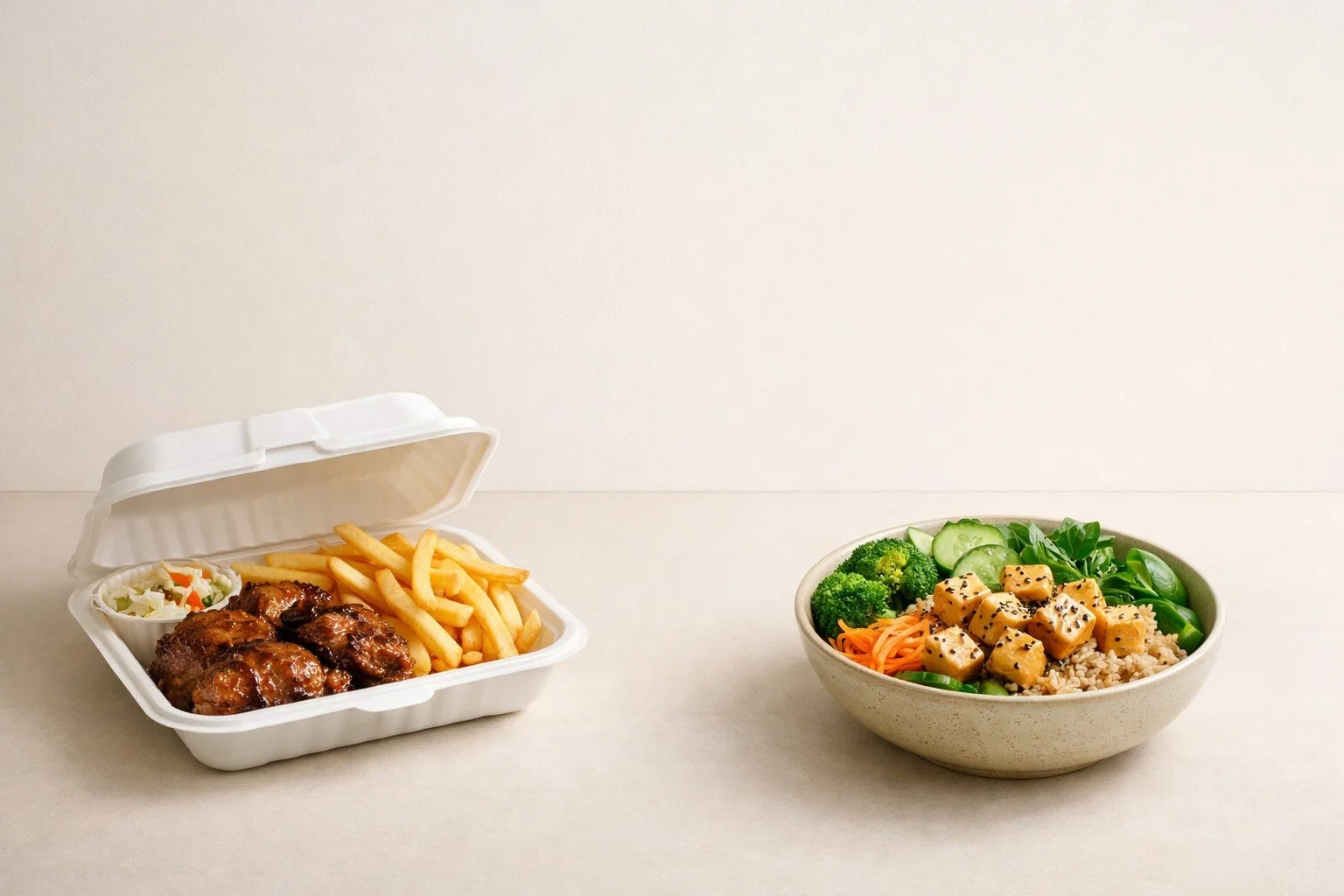
Option A:
Heavy takeaway lunch with refined carbs and high-fat protein.
Option B:
Tofu grain bowl with brown rice, mixed vegetables, sesame dressing, and leafy greens.
Track:
2 pm alertness
Length of sustained focus
Digestive comfort
Mood steadiness
No ideology.
Just observation.
Final Takeaway: Energy Is a Pattern
Work performance thrives on rhythm.
Meals that support:
Gradual glucose release
Digestive ease
Nutrient balance
Moderate portions
…tend to support steadier energy throughout the day.
Plant-based eating — when structured intentionally — naturally leans toward that rhythm.
Not because it’s extreme.
But because it’s balanced.
And if tofu becomes your quiet midday anchor, that’s one small shift toward a kinder, more sustainable world. 🌱✨
