
Veggie Charcuterie: Stunning Plant-Based Grazing Boards
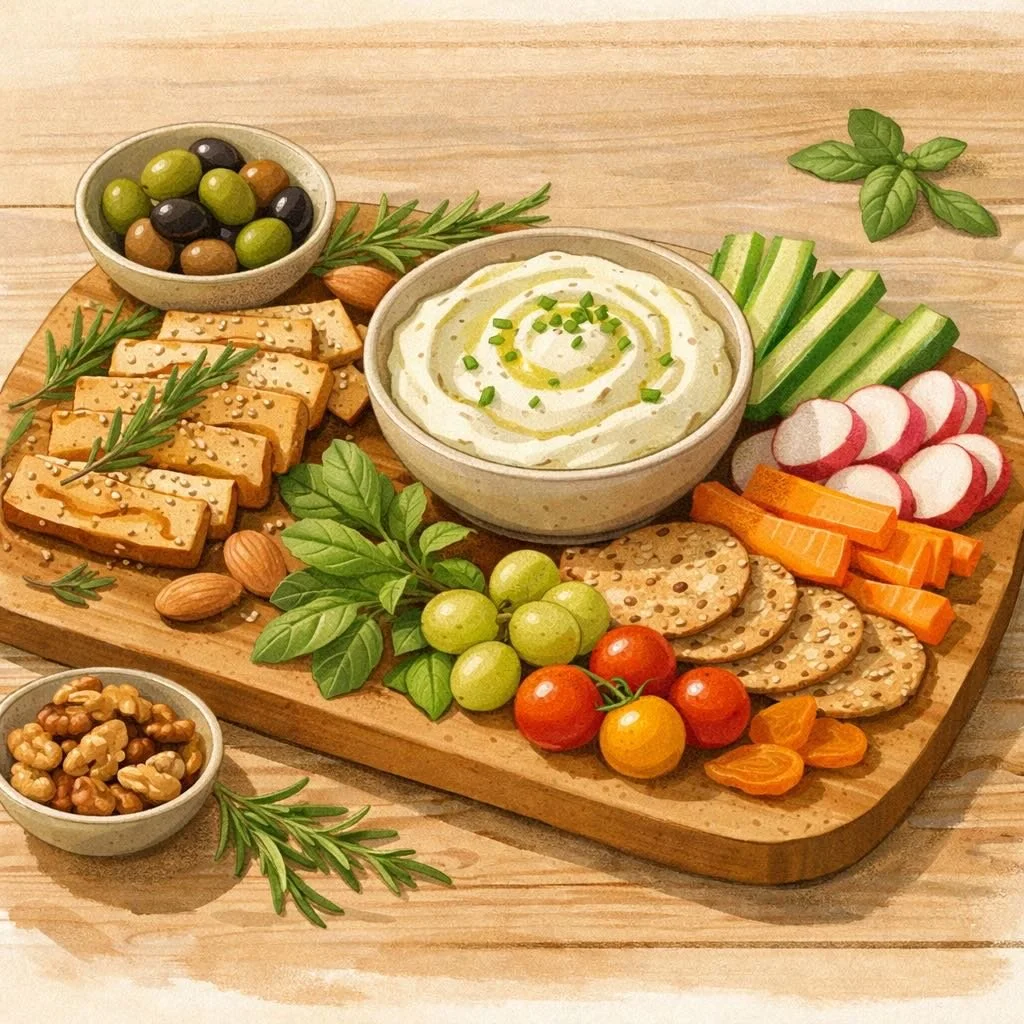
Why Veggie Charcuterie Is Having a Moment
Charcuterie boards used to be about cured meats and cheeses. Veggie charcuterie flips that idea on its head—not by removing pleasure, but by redefining it.
A great plant-based grazing board delivers the same things people crave:
Variety
Contrast
Visual abundance
Something crunchy, creamy, salty, fresh, and indulgent
When done well, it doesn’t feel like a “vegan alternative.”
It feels like a feast.
And for Tofu World, veggie charcuterie is a natural expression of the mission: showing how plants can be generous, satisfying, and joyful—one board at a time.
The Golden Rule: Texture Comes First
The secret to unforgettable veggie charcuterie isn’t ingredients—it’s texture balance.
Every board should hit these five zones:
Creamy – whipped tofu spreads, hummus, cashew cream
Crunchy – crackers, crisp vegetables, roasted nuts
Chewy – marinated tofu, sun-dried tomatoes, grilled mushrooms
Fresh – raw vegetables, herbs, fruit
Punchy – pickles, olives, fermented or acidic elements
If one zone is missing, the board feels flat.
If all five are present, people keep grazing without thinking.
Tofu: The Quiet Star of the Board
Tofu is often overlooked on grazing boards—but it’s actually one of the most versatile anchors you can use.
How tofu shines in charcuterie:
Marinated tofu slabs sliced thin like cold cuts
Baked tofu cubes with smoky or herby coatings
Whipped tofu dips blended with lemon, garlic, or roasted vegetables
Crispy tofu bites for crunch and protein
Because tofu absorbs flavour so easily, it becomes whatever the board needs—earthy, savoury, bright, or indulgent.
Think of tofu as the structural protein of veggie charcuterie: it gives the board substance without heaviness.
Building the Board: A Simple Framework
You don’t need fancy equipment—just intention.
1. Start with the anchors
Choose 2–3 substantial items:
Marinated tofu
A hearty dip
Roasted or grilled vegetables
Place these first to create visual weight.
2. Fill with colour and contrast
Add:
Raw vegetables (carrots, radish, cucumber, capsicum)
Fresh fruit (grapes, apple slices, figs when in season)
Pickled elements (gherkins, onions, olives)
Alternate colours to avoid large monochrome patches.
3. Add crunch and carriers
Every creamy element needs a vehicle:
Crackers
Toasted sourdough
Seeded flatbreads
Rice crackers or lavosh
Break some pieces for a relaxed, abundant look.
4. Finish with detail
This is where boards feel “crafted”:
Fresh herbs scattered loosely
Drizzles of olive oil or chilli oil
A small bowl of flaky salt or dukkah
Flavour Themes That Always Work
Instead of random ingredients, choose a flavour direction.
Mediterranean-Inspired
Lemon-herb tofu
Olives, roasted capsicum, hummus
Flatbread and fresh parsley
Asian-Leaning
Soy-ginger tofu
Pickled cucumber, edamame
Sesame crackers, chilli crisp
Earthy & Rustic
Smoked tofu
Roasted mushrooms, walnuts
Wholegrain bread, thyme
A theme creates harmony—even when there’s a lot happening.
Hosting Without Stress
Veggie charcuterie is perfect for gatherings because it:
Can be mostly prepped ahead
Accommodates mixed diets effortlessly
Encourages sharing without pressure
Pro tip:
Prepare all components earlier, but assemble the board just before serving to keep textures fresh and colours vibrant.
Common Mistakes to Avoid
Too many dips, not enough bite
Balance spreads with solid elements like tofu or vegetables.All soft textures
Without crunch, boards feel tiring.Overcrowding
Negative space helps each item shine.Treating it like a meat board clone
Veggie charcuterie isn’t about imitation—it’s about abundance.
A Kinder Way to Gather
Veggie charcuterie boards do more than feed people.
They invite curiosity. They lower defences. They show that plant-based food can feel generous, social, and celebratory.
When someone reaches for a piece of marinated tofu without hesitation—that’s a quiet shift happening.
And those quiet shifts, board by board, are how food helps build a kinder world.
