
Why Tofu Became My Symbol of Hope and Change
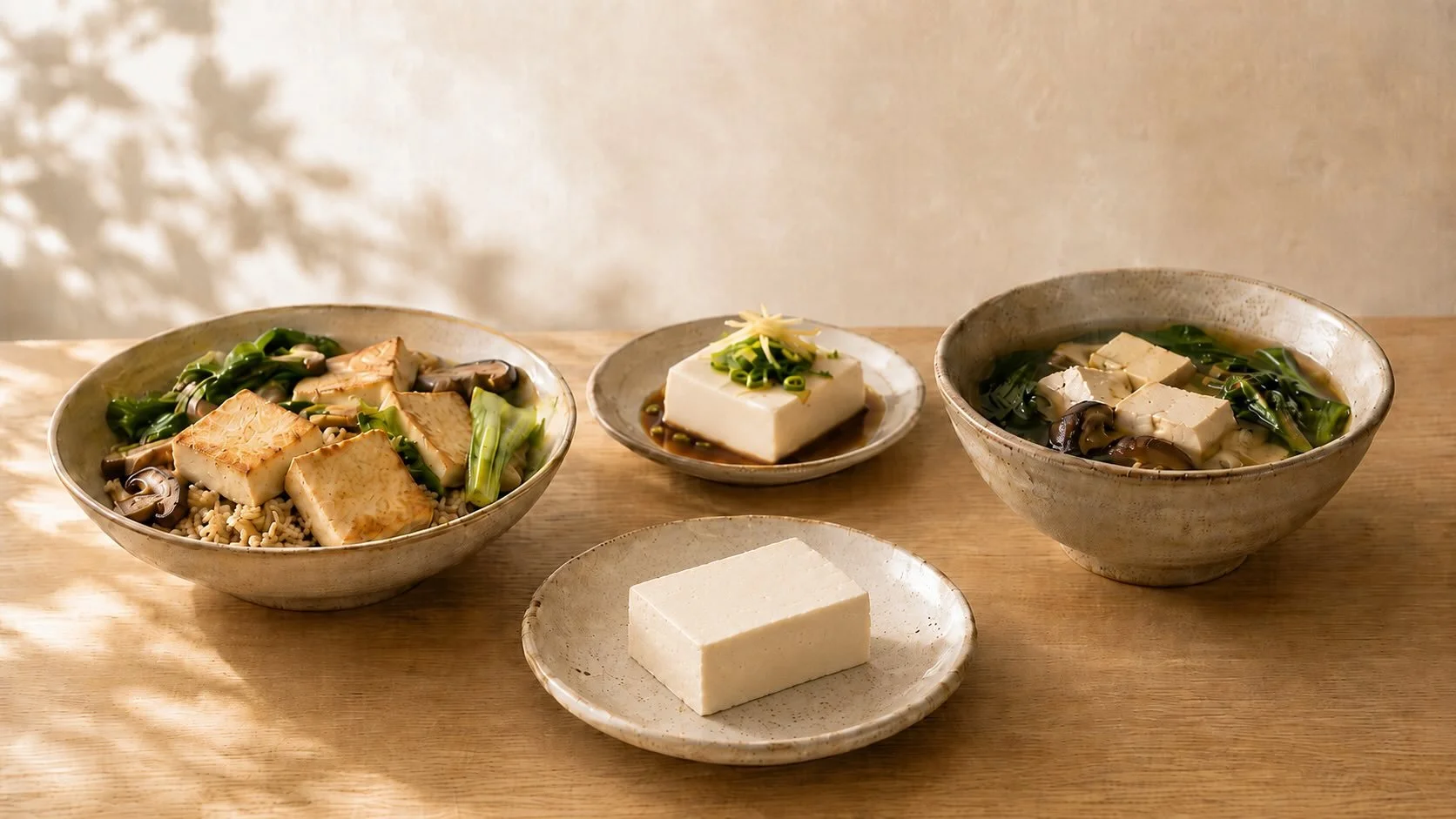
There was a time when I barely noticed tofu. It was simply another ingredient—quietly occupying a place on the plate without demanding much attention.
But as I began questioning my food choices and their effects on animals, the environment and the future I wanted to support, tofu took on a different meaning.
Here was something modest yet remarkably adaptable. It could carry tradition, welcome creativity and make plant-based change feel possible rather than overwhelming.
Tofu became more than food to me. It became a symbol of hope: a reminder that even an ordinary choice can move us towards something better.
1. Tofu Taught Me That Change Can Be Gentle
I once imagined that changing how I ate would mean giving something up. Food is tied to tradition, comfort and identity, so even a small shift can feel like leaving part of ourselves behind.
Tofu showed me a gentler path.
Mild and adaptable, it can find a place in meals we already know—simmered in a curry, browned for a rice bowl or served in a comforting broth. It does not ask everyone to change at once, nor does it insist that familiar food must disappear.
With care, tofu can become golden and crisp, soft and delicate, deeply savoury or quietly comforting. It does not erase the flavours around it. It listens to them, absorbs them and finds its place among them.
That adaptability taught me something important: change does not have to mean rejecting who we have been. Sometimes it simply means making room for who we are becoming.
2. Tofu Reflects the Future I Want to Support
Once tofu opened the door to change, it also encouraged me to look beyond my own plate.
Food never exists in isolation. What we eat is connected to land, water, energy, animals and the people who produce it. No single comparison tells the whole story—farming practices, processing methods and local conditions all matter. Even so, large life-cycle studies consistently show that plant proteins generally require less land and produce fewer greenhouse-gas emissions than animal proteins, particularly beef and lamb.
That does not make tofu perfect, and it does not make every food decision simple. But choosing tofu in place of a meat-centred meal can be a practical way to reduce the environmental burden of what we eat.
For me, it also became an everyday expression of compassion. Eating tofu more often allowed me to reduce my reliance on animal foods without turning every meal into a test of moral purity.
Each modest choice brought my actions a little closer to my values—not a demand to be perfect, but a quiet promise to keep moving in a kinder direction.
3. Tofu Made the Table Feel More Inclusive
At first, I wondered whether eating more plant-based meals would make food feel less familiar—or whether everyone could still feel welcome around the same table.
Tofu helped ease that concern because it does not belong to only one diet or one kind of eater. A vegan may build a meal around it. A flexitarian may choose it instead of meat a few times a week. An omnivore may simply enjoy it as another ingredient. Nobody has to earn a place at the table.
Tofu also carries many culinary identities. In Japan, chilled hiyayakko celebrates its softness and delicacy. Vietnamese cooks fry and braise tofu or pair it with tomatoes, vegetables and aromatic sauces. In parts of Nigeria, soybean curds known as beske or awara have developed their own local preparations and histories.
These traditions are distinct, and each deserves to be understood on its own terms. Together, however, they remind us that tofu is neither a passing substitute nor a fringe food. It has long been valued as an ingredient in its own right.
That is part of what makes tofu feel hopeful to me. It can be a bridge—adaptable enough to meet people where they are and generous enough to bring different tastes, traditions and choices to the same table.
4. Tofu Reawakened My Curiosity
For much of my life, tofu could seem plain, predictable or forgettable. But when I began paying closer attention, one apparently simple block revealed an unexpected range of possibilities.
I discovered that tofu was not one uniform ingredient. Silken tofu could be served chilled or blended into a sauce. Firm tofu could be braised or seared. Frozen and thawed tofu developed a more open, chewy structure that held broth and seasoning.
I also learned that familiar advice was not universal. Delicate tofu should not be pressed, while dense vacuum-packed tofu may need only surface drying. Marinades season compact tofu most strongly near its exterior, so glazing or simmering can sometimes deliver more flavour than a long soak.
Cooking tofu became an exercise in attention. A dry surface encouraged browning. Undisturbed contact with a hot pan helped form a golden crust. Cutting, tearing or crumbling the same block changed how it held sauce and felt in the mouth.
What began as cooking became a form of play—experimenting, occasionally failing and gradually learning what each type of tofu needed.
In that process, tofu taught me another lesson: curiosity can transform something ordinary without asking it to pretend to be something else.
5. Tofu Reminds Me That Small Choices Matter
The more I learned, the more tofu came to represent a kind of practical hope.
In a world facing climate change, biodiversity loss and animal suffering, it is easy to feel that one person—or one dinner—cannot make a meaningful difference.
One tofu meal will not change the world. But it can become the beginning of a habit. It can introduce a friend to a new flavour, show a child that plant-based food belongs at the family table or encourage a café to keep a tofu dish on its menu.
A choice can influence the next choice. Repeated across kitchens, families and communities, small decisions can gradually reshape what feels familiar, desirable and possible.
The value of one meal, then, lies partly in the meals that follow it.
Tofu taught me that hope does not always arrive through grand gestures. Sometimes it begins with an ordinary decision made with care—and then made again.
Final Takeaway: A Block of Hope
Tofu began as an easily overlooked ingredient. Now, it represents something much larger to me.
It is a symbol of gentleness without weakness, tradition without stillness and transformation without rejection. It reminds me that we can honour where we have come from while choosing where we want to go.
Most importantly, it has taught me that compassion becomes more sustainable when it welcomes progress instead of demanding perfection.
Tofu cannot build a kinder, more sustainable world on its own. No single food can. But it gives us a practical and hopeful place to begin.
So, the next time you see a block of tofu, look beyond what it appears to be. Consider what it can become, what it might bring to the table and what one thoughtful meal could set in motion.
Because meaningful change does not always begin loudly.
Sometimes it begins with one block, one plate and one choice made with hope.
