
How to Build Umami with Less Sodium
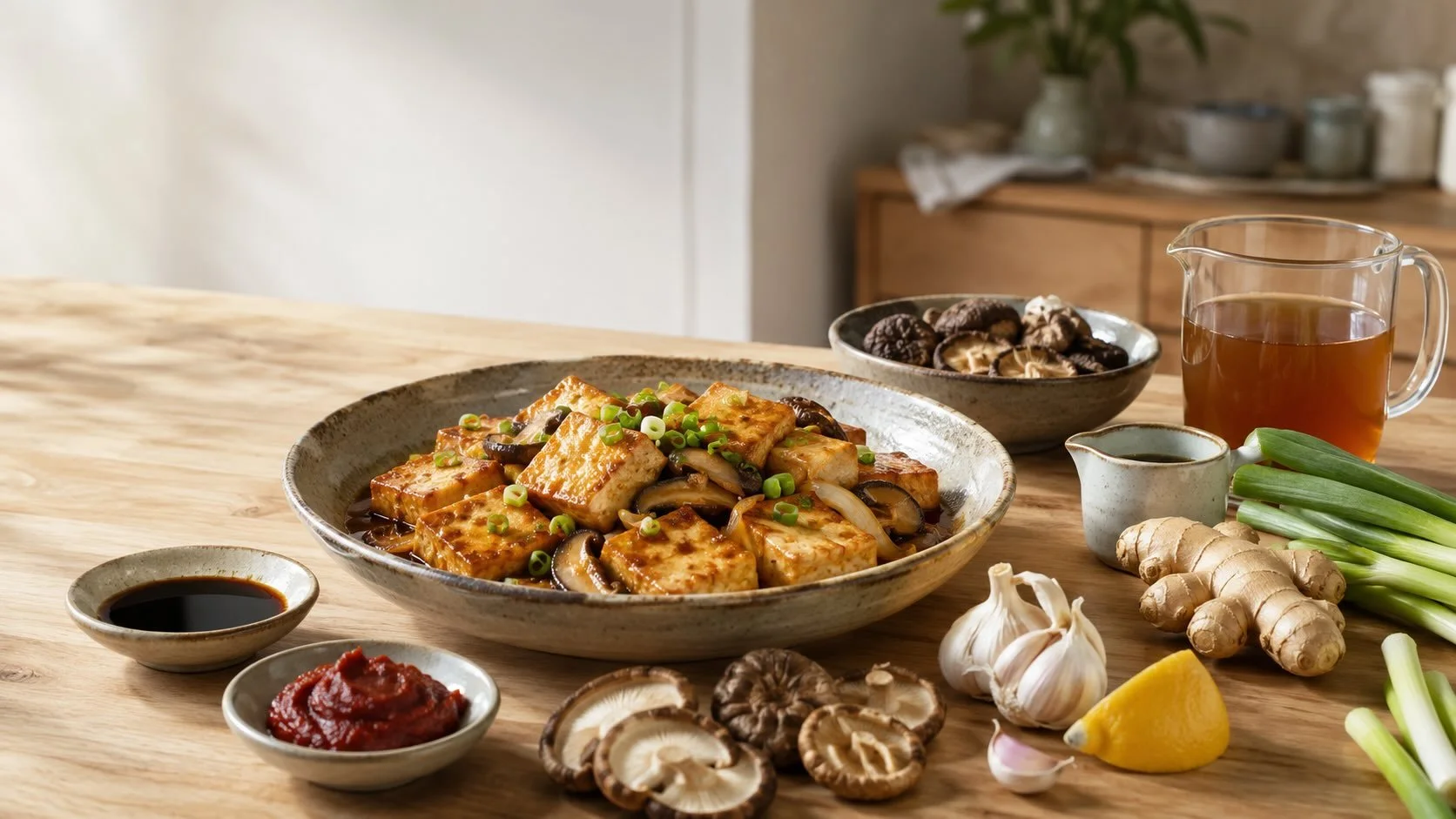
Umami can make tofu taste fuller, deeper and more satisfying. Yet many familiar sources of umami—including soy sauce, miso, stock powder and bottled marinades—can also contribute substantial sodium.
The answer is not to eliminate every salty ingredient. It is to build flavour in layers, then use sodium-containing seasonings in small, deliberate amounts where they have the greatest impact.
Umami and saltiness are different tastes
Saltiness comes mainly from sodium chloride. Umami is a distinct savoury taste associated principally with glutamate and certain nucleotides naturally present in foods.
Although they complement each other, they perform different jobs:
Salt sharpens flavours and can reduce the perception of bitterness.
Umami gives food greater savoury depth and persistence.
Acidity adds brightness and contrast.
Aromatics and spices create complexity.
Browning contributes roasted flavours and richness.
This distinction matters when reducing soy sauce. Replacing half of it with rice vinegar may lower the sodium, but it will also make the dish sharper. That might be delicious, but vinegar does not directly replace either saltiness or umami.
A better approach is to use less soy sauce, rebuild the missing savoury depth and then add only enough vinegar to brighten the finished dish.
Find where the sodium is coming from
The salt shaker may not be the main source. Sodium can accumulate through several ingredients in the same meal:
Soy sauce or tamari
Miso
Stock powder or packaged broth
Gochujang and other fermented pastes
Chilli crisp and bottled sauces
Pre-seasoned tofu or plant-based meat
Pickles and preserved vegetables
Compare products using the sodium amount per 100 grams or 100 millilitres. A product labelled “reduced sodium” contains less sodium than its regular counterpart, but that does not necessarily make it low in sodium.
Consider the whole dish rather than judging each ingredient separately. Small amounts of miso, soy sauce, stock powder and chilli crisp can add up quickly.
Build savouriness in layers
Instead of asking one condiment to provide all the flavour, combine several complementary techniques.
1. Brown ingredients properly
Browning is not a substitute for glutamate-rich foods such as mushrooms or tomatoes. However, Maillard reactions create roasted aromas and taste-active compounds that make food seem deeper and more savoury.
Pat firm tofu dry and place it in a wide, hot pan with space between the pieces. Let a golden crust develop before turning them. If the pan becomes crowded, cook mushrooms, onions or cabbage separately so they brown rather than steam.
For soups and braises, sauté or roast some of the vegetables before adding liquid. This gives an unsalted or lower-sodium broth far more character.
2. Pair mushrooms with tomatoes
Fresh mushrooms contribute savoury flavour and satisfying texture. Dried shiitake also contain guanylate, a nucleotide that works particularly well with glutamate from foods such as tomatoes. Together, they can taste more savoury than either ingredient used alone.
Soak dried shiitake in cool or lukewarm water until softened. Strain the soaking liquid through a fine sieve or filter to remove grit, then use it in soups, sauces or braises. Chop the softened mushrooms and cook them thoroughly before serving.
This approach produces both a flavourful cooking liquid and mushrooms that can become part of the finished dish.
3. Concentrate tomato paste
Tomatoes naturally contain glutamate. Tomato paste is especially useful because a small amount can add depth without making the entire dish taste like tomato sauce.
Cook one or two teaspoons of tomato paste in a little oil until it darkens slightly and loses its raw aroma. Choose a no-added-salt or lower-sodium product when available, but compare labels because sodium levels vary.
Cooked tomato paste can deepen mushroom gravy, lentil sauces, mapo-style tofu and savoury tofu glazes.
4. Develop aromatic complexity
Garlic, ginger, shallot, spring onion, lemongrass, chilli and toasted spices do not replace salt, but they help prevent lower-sodium food from tasting empty.
Cook robust aromatics early to mellow their raw edges and develop their flavour. Reserve a smaller fresh portion for the end when you want brightness. Toast dry spices or bloom them briefly in oil to release their aromas, taking care not to burn them.
5. Use salty seasonings as accents
Soy sauce and miso do not have to disappear. Treat them as concentrated accents rather than the entire flavour base.
Instead of simmering tofu in a large quantity of soy sauce, begin with shiitake liquid, browned aromatics and cooked tomato paste. Add a measured teaspoon or two of lower-sodium soy sauce towards the end, then taste again.
A small finishing amount can remain more noticeable than the same quantity diluted through a large volume of cooking liquid.
Add contrast before adding more salt
A dish that seems flat does not always need more sodium. It may need acidity, aroma or texture.
Try finishing it with:
Rice vinegar, black vinegar, lemon or lime
Toasted sesame seeds or unsalted crushed peanuts
Fresh herbs or sliced spring onion
Chilli, black pepper or sansho
A few drops of toasted sesame oil
Crisp mushrooms, onions or unsalted breadcrumbs
Add acid gradually. Begin with half a teaspoon, stir and taste. The goal is to lift the other flavours—not make the dish sour.
A practical lower-sodium tofu sauce
For approximately two portions, use:
125 ml strained shiitake soaking liquid or water
1–2 teaspoons lower-sodium soy sauce
1 teaspoon tomato paste
1 tablespoon finely chopped soaked shiitake
Garlic, ginger or spring onion to taste
½–1 teaspoon rice vinegar
1 teaspoon cornflour mixed with cold water, if needed
First, cook the tomato paste and aromatics briefly in a little oil. Add the shiitake, liquid and soy sauce, then simmer until the mushrooms are thoroughly cooked. Thicken if desired, add browned tofu and cook until the sauce lightly coats it. Finish with vinegar and taste.
Ask three separate questions:
Does it need more savoury depth? Add more cooked mushrooms, browned ingredients or a little tomato paste.
Does it taste dull? Add a small amount of acid, chilli or fresh aromatic.
Does it genuinely need more saltiness? Add a measured splash of soy sauce or a small pinch of salt.
This prevents every flavour problem from being answered with more sodium.
Common mistakes
Replacing soy sauce with vinegar one-for-one: Sodium decreases, but the dish may become sour without regaining the savoury depth it lost.
Stacking salty condiments: Several modest additions of miso, stock powder, soy sauce and chilli crisp can accumulate quickly.
Overcrowding the pan: Pale, steamed ingredients lack the roasted complexity that helps lower-sodium food feel satisfying.
Assuming every umami product is low in sodium: Bouillon, fermented sauces, nutritional yeast blends and mushroom seasonings vary considerably. Check the label.
Reducing everything at once: Gradual reductions give your palate—and your cooking technique—time to adjust.
Final Takeaway
Building umami with less sodium is not about accepting bland tofu. It is about giving different ingredients different jobs.
Use mushrooms and tomatoes for savoury depth, browning for roasted complexity, aromatics and spices for character, and acidity and texture for contrast. Then use soy sauce, miso or salt in measured amounts where they will make the greatest difference.
When those layers work together, tofu can taste complete, generous and deeply savoury without relying on one heavily salted sauce.
