
10 Ways to Build Umami Without Meat
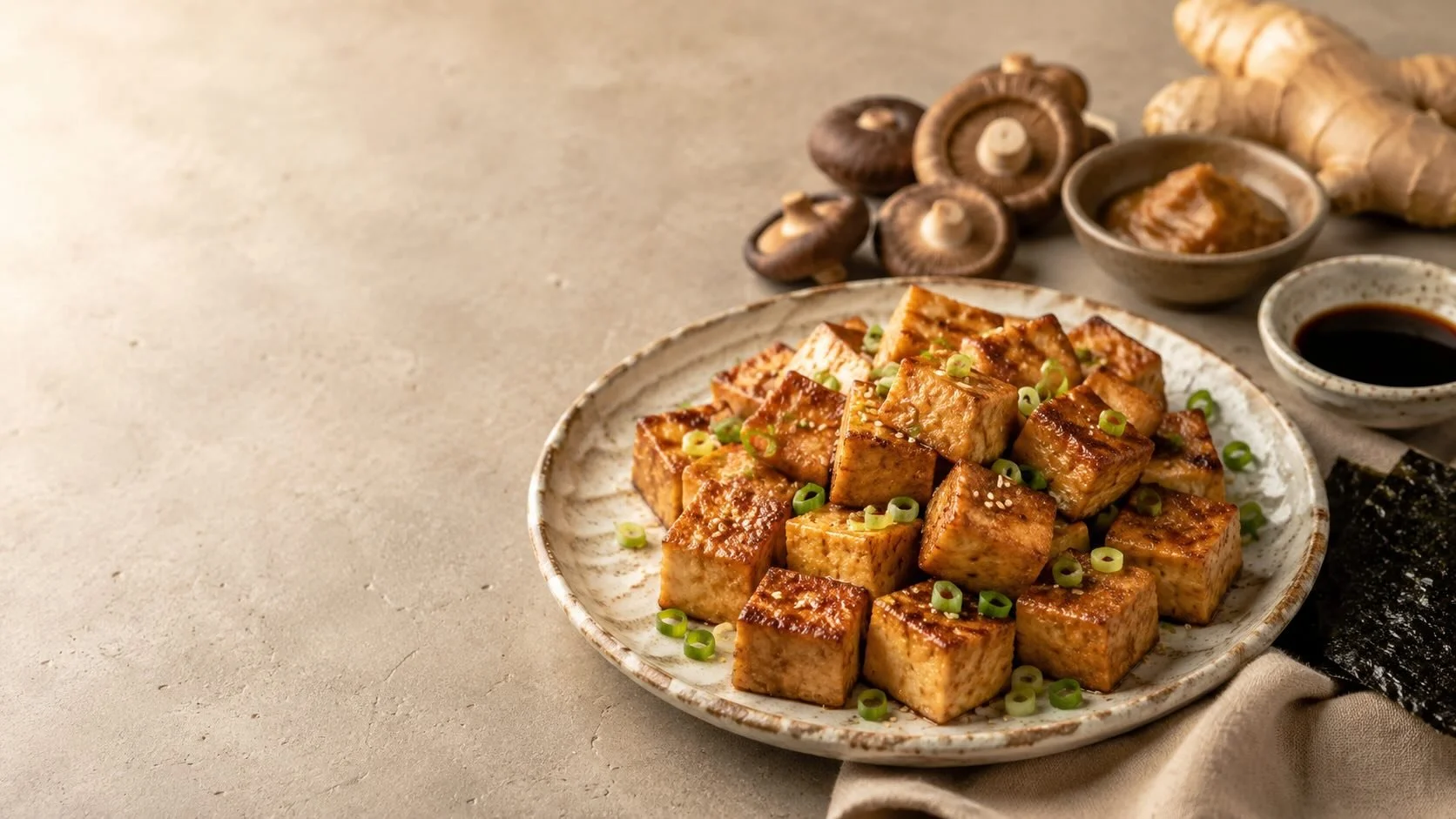
Umami is the deep savoury taste that makes food feel rich, rounded, and satisfying. It is why soy sauce adds depth to a stir-fry, why browned mushrooms seem almost meaty, and why miso can transform a simple broth.
The good news is that umami does not belong to meat. It can come from soybeans, mushrooms, seaweed, tomatoes, fermentation, yeast, browning, and smart cooking techniques.
For tofu, this matters especially. Tofu has a gentle flavour, so the ingredients and techniques around it often determine whether it tastes bland or deeply satisfying.
1. Start with Soy Sauce or Tamari
Soy sauce brings salt, fermentation, and savoury depth in one ingredient.
Use it in marinades, stir-fries, soups, braises, and glazes. For tofu, it works especially well when cooked on the surface. Brown the tofu first, then add soy sauce and let it reduce into a glossy coating.
Tamari offers a similar effect and is often used as a gluten-free alternative.
2. Use Miso for Rounded Depth
Miso adds a fuller, deeper savouriness than soy sauce alone.
White miso is milder and sweeter, while darker miso is richer and more intense. A spoonful can transform soups, dressings, noodle sauces, and tofu glazes.
For the best flavour, stir miso into dishes near the end of cooking rather than boiling it heavily.
3. Brown Mushrooms Properly
Mushrooms are one of the most powerful meat-free umami ingredients.
If you want faster browning, avoid overcrowding the pan. Mushrooms release water first. Once that moisture evaporates, they can brown and develop deeper flavour.
Shiitake, oyster, king oyster, and Swiss brown mushrooms are particularly useful. Dried shiitake mushrooms are even more concentrated, and their soaking liquid can add depth to soups and sauces.
4. Add Seaweed for Savoury Complexity
Seaweed contributes clean savoury notes that make plant-based dishes feel more complete.
Kombu is excellent for broths, while nori works well over rice bowls, noodles, and tofu dishes. Wakame is useful in soups.
Use seaweed sparingly. A small amount often adds more complexity than a large amount.
5. Build Flavour with Aromatic Oil
Umami is not only about ingredients but also about how flavour is carried.
Oil captures aromas from garlic, ginger, spring onion, chilli, herbs, and spices. This is why tofu often tastes richer when aromatics are gently cooked in oil before sauces are added.
A finishing drizzle of sesame oil, chilli oil, or spring onion oil can add another layer of depth.
6. Use Tomato Paste or Roasted Tomatoes
Tomatoes are naturally rich in savoury compounds, especially when concentrated.
Fry tomato paste briefly in oil before adding liquid. This softens its raw sharpness and deepens its flavour.
Roasted tomatoes work similarly, pairing especially well with baked tofu, grain bowls, soups, and Mediterranean-style dishes.
7. Use Nutritional Yeast or Yeast Extract
Nutritional yeast provides savoury, nutty, slightly cheesy depth.
It works well on tofu, roasted vegetables, pasta, soups, and grain bowls.
Yeast extracts such as Vegemite or Marmite are much stronger. Even a small amount can add significant savouriness to soups, gravies, and sauces.
8. Use Fermented Ingredients
Fermentation is one of the quickest routes to umami.
Alongside soy sauce and miso, ingredients such as doubanjiang, black bean sauce, kimchi, sauerkraut, tempeh, and sufu can add complexity and depth.
Because many fermented foods are salty, start with small amounts and adjust gradually.
9. Roast, Sear, Grill, or Char
Browning creates flavours that boiling cannot.
Roasted vegetables, grilled mushrooms, and browned tofu all gain depth through moisture loss and surface caramelisation.
For tofu, dry the surface first and allow it to brown before adding sauces.
10. Reduce Sauces Until They Cling
Thin sauces often taste weaker than their ingredients suggest.
As water evaporates, savoury compounds become more concentrated, and the sauce becomes better able to cling to tofu.
This is one of the most effective ways to build flavour. Rather than relying entirely on marination, let browning, simmering, reducing, and glazing do much of the work.
A Simple Umami Rule
Umami becomes stronger when different savoury ingredients work together.
Pair a glutamate-rich ingredient with mushrooms, yeast, seaweed, or fermented foods.
For example:
Soy sauce + dried shiitake
Miso + roasted mushrooms
Tomato paste + nutritional yeast
Kombu broth + tofu
Black bean sauce + pan-fried tofu
Simple combinations often create more depth than using many ingredients at once.
A Simple Umami Formula for Tofu
For reliable results:
Create texture through pressing, frying, baking, roasting, or simmering.
Add a savoury base such as soy sauce, miso, mushroom soaking liquid, tomato paste, or fermented bean paste.
Add aromatics such as garlic, ginger, chilli, herbs, or spring onion.
Use heat to brown tofu or reduce sauces.
Finish with balance from acid, fat, herbs, chilli, seeds, or seaweed.
Common Mistakes
Using too much liquid and creating watery sauces.
Relying only on marination instead of browning and glazing.
Combining too many umami ingredients at once.
Forgetting acidity and freshness.
Under-seasoning.
Final Takeaway
Building umami without meat is not about copying meat. It is about understanding flavour.
Soy sauce, miso, mushrooms, seaweed, tomatoes, yeast, fermentation, browning, and reduction all contribute depth in different ways.
For tofu, these techniques can transform a mild ingredient into the centrepiece of a deeply savoury and satisfying meal.
