
Tofu Myths Explained: Facts, Flavour and Better Cooking
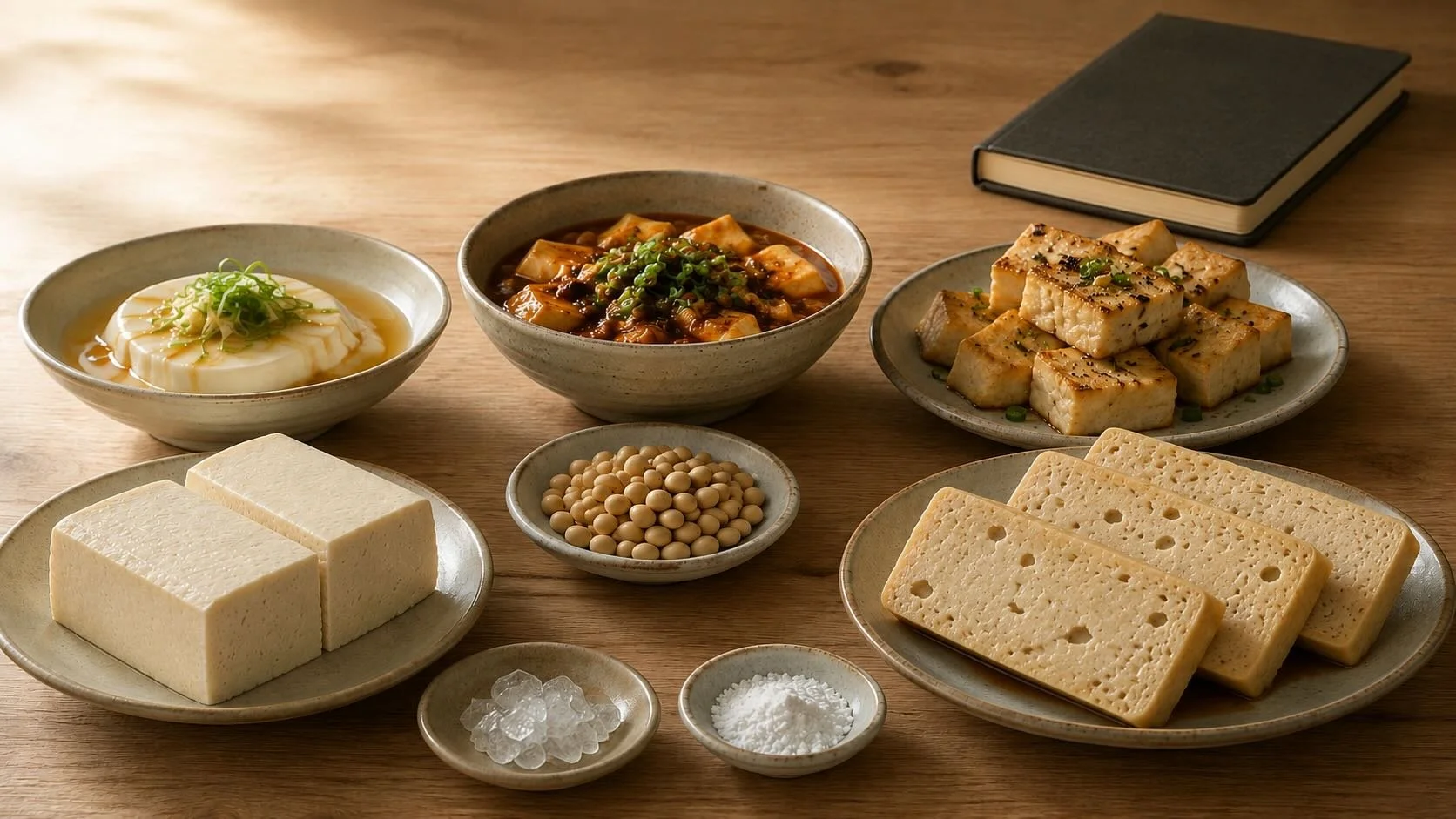
Tofu has been eaten across East and Southeast Asia for centuries, yet myths still shape how many people view and cook it. Some concern health; others come from treating every type of tofu as though it behaves in the same way.
Here is what the evidence—and the kitchen—actually tell us.
Myth 1: “Tofu Is Flavourless”
The reality
Mild is not the same as flavourless. Fresh tofu can have a delicate soybean aroma, gentle sweetness and a creamy or subtly mineral character. These qualities are valued in chilled, steamed and lightly seasoned dishes.
Tofu can also carry bold flavours, but success depends on more than pouring over a marinade. Salt, surface area, browning, sauce concentration and tofu texture all matter.
In the kitchen: Serve silken tofu chilled with a restrained dressing when you want its soybean character to remain noticeable. For greater intensity, tear or cut firm tofu into smaller pieces, brown it well and finish it in a concentrated glaze.
Chef’s note: Contrast can be more interesting than uniform seasoning. A deeply savoury crust surrounding a tender centre often creates a better eating experience than flavouring every part equally.
Myth 2: “Tofu Absorbs Marinade Like a Sponge”
The reality
Fresh tofu already contains considerable water. Marinades can move into its pores to some degree, but they usually flavour the surface and shallow openings far more effectively than the centre—especially in large, intact pieces.
An overnight soak therefore does not guarantee deeply seasoned tofu.
In the kitchen: Increase the available surface by slicing, tearing or lightly scoring the tofu. Season it directly, cook until the exterior is dry or browned, then add a reduced sauce that can cling to it.
Freezing and thawing firm tofu changes the structure more dramatically. Ice crystals create irregular cavities, allowing more sauce to enter after thawing and squeezing. The trade-off is a chewier, more porous texture.
Myth 3: “All Tofu Must Be Pressed”
The reality
Pressing is a technique, not a rule. It can remove some free moisture from firm or extra-firm tofu when a drier exterior is helpful, but it is unnecessary for many preparations. Pressing silken or soft tofu will usually damage it.
Choose tofu according to the result you want:
Silken: chilled dishes, dressings, soups and blending
Soft: steaming, gentle simmering and mapo tofu
Medium or firm: braising, pan-frying and stir-frying
Extra-firm: grilling, baking and robust handling
Frozen–thawed: porous structure and a chewy bite
Even firm tofu does not always need pressing. Draining it and drying the surface may be sufficient.
Myth 4: “Extra-Firm Tofu Is Always Best”
The reality
Extra-firm tofu is convenient because it holds together, but firmness is not a measure of quality. Using it for every dish can make tofu seem dry and monotonous.
Soft tofu creates a valuable contrast between a delicate centre and a strongly seasoned sauce. Its tenderness is fundamental to many versions of mapo tofu. Korean dubu jorim develops flavour through simmering, while Japanese agedashi-style tofu combines a light coating, fragile interior and savoury broth.
The best tofu is the one whose structure suits the dish.
Myth 5: “Crispy Tofu Requires Deep-Frying”
The reality
Crispness depends on moisture control, sufficient heat and space for steam to escape—not necessarily a deep fryer.
Dry the exterior, preheat the pan or oven and avoid overcrowding. A light starch coating can create a delicate shell, while excess wet marinade encourages steaming and slows browning.
When pan-frying, allow the tofu to form a crust and release readily before turning it. When baking, look for golden edges and a dry, lightly crisp surface rather than relying on a fixed cooking time alone.
Myth 6: “Tofu Has Little Nutritional Value”
The reality
Tofu provides protein containing all nine essential amino acids, along with iron and other nutrients. However, no single nutrition figure represents every product.
Protein, energy, fat and mineral content vary with soybean concentration, water content, coagulant and manufacturing method. Tofu set with calcium sulfate may provide substantial calcium, while nigari-set tofu may contain considerably less. Check the product’s nutrition information panel rather than assuming all firm tofu is nutritionally identical.
Serving tofu with vitamin C-rich vegetables, such as capsicum or broccoli, can also support the absorption of its non-haem iron.
Myth 7: “Tofu Is Too Processed to Be Healthy”
The reality
The word “processed” does not reveal a food’s nutritional quality.
Traditional tofu production involves soaking and grinding soybeans, heating and filtering the soy milk, coagulating its proteins and shaping the curds. Plain tofu commonly contains soybeans, water and one or more coagulants.
Flavoured, smoked and ready-to-eat tofu may contain additional salt, sugar or oil. Assess these products through their ingredients and nutrition panel—not simply by whether they have been processed.
Myth 8: “Soy Foods Disrupt Human Hormones”
The reality
Soy isoflavones are often called phytoestrogens, but they are not human oestrogen. They interact selectively and relatively weakly with oestrogen receptors.
Human evidence does not support the claim that ordinary soy foods disrupt reproductive hormones in healthy adults. Soy foods should also be distinguished from concentrated isoflavone supplements, which provide different doses and should not be treated as nutritionally equivalent.
Myth 9: “Tofu Damages the Thyroid”
The reality
Research has not shown that ordinary soy-food consumption meaningfully changes the principal thyroid hormones in iodine-sufficient people with normal thyroid function.
The more practical concern involves medication absorption—not tofu damaging the thyroid. Soy-containing meals can reduce the absorption of levothyroxine.
Because directions can vary with the medicine and its formulation, follow your product instructions and ask your pharmacist or doctor for personalised timing advice. Do not alter prescribed medication without professional guidance.
Myth 10: “Tofu Automatically Causes Weight Gain”
The reality
No individual food determines body-weight change. Tofu can contribute protein and satisfaction to a balanced meal, but the energy content of the finished dish depends on portion size and preparation.
Steamed tofu with vegetables differs considerably from heavily fried tofu in an oil-rich or sugary sauce. Neither preparation is automatically “good” or “bad”; the complete meal and overall eating pattern matter more than tofu’s presence.
One Important Safety Note
Soy is a recognised food allergen. Anyone with a diagnosed soy allergy should avoid tofu and follow appropriate professional advice.
Opened tofu is also perishable. Refrigerate it promptly, follow the package’s storage directions and use it within the recommended period. Smell alone cannot reliably establish food safety.
Final Takeaway
Tofu does not need to imitate meat, absorb an overnight marinade or become aggressively crisp to deserve a place on the plate. Its strength lies in its range: silken or dense, subtly seasoned or intensely glazed, tender or browned.
Understanding moisture, surface seasoning, heat and texture will improve tofu more reliably than following universal rules. Choose a tofu that suits the dish, respect its own character and let the cooking method do the work. That is where tofu stops being merely a substitute and becomes an ingredient worth mastering.
