
Compassion on a Plate: What Cooking Tofu Can Teach Us
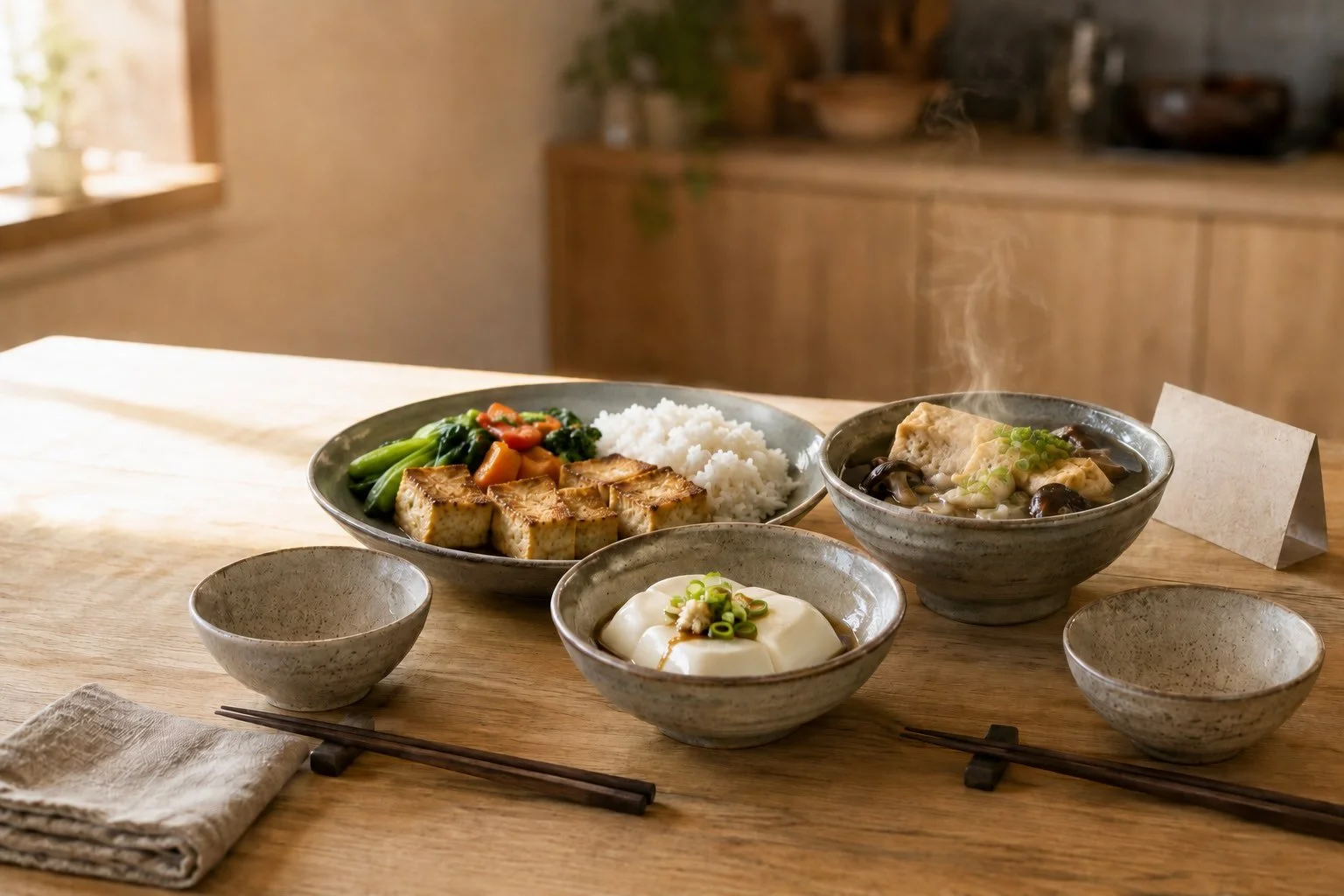
A block of tofu can look simple, but simplicity does not mean sameness. Silken tofu trembles under a spoon. Firm tofu can be drained, dried, torn or browned. Frozen-and-thawed tofu develops irregular cavities that hold broth differently. Fresh tofu may have a delicate soybean sweetness worth preserving rather than covering.
Learning to cook these forms well begins with a basic discipline: pay attention before deciding what they need.
That idea reaches beyond technique. Kindness also becomes more meaningful when we stop applying the same response to everyone. Sometimes care means helping. Sometimes it means listening, making room or doing less. In the kitchen and in our relationships, good intentions matter—but attention determines whether those intentions are genuinely helpful.
Attention Before Transformation
Tofu is often called a blank slate, as though it has no value until a cook gives it flavour. But well-made tofu is not empty.
Depending on the soybeans, coagulant, water, freshness and production method, tofu may taste gently nutty, sweet, mineral or slightly grassy. Its character can be quiet, but quietness is not absence. A restrained dressing may reveal more than a heavy marinade.
Compassion asks for the same kind of attention. When someone is struggling, it can be tempting to respond immediately with advice, optimism or a story from our own experience. Yet a person may not need to be transformed from distressed to cheerful. They may first need to feel heard.
Instead of saying, “Don’t worry—you’ll be fine”, we might ask:
“Would you like to talk about it, or would practical help be more useful?”
That small question leaves room for the other person to tell us what support means to them. It is the human equivalent of tasting before seasoning: observe first, then respond.
Different Textures Need Different Care
Not every tofu should be pressed.
Silken and soft tofu are generally handled as little as possible because their delicate texture is part of their appeal. Firm tofu intended for frying may benefit from draining and thorough surface drying. Pressing can remove additional moisture when a particular method requires it, but excessive pressure may make some tofu dry or cause it to split.
Frozen-and-thawed tofu behaves differently again. Ice crystals alter its internal structure, creating cavities that make it especially suited to broths, braises and strongly seasoned sauces.
There is no single “correct” treatment separated from the result we want.
People are equally varied. One friend may appreciate regular check-ins during a difficult period; another may need privacy. A colleague learning a task may want detailed guidance, while an experienced colleague may interpret the same guidance as unnecessary interference.
Kindness is therefore not simply about being gentle. It is about being responsive. Treating everyone identically may appear fair, but consideration sometimes requires us to recognise different circumstances, boundaries and needs.
Hospitality Begins with Listening
Cooking for someone can be a practical expression of care—but only when the meal considers the person receiving it.
Preparing tofu for a vegan guest is more thoughtful than leaving them with a few side dishes, but tofu alone does not make a meal inclusive. A considerate host might also ask about allergies, intolerances, religious requirements, preferred flavours and cross-contact concerns.
Even within plant-based eating, preferences vary widely. One guest may love the soft texture of silken tofu, while another may only enjoy tofu with a browned exterior. Some people cannot eat soy. Others may avoid alcohol-based seasonings or ingredients containing hidden animal products.
The aim is not to produce a flawless meal or interrogate a guest about everything they eat. A simple question is often enough:
“Is there anything you avoid, and what kinds of dishes do you enjoy?”
Listening prevents hospitality from becoming a performance in which the cook’s intentions matter more than the guest’s experience.
It also allows tofu to be served as a valued ingredient rather than a reluctant substitute. A carefully prepared tofu dish says more than, “I found something you can eat.” It says, “Your meal belongs at this table.”
Seasoning Without Erasing
Marinating is another technique often treated as essential to tofu, but much of a marinade’s flavour remains near the surface of an intact block. Cutting, scoring, tearing or freezing tofu can change how a sauce clings to or moves through its structure. In other preparations, a glaze, dressing or seasoned broth may work better than a long soak.
The goal is not always to make tofu taste like something else. Seasoning can complement its character rather than erase it.
Thoughtful communication follows a similar principle. Encouragement should support people without replacing their feelings with the response we would prefer them to have. Honesty also has a place: compassion does not require us to avoid difficult conversations or accept harmful conduct.
Clear boundaries can be kind. They tell others what is acceptable while protecting our own wellbeing. The important distinction is between clarity and cruelty. We can address a missed commitment, for example, without attacking someone’s character:
“The delay affected the rest of the work. Can we discuss what happened and agree on a realistic next step?”
The issue remains visible, but blame does not dominate the conversation.
Kindness Is Not Perfection
Meals go wrong. Tofu sticks to the pan, seasoning becomes unbalanced, or a carefully planned dish fails to suit the person eating it. Relationships contain similar moments of misjudgement.
Kindness does not mean pretending those mistakes did not happen. It means acknowledging their effect, listening without immediately defending our intentions and deciding what should change.
Some harm cannot be resolved by one apology, and reconciliation is not always appropriate or safe. Responsibility may require sustained change, professional support or respectful distance. Compassion includes boundaries—not only for others, but also for ourselves.
The same generosity should extend to the cook. Caring for people does not demand elaborate food, expensive ingredients or endless emotional energy. A simple bowl of tofu and rice prepared with genuine consideration may express more care than a complicated meal made through exhaustion and resentment.
A Small Practice at the Table
The next time you prepare tofu for someone, begin with one question: what would make this meal feel welcoming to them?
The answer might influence the tofu you choose, the texture you create, the level of chilli you add or the precautions you take. It might lead to a delicate chilled silken tofu, a deeply flavoured braise or crisp-edged firm tofu served with a familiar sauce.
The specific dish matters less than the attention behind it.
Final Takeaway
Tofu does not teach us that everything improves when enough pressure or flavour is applied. It offers a quieter lesson: understand what is in front of you before intervening.
Different tofu needs different handling. Different people need different forms of care. In both cases, attention helps us recognise when to act, when to ask and when to leave something beautifully intact.
A kinder world is unlikely to arrive through one dramatic gesture. It can begin with ordinary, repeatable choices—including making room at the table and preparing one meal in which another person feels genuinely considered.
