
A meal can be salty, spicy and full of ingredients yet still feel flat. Another dish, made with tofu, vegetables and a few seasonings, can leave you wanting another bite.
The difference often lies in how the flavours work together.
Think of depth as a satisfying foundation, such as the savouriness of mushrooms or the sweetness of softened onions. Complexity comes from distinct flavours and textures that complement that foundation.
Neither requires a long shopping list. The useful question is: what would make the next mouthful more enjoyable?
1. Give the Dish a Clear Direction
Before reaching for seasonings, decide what you want the meal to feel like: earthy and comforting, bright and herbal, or smoky and warming.
For an earthy tofu dish, you might choose mushrooms, garlic and thyme. For a brighter meal, try ginger, lime and coriander.
These are starting points, rather than strict pairing rules. Choosing one or two leading flavours simply makes later decisions easier.
Give each addition a purpose. If smoked paprika already provides the main character, several other powerful seasonings may make it harder to appreciate.
2. Develop Flavour Before Adding Liquid
The order of cooking can matter as much as the ingredients.
For golden tofu, drain firm tofu and pat its surfaces dry. A particularly wet block may benefit from gentle pressing; dense, well-drained tofu may need little extra preparation.
Warm a thin layer of oil in a frying pan over medium to medium-high heat. Arrange the pieces with space between them, cooking in batches if necessary. Let the underside become golden before turning. If it sticks, give it a little longer rather than forcing it loose.
Allow mushrooms to release their moisture, then continue cooking until the liquid reduces and their surfaces begin to brown. Soften onions longer when a sweeter background suits the dish.
After browning, add a splash of water or stock and loosen the golden residue into the sauce. If the residue is blackened and smells burnt, clean the pan before continuing.
Browning is one tool. A delicate tofu soup can develop its character through gentle simmering and aromatic ingredients instead.
3. Build a Savoury Foundation
Tomatoes, mushrooms, miso and soy sauce offer different ways to bring umami to plant-based food.
Some combinations reinforce one another. The umami effect of glutamate can be strengthened by guanylate, found in dried shiitake mushrooms. This makes ingredients such as tomatoes and dried shiitake useful partners.
Try a little miso in a mushroom sauce, or rehydrated, sliced shiitake in a tomato stew.
To mix miso evenly, loosen it with a little warm cooking liquid first. Stirring it in near the end can retain more of its aroma; longer cooking gives a different result.
Taste before adding more. Savoury condiments often contribute salt too, and several spoonfuls can overwhelm the vegetables you wanted to highlight.
4. Use Timing to Create Different Aromas
Our experience of flavour combines taste with aroma, texture and temperature. When you add an aromatic ingredient therefore changes the meal.
Garlic gently cooked at the beginning gives a different effect from raw garlic in a dressing. Ginger simmered in a sauce becomes part of its background; a little freshly grated ginger near the end adds a more immediate lift.
You can create this contrast with one ingredient. Cook spring onion whites with the base, then scatter sliced green tops over the finished dish.
For ground spices, lower the heat and stir constantly in a little oil until fragrant. Have the next liquid or moist ingredient ready to add promptly. If the spices darken rapidly or smell acrid, the pan is too hot.
5. Balance Richness and Add Contrast
A creamy or deeply savoury dish may need brightness rather than another strong seasoning.
Test this in a separate spoonful: add a drop or two of lemon juice or vinegar, then compare it with an unchanged mouthful. If it tastes better, adjust the main dish gradually.
Texture offers another way forward. Golden tofu against soft beans, toasted seeds over tender vegetables, or crisp cucumber beside a smooth sauce can make a meal more interesting.
Choose one useful contrast. A garnish earns its place when it changes the eating experience.
Put the Layers Together
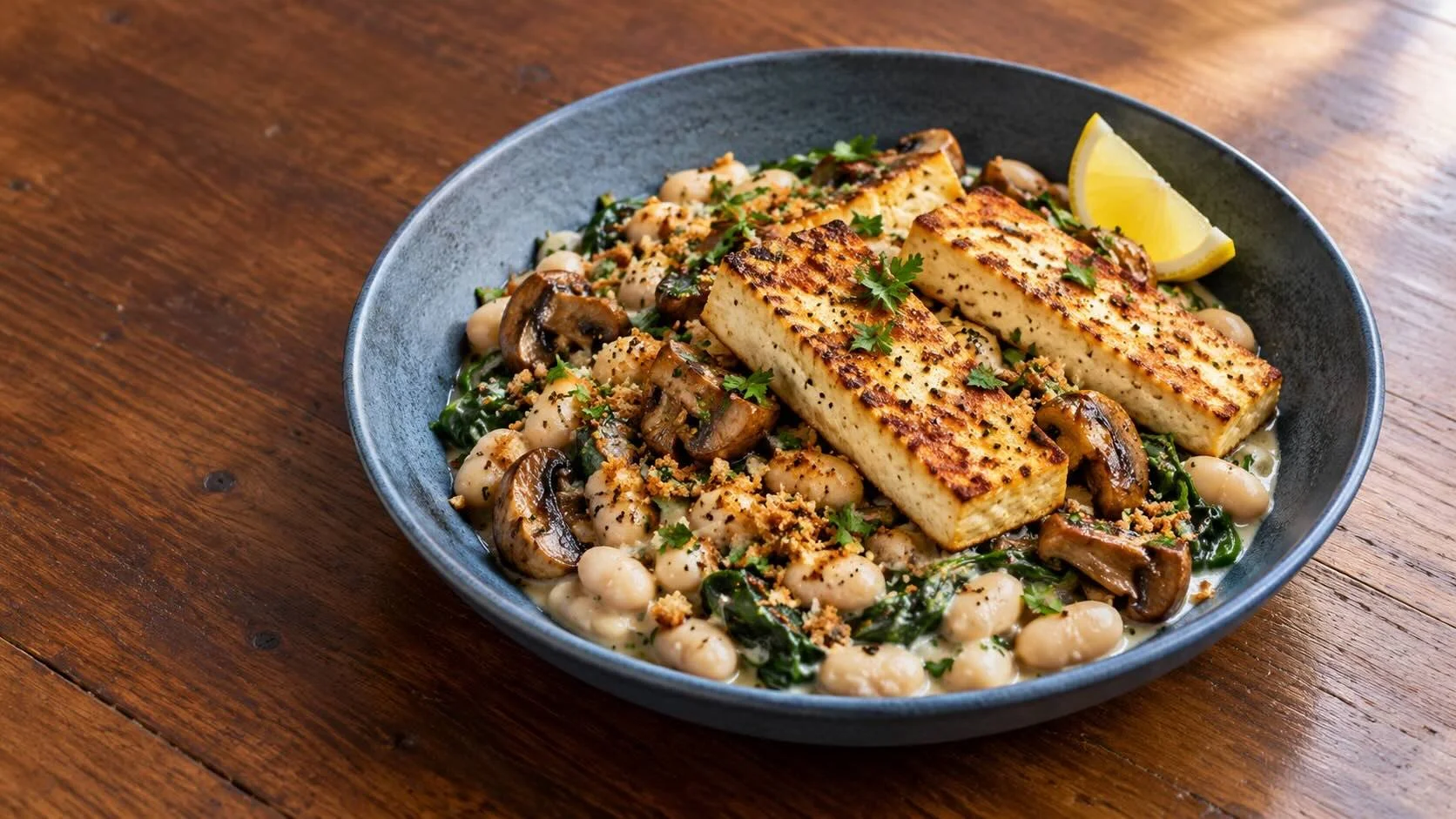
Consider golden tofu served with creamy white beans, browned mushrooms and spinach.
The beans provide a mellow base. Mushrooms and a little miso bring savouriness. Garlic and thyme establish the aromatic direction. Tofu adds a firmer bite, while lemon, parsley and toasted breadcrumbs provide brightness, freshness and crunch.
You can simplify this meal. Keep the elements that make the biggest difference to you.
When the Dish Still Feels Flat
Bland throughout? Test a small pinch of salt in one spoonful before adding more ingredients.
Salty enough but lacking savouriness? Try a little mushroom, tomato or miso that suits the dish.
Rich but heavy? Test a little acidity.
Flavourful but repetitive? Add a fresh herb or a contrasting texture.
Too intense? Add an appropriate mild component, such as unseasoned beans, tofu or grains, then reassess.
Change one thing at a time so you can recognise what helped.
Common Mistakes
Adding several strong condiments before tasting.
Cooking delicate herbs as long as the main ingredients.
Crowding the pan when aiming for browning.
Making every component equally rich, salty or spicy.
Final Takeaway
Depth and complexity grow from clear choices: develop a foundation, add complementary aromas, and finish with balance or contrast.
Start with one familiar tofu meal and improve one step. A more enjoyable plant-based meal is a small change worth repeating.
