
The Many Textures of Bean Curd – A Guide to Cooking Them
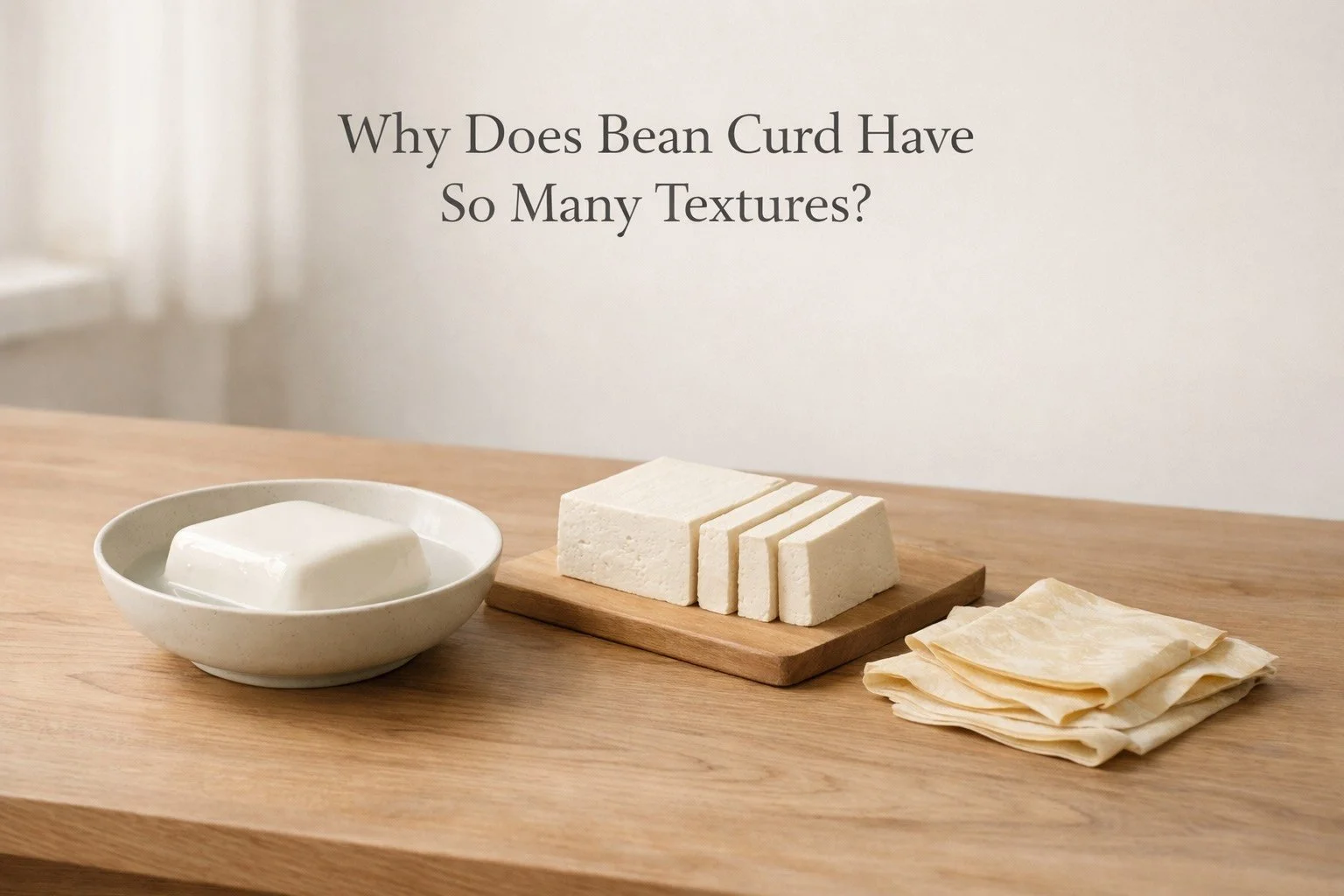
Bean Curd Is Not One Texture — It’s a Spectrum
One of the biggest misunderstandings about tofu (or bean curd) is treating it as a single ingredient. In reality, bean curd exists on a texture spectrum, shaped by how the soy milk is coagulated, handled, and pressed.
Understanding texture is the key to loving tofu. When tofu disappoints, it’s rarely the flavour — it’s usually the wrong texture used in the wrong job.
This guide breaks down the major textures of bean curd and explains what each one is good at, how it behaves under heat, and how to cook it with confidence.
Silken Bean Curd (嫩豆腐 / Silken Tofu)
Texture: Custardy, smooth, spoon-soft
How it’s made: Coagulated directly in its container, never pressed
Silken bean curd is a continuous gel, not a sponge. It holds water inside its structure rather than between curds, which is why pressing ruins it.
Best uses
Desserts (mousse, cheesecakes, puddings)
Blended sauces and creams
Gentle simmered dishes (mapo tofu, tofu soups)
How to cook it
Handle minimally
Heat gently
Blend rather than chop when smoothness matters
Tofu World tip: Silken tofu excels when treated like dairy — think custard, cream, or ricotta — not meat.
Soft Bean Curd
Texture: Delicate but sliceable
How it’s made: Lightly set, minimal handling
Soft tofu sits between silken and firm. It holds its shape better than silken but still breaks easily.
Best uses
Soups and stews
Braised dishes
Steamed preparations
How to cook it
Add late in cooking
Avoid aggressive stirring
Let sauces flow around it
This is tofu for people who love tenderness and subtlety.
Medium & Medium-Firm Bean Curd
Texture: Springy, resilient, gently porous
How it’s made: Light pressing after curd formation
This is the most versatile category — often the best starting point for beginners.
Best uses
Stir-fries
Braises
Pan-frying
Grilling with care
How to cook it
Dry the surface before frying
Season boldly on the outside
Let it brown before moving
Medium tofu adapts. It doesn’t fight back.
Firm & Extra-Firm Bean Curd
Texture: Dense, chewy, meaty
How it’s made: Heavily pressed to expel free water
This is the tofu most people picture — and often misuse.
Best uses
Crispy cubes
Skewers
Baking and air-frying
Crumbling as mince
How to cook it
Focus on surface seasoning, not soaking
Use starches for crispness
High heat = better texture
Tofu World tip: Pressing helps texture, but flavour lives on the surface. Think crust, not marinade.
Fried Bean Curd (Aburaage & Tofu Puffs)
Texture: Spongy, airy, oil-infused
How it’s made: Deep-fried tofu that expands and dries internally
These golden puffs behave completely differently from fresh tofu.
Best uses
Curries
Soups
Stuffed tofu pockets
Saucy dishes
How to cook it
Briefly blanch to remove excess oil
Let the sauces soak into the interior
Avoid dry cooking
This is one of the only tofu types that truly absorbs liquid.
Tofu Skin (Yuba)
Texture: Silky, chewy, layered
How it’s made: Skimmed soy protein film from heated soy milk
Yuba isn’t pressed tofu — it’s a protein-lipid sheet, rich and flexible.
Best uses
Rolls and wraps
Noodle-like strips
Layered braises
How to cook it
Rehydrate gently if dried
Avoid over-soaking
Treat it like fresh pasta, not tofu
Choosing the Right Bean Curd: A Simple Rule
Instead of asking “How do I cook tofu?”, ask:
What texture does this dish need?
Creamy → silken
Tender → soft
Balanced → medium
Chewy → firm
Spongy → fried
Silky-layered → yuba
Once texture and dish align, tofu stops being confusing — and starts being joyful.
Final Takeaway: Texture Is the Language of Bean Curd
Bean curd doesn’t ask to be disguised. It asks to be understood.
Each texture carries intention, tradition, and possibility. When we cook tofu with respect for its structure — not against it — we unlock a quieter, deeper kind of deliciousness.
And in doing so, we take one more small step toward a kinder, more thoughtful way of eating. 🌱
