
Fermented Black Beans (Douchi): Umami’s Bold Secret
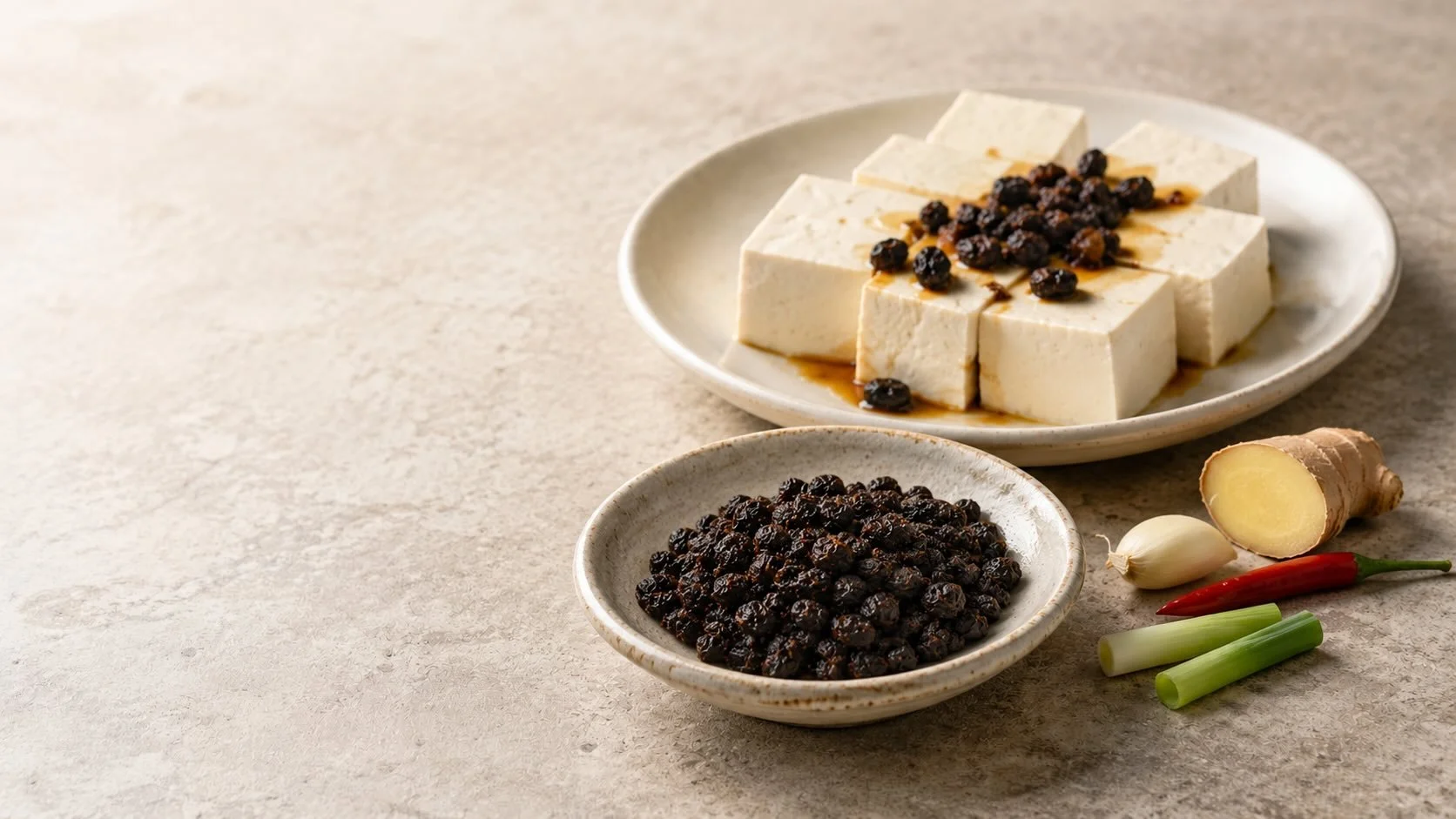
A few wrinkled black beans can transform a dish. Douchi is salty, earthy, faintly bitter and deeply savoury, with aromas recalling aged cheese, soy sauce or dark chocolate. Used carefully, it adds fermented depth that fresh aromatics and salt cannot reproduce.
What Is Douchi?
Douchi (豆豉) is a traditional Chinese condiment made by fermenting cooked soybeans, commonly black soybeans. Despite the English name “fermented black beans”, it is unrelated to the black turtle beans used in Latin American cooking. The beans usually remain individually identifiable, although fermentation leaves them dark, soft, wrinkled and intensely flavoured.
Douchi also differs from prepared black bean sauce, which generally combines it with garlic, oil, sugar, soy sauce or starch. Sauce is convenient, but its flavour and salinity are already set. Plain douchi gives cooks more control.
An Ancient Flavour with Many Traditions
Fermented soybean condiments have an exceptionally long history in China. Early forms known as shi appear in texts and archaeological evidence from more than two millennia ago. They were valued before modern refrigeration because fermentation, salting and drying helped preserve a nutritious harvest while creating powerful flavour.
Douchi later became embedded in regional Chinese cuisines rather than remaining uniform. Well-known traditions include Yangjiang douchi from Guangdong and Yongchuan douchi from Chongqing. Some versions are dry and loose; others are moister. Aroma, saltiness, sweetness and texture shift with the soybean, microbial culture, climate, seasoning and maturation.
Traditions are often classified by dominant fermenters—including Aspergillus, Mucor, Rhizopus or bacteria—although their microbial communities may be more complex.
How Fermentation Builds Umami
Soybeans begin with abundant protein, fat and carbohydrate, but much of their flavour potential is locked inside large molecules. During fermentation, microbial enzymes break proteins into smaller peptides and amino acids, while other reactions transform carbohydrates and fats. The resulting mixture of savoury, aromatic, sweet and bitter compounds gives douchi its distinctive complexity.
For fuller aroma, briefly cook chopped douchi with garlic or ginger in a little oil over low to medium heat. Add liquid before the small beans scorch.
Why Douchi and Tofu Work Together
Tofu offers moisture, gentle soybean sweetness and a clean canvas; douchi supplies salinity, aroma and concentrated savouriness. Their shared origin creates harmony; different processing creates contrast.
Firm tofu can be pan-seared before douchi, garlic, ginger and a splash of water are added to form a light coating. Soft tofu suits steamed or gently braised dishes where the beans perfume the surrounding liquid. Douchi also works with tofu skin, mushrooms, aubergine, capsicum, green beans and leafy greens.
Do not expect a thick block of tofu to absorb flavour deeply. Douchi mainly seasons its surface and the sauce around it. Smaller pieces, torn edges and sufficient coating create a more even experience. This is more reliable than extending marinating time.
How to Use It Without Overpowering Food
Start with one to two teaspoons of chopped douchi for a dish serving two, then adjust. Brands differ, so taste a tiny piece first. Whole beans create occasional bursts of intensity; finely chopped beans distribute flavour more evenly. Crushing some while leaving others intact provides both effects.
Rinsing depends on the product. If loose, dry-packed douchi tastes excessively salty, a quick rinse can soften it, but prolonged soaking washes away character. Do not automatically rinse oil-packed, brined or paste-coated varieties; follow the label and account for their accompanying seasoning. If the beans taste balanced, use them directly. Reduce soy sauce, stock powder and added salt until the dish is nearly finished.
Pair it with ingredients that give contrast. Garlic, ginger, spring onion and chilli brighten its darkness. A small amount of sugar can round bitterness without making the dish sweet. Rice wine or vinegar adds lift, while water or unsalted stock spreads concentrated flavour. Oil helps release aroma, but douchi does not require a heavy sauce.
Buying, Storing and Reading the Label
Look for douchi in Chinese grocers, Asian supermarkets or the international aisle, sold in bags, boxes or jars. The ingredient list may be as simple as soybeans, salt and a fermentation culture, or may include wheat, spices, sugar, alcohol or preservatives. Anyone avoiding gluten must check the specific label rather than assuming all douchi is gluten-free.
Choose intact, characteristically wrinkled beans without unexpected wetness or damaged packaging. Storage instructions vary: keep unopened products as directed, then reseal tightly after opening and refrigerate when the label requires it. Always use a clean, dry utensil. Discard the product if it develops unusual coloured growth, an unexpectedly rotten smell or other changes inconsistent with its original appearance.
Nutrition: Condiment, Not Superfood
Douchi retains soybean-derived protein and compounds changed by fermentation, but portions are small. Claims that it transforms gut health or prevents disease exceed what eating it as a seasoning can establish. Fermentation does not automatically make a product probiotic, particularly when processing or cooking reduces living microorganisms.
The practical nutritional issue is sodium. Amounts vary, but salted douchi can be concentrated, so use it to replace some other salty seasonings rather than adding it on top of them. People following a sodium-restricted diet should compare labels and keep portions modest. Those with a soy allergy must avoid it.
Common Mistakes
Using douchi like ordinary beans makes a dish aggressively salty. Adding it alongside full quantities of soy sauce doubles the seasoning. Burning it produces harshness, while hiding it under a sugary bottled sauce loses its distinctive aroma.
Final Takeaway
Douchi proves that a tiny amount of an ingredient can carry centuries of craft and remarkable flavour. Its boldness should not be feared, only measured. Taste the product, chop it according to the effect you want, balance its salt and protect it from scorching.
With tofu, douchi brings two expressions of the soybean together. One is fresh, mild and tender; the other fermented, concentrated and assertive. Together, they show how plant-based food can build depth without meat—and how an ancient condiment can inspire kinder, richly satisfying meals today.
