
Seaweed Flakes and Salt: An Everyday Touch of Ocean Umami
Introduction — Where Flavour Actually Happens
Most cooking focuses on what goes into food.
Marinades. Sauces. Long cooking.
But flavour isn’t experienced deep inside a dish.
It’s experienced at the surface —where food meets the tongue.
Seaweed flakes and seaweed salt belong to a different category of seasoning.
They don’t build flavour from within.
They adjust it at the surface.
A pinch doesn’t make a dish heavier.
It makes it clearer.
The Surface Umami Concept
Not all umami behaves the same way.
Heavy umami (built into the dish)
miso
soy sauce
mushrooms
slow cooking
These create depth, richness, and weight.
Light umami (applied at the surface)
seaweed flakes
seaweed salt
These don’t add mass.
They shift perception.
Seaweed works differently because its flavour is:
naturally rich in clean glutamates
low in the heavier compounds created by fermentation
carried by delicate ocean aromas
So instead of layering flavour…
It brings existing flavours into focus.
Seaweed Salt — Rethinking Seasoning
Salt is usually about control.
Add more → food tastes stronger.
Seaweed salt changes that relationship.
It combines:
salinity (structure)
umami (depth)
mineral notes (clarity)
So instead of seasoning harder…you’re seasoning more precisely.
In practice, this often means:
using less salt overall
getting a rounder, more balanced taste
finishing dishes with intention rather than force
A small pinch can feel like a complete adjustment.
Surface, Not System — How to Use It
Most ingredients are built into a dish.
Seaweed works best when it’s added at the end.
Because that’s where:
aroma stays intact
texture remains visible
flavour is felt immediately
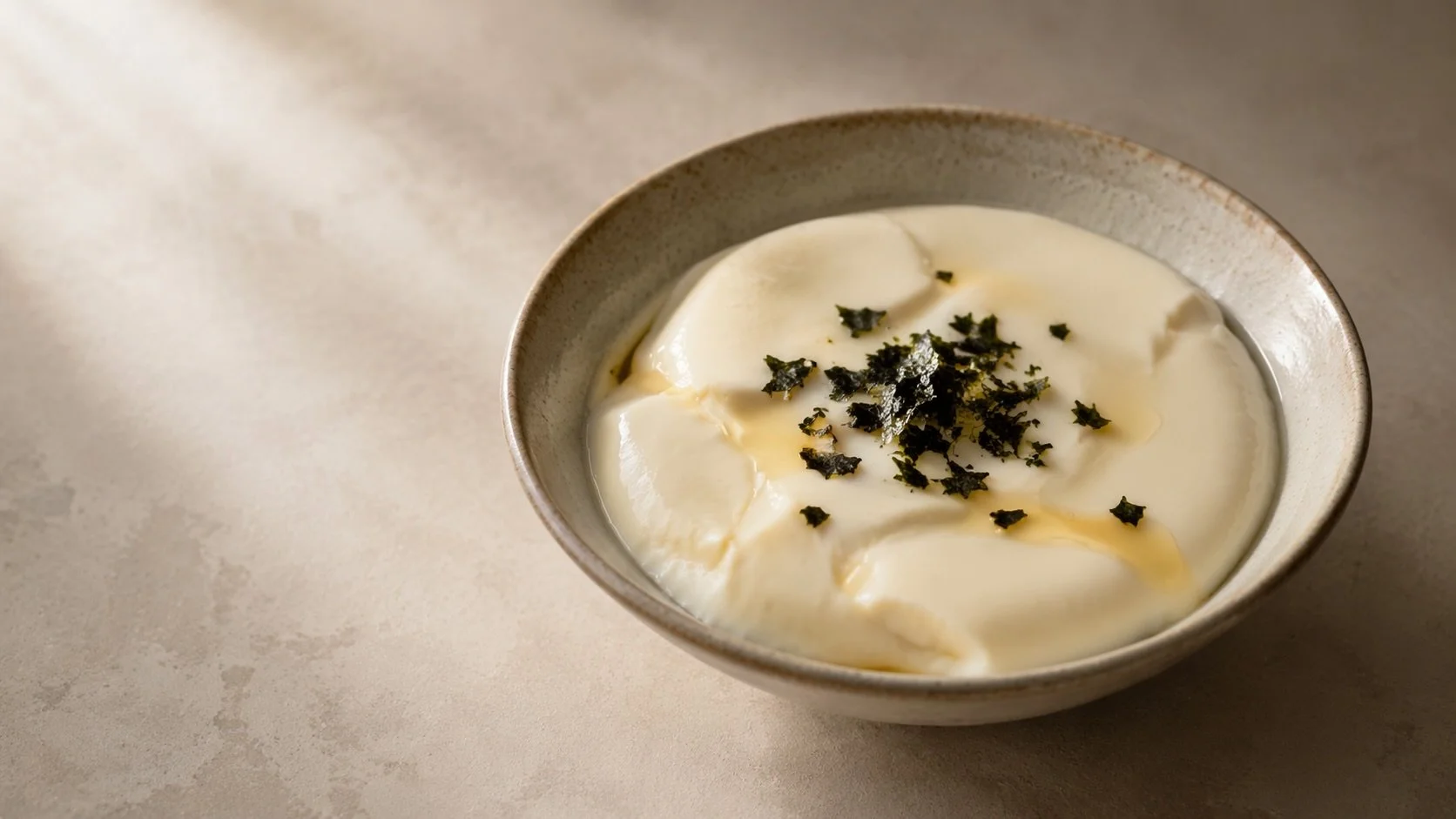
1. Over tofu
silken tofu
crispy tofu cubes
tofu scramble
cold tofu dishes
Tofu is quiet.
Seaweed gives it direction.
2. Over roasted vegetables
pumpkin
carrots
potatoes
cauliflower
broccolini
Roasting builds sweetness.
Seaweed restores balance.
3. Over simple bases
rice
soba/udon
quinoa
barley
A plain base becomes layered — without extra sauce.
4. Over snacks
popcorn
rice crackers
avocado toast
nuts
This is where it becomes a habit.
Not cooking — just finishing.
5. In plant-based “seafood” (lightly)
chickpea “tuna”
tofu “crab”
mushroom chowder
A small amount suggests the ocean.
Too much tries to imitate it.
Cooking with Awareness
Seaweed is naturally concentrated — not just in flavour, but in minerals.
A small pinch goes a long way, both for taste and for balance.
Some varieties, especially kelp, are very high in iodine. Others may carry trace minerals depending on where they’re grown. This doesn’t make them unsafe — it simply means they’re best used thoughtfully rather than heavily.
Choosing brands that publish purity testing is a simple way to cook with more confidence.
Like many powerful ingredients, seaweed works best when used lightly and consistently — not in excess.
Why This Works So Well with Tofu
This pairing is structural — not just culinary.
Tofu is:
high in water
soft in structure
resistant to deep flavour penetration
So instead of forcing flavour inward…
You let it exist where it matters most.
When seaweed meets tofu:
it lightly absorbs surface moisture
softens just enough to cling
creates a thin layer of flavour
Right at the point of contact.
Simple ways to feel it
silken tofu + soy + ginger + seaweed flakes
pan-seared tofu + seaweed salt finish
crispy tofu bowl + roasted veg + seaweed
cold tofu + sesame oil + vinegar + seaweed
Nothing complicated.
Just a precise final step.
Final Takeaway — Less, Placed More Precisely
Most cooking is about adding more.
More sauce. More seasoning. More layers.
Seaweed offers a different idea.
That flavour doesn’t always need to be built.
Sometimes it just needs to be placed —exactly where it can be experienced.
A pinch doesn’t make food louder.
It makes it clearer.
