
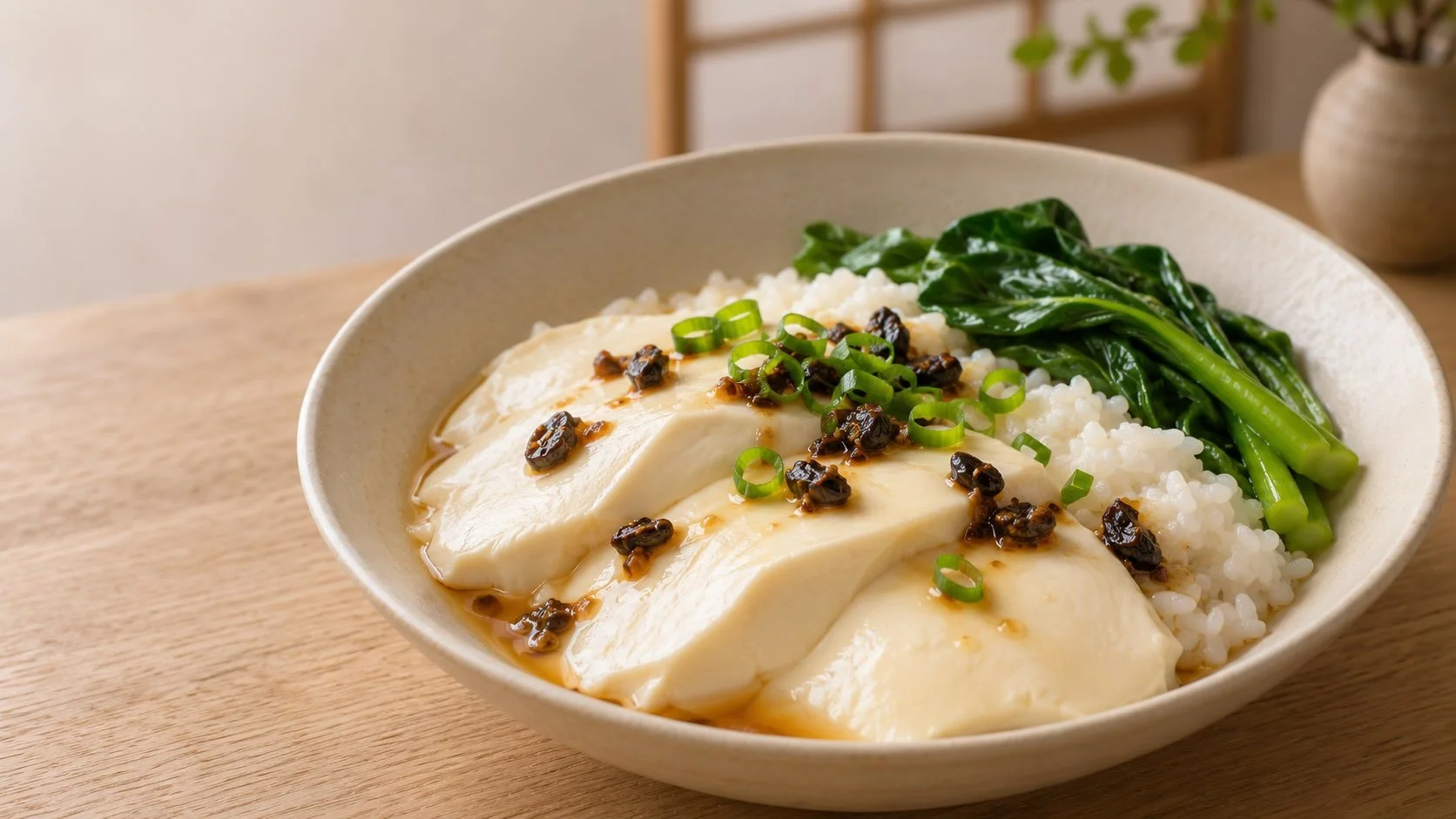
A bowl of tofu and rice can taste perfectly well salted and still feel as though something is missing. Stir a little miso into a spoonful of warm water and drizzle it over the tofu. The change is easy to taste. There’s saltiness, of course, but there’s also a savoury note that carries through the rice and makes the next bite worth taking.
That’s one way to recognise umami in everyday cooking. Fermentation can bring it out, but choosing a fermented ingredient is also a decision about aroma, texture and where you want the flavour to land.
What fermentation does to flavour
Umami is the savoury taste you can find in foods as different as ripe tomatoes, dried shiitake and soy sauce. One of its main contributors is free glutamate. Soybeans already contain glutamate as part of their proteins. During the making of miso and traditionally brewed soy sauce, enzymes break some of those proteins into smaller fragments and release individual amino acids. Once freed from the protein, glutamate can contribute directly to the taste you perceive.
Take a sniff as well as a taste. A brewed soy sauce might smell malty or lightly toasted, while a spoonful of miso can have a mellow sweetness. Those impressions come from a mix of taste and aroma. The ingredients, microorganisms and methods used to make miso all shape that mix, which helps explain why two jars labelled ‘miso’ can taste quite different.
Fermentation can lead in other directions, too. A forkful of sauerkraut can wake up a rich tofu sandwich mainly through tang and crunch. That kind of contrast is worth seeking out when the filling already tastes savoury.
Choose a seasoning for the bite you want
Miso for a smooth, even savouriness. This Japanese fermented paste disperses into broth or clings to tofu in a dressing. For a simple warm lunch, stir a teaspoon of miso into a tablespoon of warm water, then add a little grated ginger and spoon it over soft tofu and rice. For soup, heat the broth and tofu first, then turn off the heat. Loosen the miso in a ladleful of hot broth and stir it back in just before serving. Since heating changes the aroma of miso soup, adding miso at the end helps preserve its aroma.
Brewed soy sauce for a light coating. Its thin consistency makes it easy to spread across a pan of tofu and greens. Pat firm tofu dry and sear it in a little oil. Let the first side turn golden and lift easily before flipping. Once both sides are browned, lower the heat and toss the tofu briefly with a little soy sauce and water. You get a browned surface with a savoury coating and a mild centre. Try a bite with the rice or noodles before adding another splash. The seasoning that tastes strong straight from the pan may be just right in a full mouthful.
Douchi for little bursts of flavour. These Chinese fermented soybeans, commonly made with black soybeans, have a concentrated aroma that varies with how they are made. Start with a small pinch. If the beans are visibly coated in salt, give them a quick rinse and pat them dry. Roughly chop them and stir them into softened garlic and spring onion, then add a splash of water and spoon the mixture over warm tofu. Leave a few pieces coarse if you enjoy catching a stronger savoury note every few bites.
Pair umami before reaching for more salt
Free glutamate and certain other compounds can make each other’s savoury effect stronger. One partner is guanylate, which you’ll find in dried shiitake. That makes a broth of dried shiitake and miso a good place to taste how two ingredients can work together. The mushrooms bring their own earthy aroma and the miso brings salt as well as glutamate, so there’s more going on in the bowl than the interaction alone.
Start by rehydrating the dried shiitake in cool water in the fridge until pliable. Strain the soaking liquid to remove any grit, then simmer the sliced mushrooms in it until tender. Warm some soft tofu in the broth, then turn off the heat and stir in the loosened miso a little at a time. Taste as you go. If the soup gets too salty, add a splash of unsalted broth or water.
Try it on one dinner
Start with tofu and cabbage over rice. Before seasoning the bowl, set aside three bites, each with a little tofu, cabbage and rice. Leave the first plain, add a few grains of salt to the second and add a few drops of diluted soy sauce to the third. Taste them in that order. Beyond saltiness, what do you notice in the soy sauce bite? You might pick up a toasted aroma or a fuller savoury taste. The bites may differ in saltiness, so use the comparison to decide which seasoning you prefer.
Season the bowl a little at a time and taste a full bite before adding extra salt. The rice, greens and any dressing all affect how salty the tofu tastes at the table.
You can use the same approach with leftovers. If yesterday’s tofu bowl already has a rich sauce, a spoonful of tangy fermented cabbage might give it the lift you want. If the rice and greens taste a little spare, a drizzle of ginger miso might be enough.
Final Takeaway
Choose the fermented ingredient for the job you want it to do. Let miso round out a broth, soy sauce lightly coat browned tofu or douchi give a soft dish pockets of intense flavour. Start with one bite of a meal you know and season the rest once you’ve tasted the difference. That’s a small way to make another tofu dinner worth coming back to.
