
The Tofu Sear Secret – Why Heat Control Changes Everything
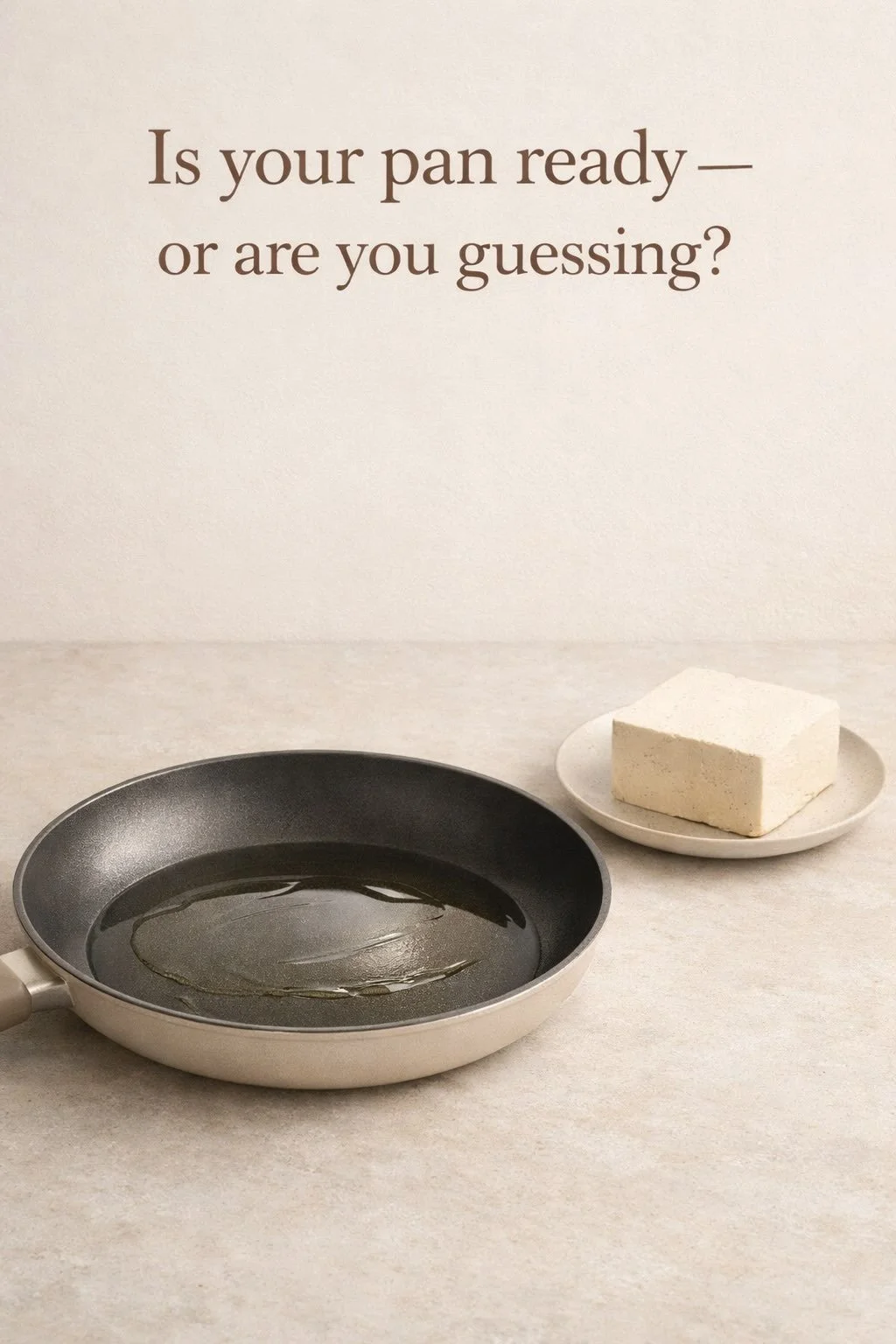
Tofu doesn’t fail in the pan because it lacks flavour.
It fails because heat is misunderstood.
Most tofu problems — sticking, tearing, uneven browning, rubbery centres — trace back to one issue: heat applied without intention. Once you understand what heat is actually doing to tofu’s structure, pan-searing stops feeling unpredictable and starts feeling precise.
This isn’t about tricks.
It’s about timing, temperature, and restraint.
What Tofu Really Is (And Why That Matters)
Tofu isn’t fibrous like meat.
It’s a protein–water gel.
Inside every block is a three-dimensional soy protein network holding water in place. When heat enters that system, two things happen at once:
Surface water evaporates
Proteins tighten and stabilise
The goal of searing isn’t to “cook tofu through”.
It’s to create a controlled temperature gradient:
Hot, dry surface → browning and release
Cooler, moist interior → tenderness and structure
If heat is wrong — too low, too high, or rushed — that gradient never forms.
Why Tofu Sticks (And Why It’s Not the Pan’s Fault)
Tofu sticks when surface moisture prevents temperature rise.
As long as water is present, the surface temperature can’t exceed 100 °C. And without higher temperatures, two critical things can’t happen:
Maillard reactions don’t begin
Natural release doesn’t occur
When tofu is placed into a pan that isn’t properly heated, proteins bond to microscopic pores in the metal. You feel resistance, reach for the spatula — and the tofu tears.
Sticking isn’t stubbornness.
It’s physics.
The Sear Window: Where Everything Changes
A proper tofu sear happens in a narrow but reliable window:
Pan preheated thoroughly
Oil shimmering, not smoking
Tofu placed down and left alone
In this window:
Surface water flashes off
Temperature rises past evaporation limits
A dry crust forms
Proteins contract and detach naturally
This is why tofu suddenly “lets go” when it’s ready.
Release isn’t forced — it’s earned.
Why High Heat Alone Doesn’t Work
Cranking the heat feels logical — but it backfires.
Excessive heat causes:
Rapid surface dehydration before internal stability
Uneven browning
Tough or brittle outer layers
Increased oil absorption
Tofu responds best to moderate, sustained heat, not aggression. Unlike steak, it doesn’t benefit from thermal shock. It benefits from controlled dehydration over time.
Heat isn’t about intensity.
It’s about duration and direction.
The Role of Oil (More Than Lubrication)
Oil isn’t just there to stop sticking.
It serves three structural roles:
Fills pan micro-pores, preventing protein bonding
Transfers heat evenly across the tofu surface
Slows moisture loss, buying time for crust formation
Too little oil leads to patchy browning.
Too much oil cools the pan and delays searing.
A thin, even film is enough — tofu doesn’t want to fry, it wants to set.
When to Flip (The Most Common Mistake)
Flip tofu once — and later than you think.
Signs it’s ready:
Edges turn golden before the centre
Tofu slides easily when nudged
The surface feels firm, not wet
If you flip early, you reset the process.
If you flip repeatedly, you prevent crust formation altogether.
Searing is patient work.
Heat Control Is Flavour Control
A proper sear isn’t just about texture — it’s flavour architecture.
When tofu browns:
Amino acids and sugars react
Savoury complexity develops
Marinades adhere instead of sliding off
Sauces cling rather than pool
This is why seasoning tofu after a good sear often tastes better than marinating it beforehand. Structure first. Flavour second.
Common Heat Mistakes (And What To Do Instead)
Mistake: Cold pan, then tofu
→ Fix: Preheat longer than feels necessary
Mistake: Crowding the pan
→ Fix: Space allows moisture to escape
Mistake: Constant flipping
→ Fix: One flip, full contact time
Mistake: Blaming tofu quality
→ Fix: Fix the heat before changing ingredients
Final Takeaway: Heat Is the Ingredient
Tofu doesn’t need tricks.
It needs respect for heat.
Once you stop treating heat as a blunt tool and start using it as a structural guide, tofu becomes predictable, reliable, and deeply satisfying.
Crisp edges.
Tender centres.
Clean release.
That’s not luck — that’s heat control.
And once you master it, tofu stops being difficult and starts being deliberate. 🌱
