
The Architecture of a Great Tofu Bowl
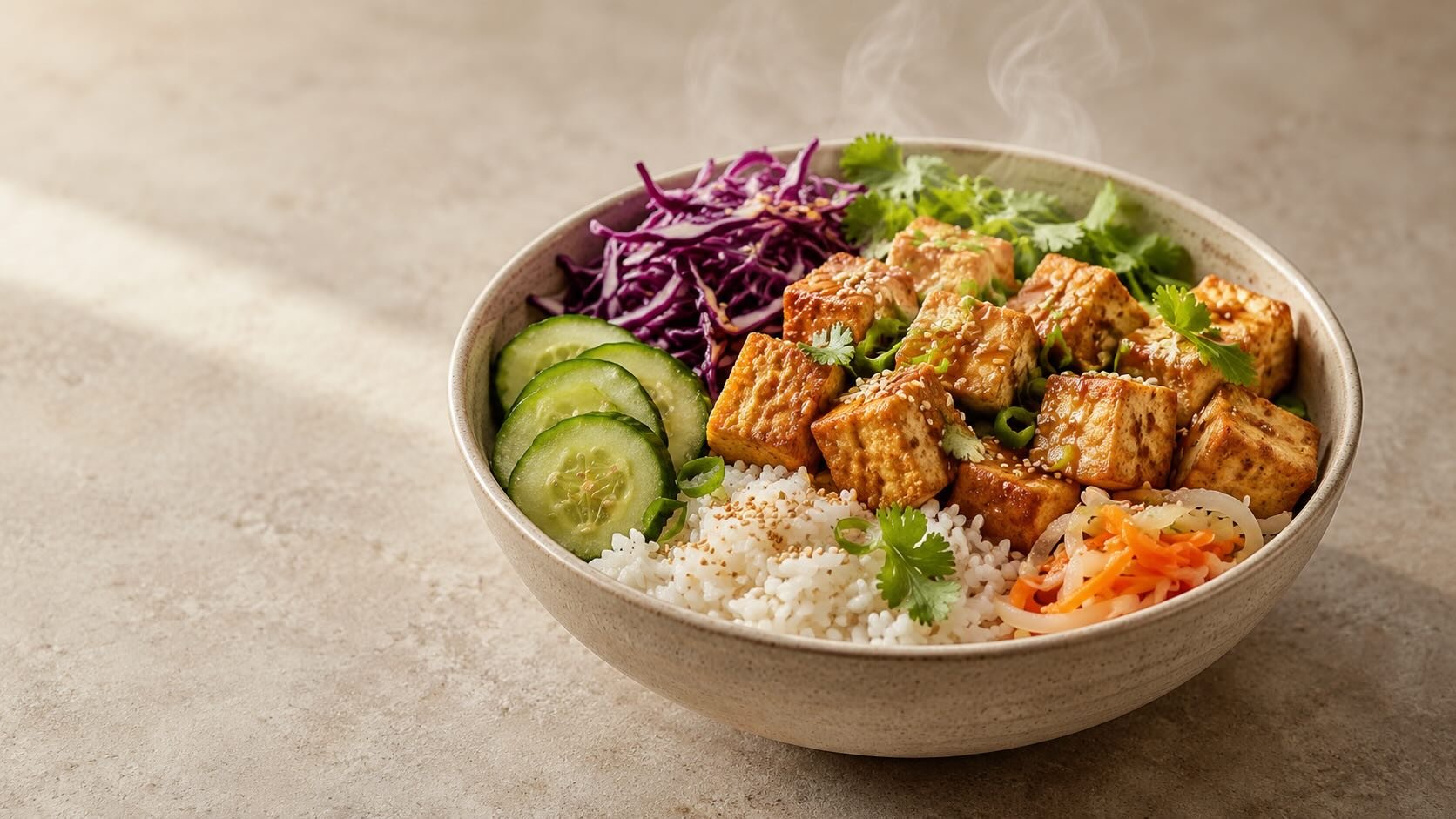
Most tofu bowls fail for the same reason: they contain ingredients, but not structure.
A bowl is not simply a collection of vegetables, grains, sauces, and tofu placed together for convenience. The best bowls feel balanced because every component performs a specific role.
When a bowl feels satisfying, refreshing, comforting, crunchy, light, and rich all at once, that experience is usually intentional — even if the cook never consciously thought about it.
Great tofu bowls are built like architecture.
They rely on a balance between:
protein
moisture
crunch
brightness
aroma
temperature contrast
Once you understand these layers, you can build endless tofu bowls without relying on recipes.
Why Tofu Works So Well in Bowls
Tofu is structurally adaptable.
Unlike heavily flavoured proteins that dominate a dish, tofu absorbs the surrounding architecture of the bowl. It can become crisp, silky, smoky, chilled, grilled, braised, or lightly seasoned, depending on what the bowl needs.
Fresh tofu itself is a protein-water gel — a delicate network of soy proteins holding moisture within its structure.
That matters because tofu interacts with bowls differently depending on how moisture is controlled.
A crisp tofu bowl succeeds because:
the tofu surface dries enough to brown
surrounding moisture stays balanced
crunch remains protected
sauces do not flood the structure
The goal is not “adding more flavour”.
The goal is to build contrast.
1. Protein — The Structural Centre
Every bowl needs an anchor.
In tofu bowls, that anchor is usually:
crispy tofu
grilled tofu
silken tofu
braised tofu
shredded frozen-thawed tofu
tofu mince
smoked tofu
The protein defines the emotional direction of the bowl.
Crispy tofu creates energy and texture.
Silken tofu creates softness and calmness.
Braised tofu creates warmth and depth.
The mistake many bowls make is treating tofu as an afterthought rather than the structural centre.
The bowl should feel designed around the tofu — not simply topped with it.
2. Moisture — The Bowl Must Flow, Not Flood
Moisture is one of the most overlooked elements in bowl design.
Too dry: the bowl feels heavy and disconnected.
Too wet: everything softens into sameness.
Good bowls manage moisture carefully through:
sauces
juicy vegetables
pickles
dressings
broths
marinated elements
But moisture should support texture, not erase it.
A common failure happens when hot tofu is placed directly onto raw greens with too much dressing. Steam and liquid combine, and the bowl collapses into softness within minutes.
The best bowls keep moisture distributed strategically rather than pooled at the bottom.
Think: light coating, not drowning.
3. Crunch — The Bowl Needs Tension
Crunch creates movement.
Without texture contrast, bowls often feel monotonous, no matter how flavourful they are.
Crunch can come from:
cabbage
cucumber
toasted seeds
roasted nuts
crispy shallots
radish
toasted breadcrumbs
puffed grains
crisp tofu edges
Crunch works because it interrupts softness.
If tofu, rice, avocado, and sauce are all soft simultaneously, the palate becomes fatigued.
Even a small amount of crunch changes the entire eating experience.
A great bowl often contains multiple levels of texture:
soft
chewy
crisp
juicy
creamy
This layering is what makes bowls feel complete.
4. Brightness — The Element That Prevents Heaviness
Brightness gives bowls lift.
Without it, umami-rich bowls can become muddy and tiring.
Brightness usually comes from acidity:
rice vinegar
lime
lemon
pickled vegetables
fresh herbs
fermented elements
Its role is not to make the bowl “sour”.
Its role is to reset the palate between bites.
This is especially important with tofu because tofu naturally carries surrounding flavours gently rather than aggressively.
Brightness creates clarity around the tofu instead of overwhelming it.
Even something as small as a quick-pickled cucumber can completely transform a bowl.
5. Aroma — The Invisible Layer
Aroma is often what makes a tofu bowl feel memorable.
Many people think flavour comes mostly from salt or sauce, but aroma shapes a huge part of the eating experience.
This layer can come from:
sesame oil
herbs
ginger
garlic
citrus zest
chilli oil
scallions
toasted spices
Warm aromatic oils are especially powerful because fats help carry volatile aroma compounds across the palate.
That is why even a small drizzle of sesame oil can suddenly make a bowl feel “complete”.
Aroma creates direction.
Without it, bowls can feel nutritionally balanced but emotionally flat.
6. Temperature Contrast — The Missing Dimension
One of the biggest differences between average bowls and exceptional bowls is temperature contrast.
Warm tofu against cool cucumber.
Hot rice beside chilled herbs.
Cold pickles against freshly roasted vegetables.
Temperature contrast creates movement across the palate and keeps each bite interesting.
If every component sits at the exact same temperature, the bowl often feels static.
Even simple bowls become dramatically more dynamic when warm and cool elements interact.
This is one reason freshly cooked tofu paired with cold, crunchy vegetables feels so satisfying.
The contrast sharpens perception.
The Bowl Is About Balance, Not Complexity
A great tofu bowl does not need:
twenty ingredients
expensive toppings
complicated sauces
perfect plating
It simply needs a balance between structural roles.
A basic bowl can feel extraordinary when:
the tofu has texture
moisture is controlled
brightness lifts richness
crunch interrupts softness
aroma creates depth
temperatures contrast naturally
Once these principles are understood, bowls become flexible rather than restrictive.
You stop following recipes mechanically.
You start composing meals intuitively.
A Simple Bowl Framework
You can build almost any tofu bowl using this structure:
Structure
Rice, noodles, grains, or greens
Protein
Crispy, grilled, braised, or silken tofu
Moisture
Sauce, dressing, juicy vegetables, or broth
Crunch
Seeds, cabbage, nuts, crispy toppings, raw vegetables
Brightness
Pickles, herbs, citrus, vinegar
Aroma
Sesame oil, herbs, garlic, ginger, spices
Temperature Contrast
Warm + cool elements intentionally paired
The exact ingredients matter less than the balance between roles.
Final Reflection
The beauty of a tofu bowl is not perfection.
It is adaptability.
A bowl can be built from leftovers, seasonal vegetables, pantry ingredients, or simple grains — yet still feel deeply satisfying when structure is understood.
Tofu works beautifully in this system because it absorbs the architecture around it without dominating the dish.
That is why tofu bowls can feel endlessly different while using the same underlying principles.
Once you understand the architecture, you no longer need endless recipes.
You only need balance.
