
Grilled Tofu Magic: How High Heat Transforms Tofu
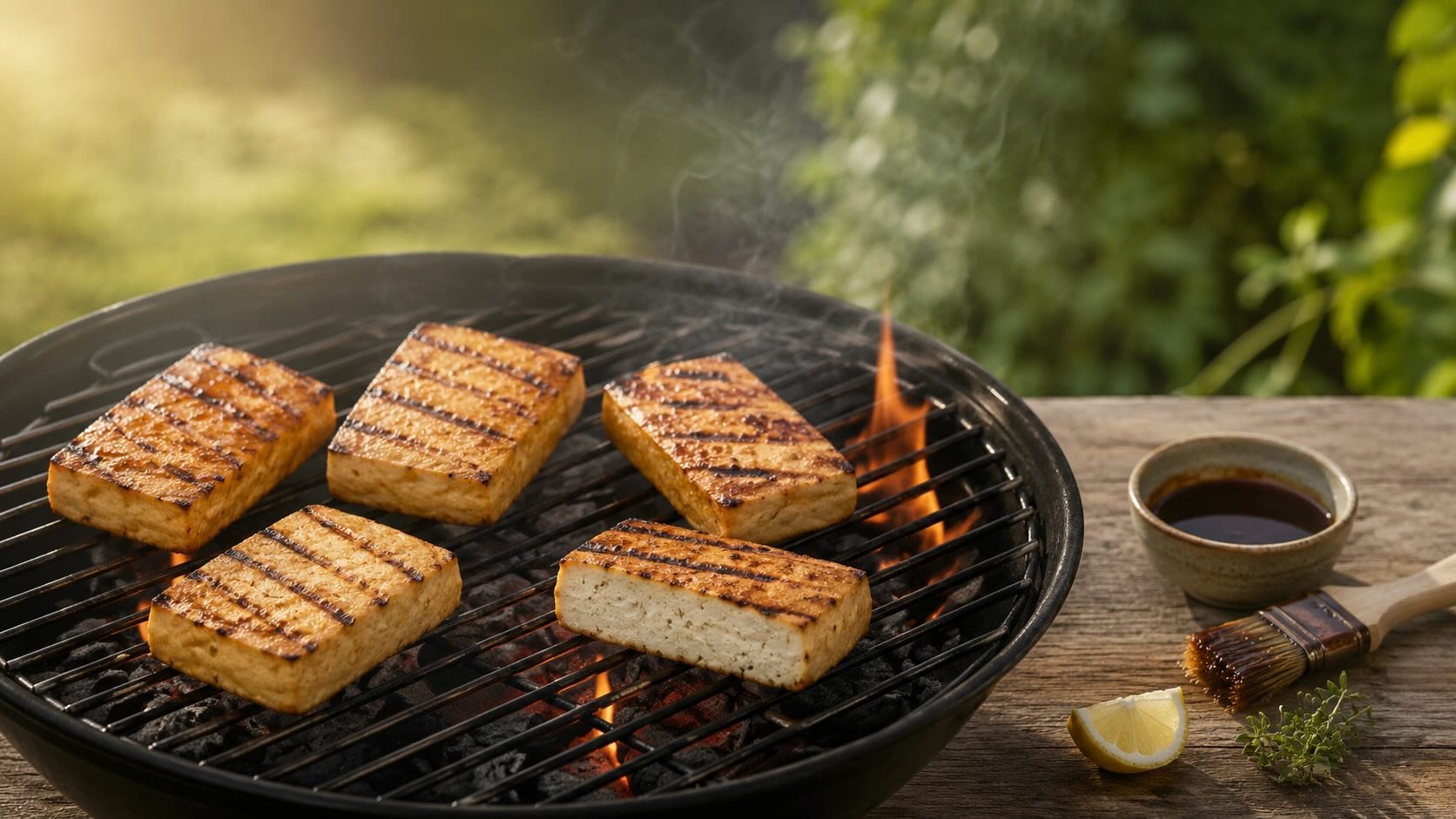
Tofu is more than stir-fry filler or a substitute for something else. On the grill, it can become a centrepiece in its own right: deeply browned at the contact points, lightly smoky over charcoal and satisfyingly firm outside while remaining moist within.
But good grilled tofu is not simply a matter of pressing it, covering it with sauce and placing it over the hottest fire. The best results come from controlling four things: tofu structure, surface moisture, heat and the timing of your seasonings.
What Grilling Actually Does to Tofu
Tofu contains a network of soy proteins holding a considerable amount of water. When it meets a hot cooking surface, that surface water must evaporate before substantial browning can begin.
Once the exterior becomes sufficiently dry and hot, Maillard reactions between amino compounds and available sugars create browned colour and complex roasted aromas. This is different from caramelisation, which involves the breakdown of sugars. A sweet glaze may caramelise on the grill, but it can also burn before the tofu browns properly.
Grilling also removes some moisture and firms the exterior. Cooked carefully, this creates a pleasant contrast between a lightly chewy surface and a tender centre. Cooked too long, especially in thin slices, tofu can become dry or rubbery.
Smoke depends on the equipment. Charcoal and wood can give tofu genuine smoky aromas; a gas barbecue may provide less, while a stovetop grill pan mainly produces contact browning and grill marks.
Choose Tofu by Structure, Not Just the Label
Firm and extra-firm tofu are the easiest choices for direct grilling because they hold together well. However, firmness labels vary between brands, so examine the block itself.
Dense, vacuum-packed or “high-protein” tofu is especially resilient and usually needs only patting dry. Water-packed firm tofu may benefit from gentle pressing if it feels saturated. Fresh firm tofu can be excellent but may require thicker cuts and more delicate handling.
Soft and silken tofu are not suitable for this basic direct-grate method. Experienced cooks can grill certain delicate varieties on a flat plate, in a basket or with another form of support, but placing them directly on wide grates invites breakage.
For most barbecues, cut the tofu into slabs approximately 1.5–2 cm thick. Thinner pieces develop more surface chew but dry quickly; thicker slabs are easier to handle and better at retaining a moist centre. Cubes work well on closely packed skewers, while triangles provide additional edges for browning.
Press Only When the Tofu Needs It
Pressing should be a response to excess water, not an automatic rule.
Drain water-packed tofu and press it gently for 15–20 minutes if the block feels very wet. Do not crush it in pursuit of maximum dryness. Dense tofu may gain little from pressing and can simply be patted thoroughly with a clean tea towel or paper towel.
Surface drying matters more than forcing water from the entire block. A wet exterior delays browning, dilutes seasoning and increases the risk of sticking.
Build Flavour in Stages
A single heavy marinade is not always the best route to flavour. Oil does not travel deeply through water-rich tofu; its main role is to coat the exterior lightly, improve heat transfer and assist release.
A balanced marinade can contain a salty ingredient, aromatics, spices and a small amount of acid or sweetness. Soy sauce with garlic and ginger, or lemon with oregano and olive oil, can work well. Marinate refrigerated for roughly 30 minutes to four hours, adjusting the time to the saltiness of the mixture and the thickness of the tofu.
Before grilling, let excess marinade drain away and remove loose pieces of garlic or herbs that could burn. Lightly coat the tofu with a neutral, high-smoke-point oil such as rice bran, avocado or refined canola oil. Use toasted sesame oil sparingly as a finishing flavour rather than the primary grilling oil.
Keep sugar-rich barbecue sauces, maple glazes and similar coatings for the final minute or two. This allows the tofu to brown before the sugar begins to caramelise or scorch. Reserve a clean portion of sauce for glazing rather than repeatedly brushing on the used marinade.
Match the Method to the Result
A charcoal barbecue offers real smoke and intense direct heat, but flare-ups require attention. A gas barbecue provides more predictable control but generally less smoke.
A ridged grill pan creates attractive contact marks, although it cannot reproduce wood or charcoal aromas. A flat plate or plancha produces broader, more even browning and is often the most forgiving option for delicate tofu.
Direct open-flame grilling can blister tofu rapidly but carries the greatest risk of scorching and breakage. It is better suited to dense tofu and experienced heat management than to a first attempt.
How to Grill Tofu Successfully
Preheat a clean barbecue to medium-high heat—approximately 200–230°C on the hood thermometer. This reading does not precisely represent the temperature at the grate, so use it as a guide rather than an absolute measurement.
Clean the hot grates thoroughly. Lightly oil the dried tofu rather than pouring oil directly over the fire.
Place the slabs across the grates and listen for an immediate, steady sizzle. Leave them undisturbed for approximately 3–5 minutes. When properly browned, they should lift with much less resistance. If a piece still sticks, wait briefly, then ease a thin metal spatula underneath instead of pulling it apart with tongs.
Turn the tofu and cook the second side for another 3–5 minutes. Treat these times as estimates: tofu density, thickness, grill design and actual surface temperature all affect the result.
Brush on any sweet glaze near the end, turning once more only if needed to set it. Remove the tofu when the contact points are well browned, the edges feel firmer, and the centre is hot but still moist. Blackened garlic, shrivelled edges or a tough centre indicate that the heat or cooking time has gone too far.
Common Grilling Problems
If the tofu sticks, the surface may have been too wet, the grates insufficiently cleaned or preheated, or the tofu turned too early. Dry it well, use a thin oil coating and give the first side time to release.
If it breaks, choose a denser block, cut thicker slabs and lift them with a spatula rather than squeezing with tongs.
If the surface stays pale, excess marinade may be cooling and steaming it. Drain the tofu more thoroughly and confirm that the grill is properly preheated.
If the outside blackens before the tofu browns, sugar, garlic or delicate herbs were probably applied too early. Begin with a restrained coating and add the glaze near the end.
If the centre becomes dry or rubbery, use thicker pieces, slightly lower heat or a shorter cooking time.
Finish for Contrast
Grilling develops roasted flavour, but the final dish often needs freshness and contrast. Finish the tofu with lemon or lime, rice vinegar, fresh herbs, spring onion, chilli oil, toasted sesame seeds or a spoonful of chimichurri.
Serve it in grain bowls, salads, bánh mì, wraps or alongside grilled vegetables. It can also become a substantial tofu steak with a late barbecue glaze or skewers served with satay sauce.
Final Takeaway
Excellent grilled tofu depends less on a long, heavy marinade than on thoughtful control. Choose a sufficiently dense block, cut it thick enough to stay moist, dry its surface and give it time to brown before turning. Add sweet sauces late and fresh flavours after cooking.
Grilling does not need to make tofu imitate meat. It reveals tofu’s own strengths: a surface that welcomes browning and smoke, a centre that can remain tender, and a structure capable of carrying flavours from the fire to the final finish.
