
Secret to Simmering Tofu in Broth – Flavour That Soaks Deep
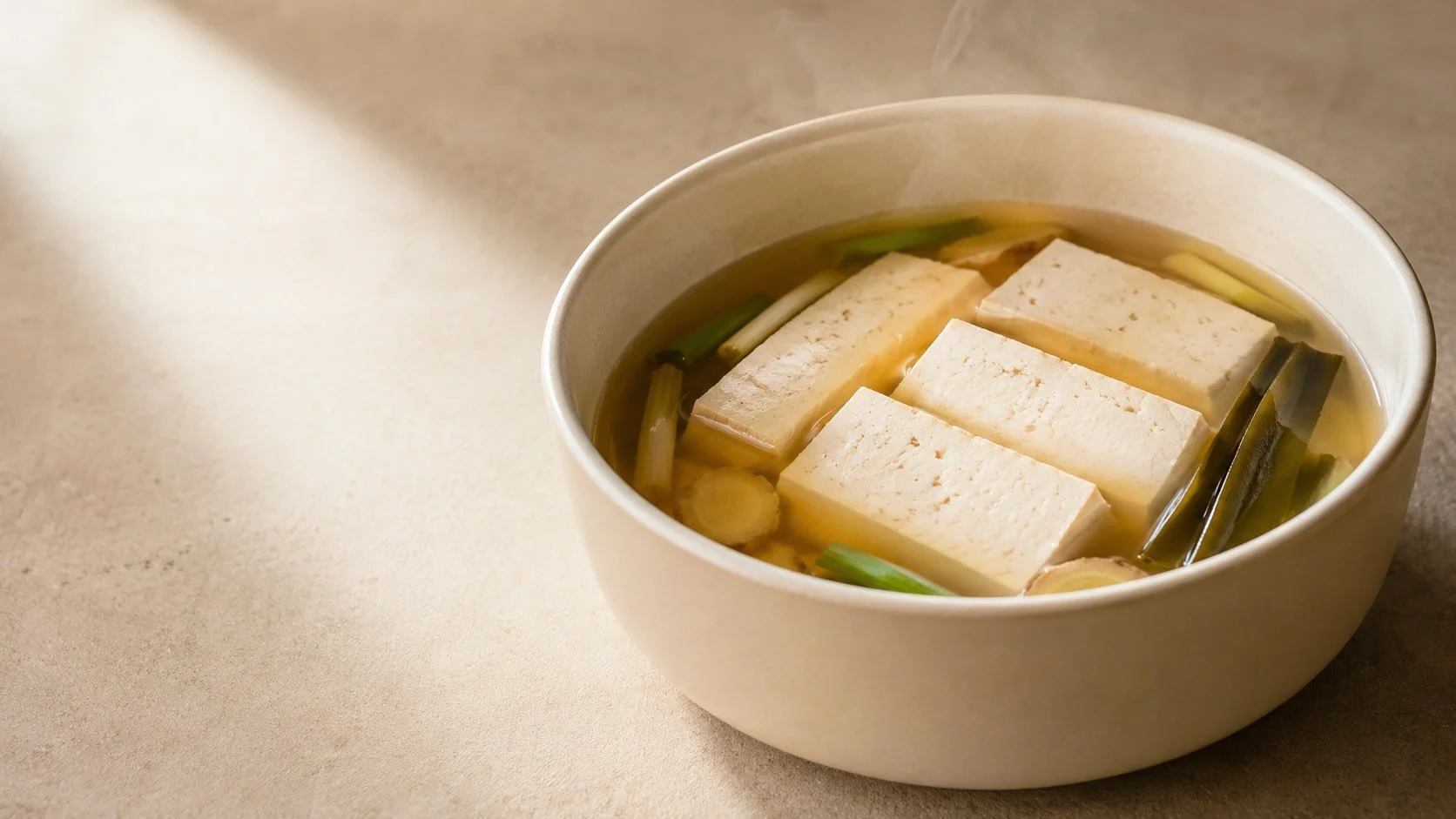
Why Simmered Tofu So Often Disappoints
Many cooks try to flavour tofu by dropping it into a strongly seasoned, rapidly bubbling broth.
The expectation is tofu infused from edge to centre. The result is often a salty surface, a bland middle and fragile pieces damaged by boiling.
The problem is not simply weak seasoning. It is the method.
Tofu is not an empty sponge. It is a water-rich network of coagulated soy proteins. Dissolved seasonings can move through that structure, but they do so gradually. Firmness, thickness, temperature and time all affect the result.
The most reliable approach is simple: build a balanced broth, simmer the tofu gently, then let it rest in the liquid.
How Flavour Moves Into Tofu
Flavour begins moving into tofu as soon as it sits in seasoned broth. Gentle heating warms both the tofu and the liquid, while resting gives dissolved seasonings more time to travel inward without further agitation.
This does not mean every thick piece will become equally seasoned from surface to centre in 20 minutes. Dense tofu and large cuts may remain milder inside. That is why tofu type, piece size and resting time matter.
Greater liquid uptake also does not automatically mean better flavour. The broth still needs a balanced combination of salt, aromatics and savoury depth.
Gentle heat begins the exchange.
Time carries flavour inward.
Resting helps complete the job.
Choose and Cut the Right Tofu
Firm tofu is the best all-round choice. It holds its shape, handles gentle simmering well and suits soups, rice bowls and light braises.
Medium tofu has a softer, more delicate bite but needs careful handling. Extra-firm tofu stays intact easily, although its denser structure may season more slowly. Silken tofu can be warmed in broth, but add it near the end and avoid stirring.
For faster, more even seasoning, cut firm tofu into slices about 1.5–2 cm thick or cubes about 2–2.5 cm wide. Larger pieces can work beautifully, but they need a longer rest and may retain a mild centre.
The Simmer-and-Rest Method
1. Prepare the tofu
Drain the tofu and pat away excess surface water. Pressing is usually unnecessary unless the block is unusually wet or you want a firmer bite.
Cut it into even pieces so they heat and season at roughly the same rate.
2. Build a balanced broth
The broth should already taste balanced before the tofu enters it, because the tofu will soften and dilute its flavour slightly.
Useful foundations include:
kombu and dried shiitake
light vegetable stock
ginger and spring onion
garlic or lemongrass
miso or a modest amount of soy sauce
Do not rely on salt alone. Build flavour with aroma, umami and, where appropriate, a little sweetness or acidity.
If using kombu, remove it just before the broth reaches a full boil to keep the flavour clean and avoid excessive extraction.
3. Add the tofu gently
Bring the broth to a bare simmer, then lower in the tofu carefully.
Starting in cold broth is not essential, and hot broth does not instantly “seal” the tofu. The practical goal is even heating with minimal rough handling.
Keep the pieces submerged and in a single layer where possible.
4. Hold at a bare simmer
Keep the liquid around 80–90°C, with light movement at the surface but no rolling boil.
Simmer:
medium tofu for about 5–8 minutes
firm tofu for about 10–15 minutes
larger or extra-firm pieces for about 15–20 minutes
Avoid repeated stirring. Gently shake the pot or spoon broth over any exposed surfaces instead.
5. Turn off the heat and rest
Cover the pot and leave the tofu in the broth for 20–40 minutes.
This is not a magic suction step. It simply gives seasoning more time to move inward while protecting the tofu from further boiling.
For deeper flavour, cool the tofu promptly and refrigerate it in the broth overnight. Thick or dense pieces may still remain milder at the centre, but the seasoning will usually become more integrated.
6. Serve or finish
Reheat the tofu gently in the broth, add it to noodles or rice, chill it for an appetiser, or lightly pan-sear it for a browned exterior.
For a more concentrated finish, lift the tofu from the pot and reduce part of the broth until it lightly coats a spoon. Taste before adding more salt, then spoon it back over the tofu as a glaze.
Why Vigorous Boiling Fails
A rolling boil does not force flavour rapidly into tofu.
Strong bubbling knocks the pieces against one another, damages delicate edges and can make the exterior rougher before the centre is well seasoned. Prolonged boiling may also leave some tofu varieties tougher or more fragile.
Gentle heat gives you more control. The aim is steady warming and sufficient contact time, not force.
Salt, Oil and Acid
Use a moderately seasoned broth rather than an aggressively salty one. If the surface tastes salty while the centre remains plain, the broth was probably too concentrated for the available resting time.
A little sesame oil, chilli oil or aromatic oil can add richness, but most of it coats the tofu and carries aroma around the surface rather than moving deeply into its water-rich interior. For a clearer broth, add finishing oil after infusion.
Acid does not completely block flavour absorption, but strong or prolonged acidity can change the surface texture of delicate tofu. For greater control, add vinegar or citrus near the end. In intentionally sour dishes, add the acid gradually and handle the tofu gently.
Troubleshooting Simmered Tofu
The tofu still tastes bland
Use smaller pieces, allow a longer rest or strengthen the broth with aromatics and umami rather than salt alone.
The surface is salty but the centre is plain
Reduce the broth’s salinity and extend the resting time.
The tofu falls apart
Use firmer tofu, cut larger pieces, lower the heat and stir less.
The tofu becomes tough
Shorten the simmer or choose a less dense tofu.
The broth turns cloudy
The tofu was probably boiled too hard, stirred too much or broken into fine fragments.
You want stronger broth uptake
Frozen and thawed tofu absorbs liquid readily but becomes distinctly porous and chewy. It suits robust braises better than delicate clear soups.
Final Takeaway
The secret to simmering tofu is not stronger broth, harder boiling or endless cooking.
Choose tofu that suits the dish. Cut it evenly. Build a broth with more than salt. Warm the tofu gently, then give it time to rest in the liquid.
Flavour begins moving during cooking and continues while the tofu rests. That unhurried contact creates a fuller, more harmonious result.
Gentle heat begins the exchange.
Time carries the flavour deeper.
A thoughtful finish brings everything together.
A quieter technique.
A fuller result.
A kinder way to cook. 🌱
