
I’m Jackfruit – Stop Asking Me to Be Your Meat Substitute
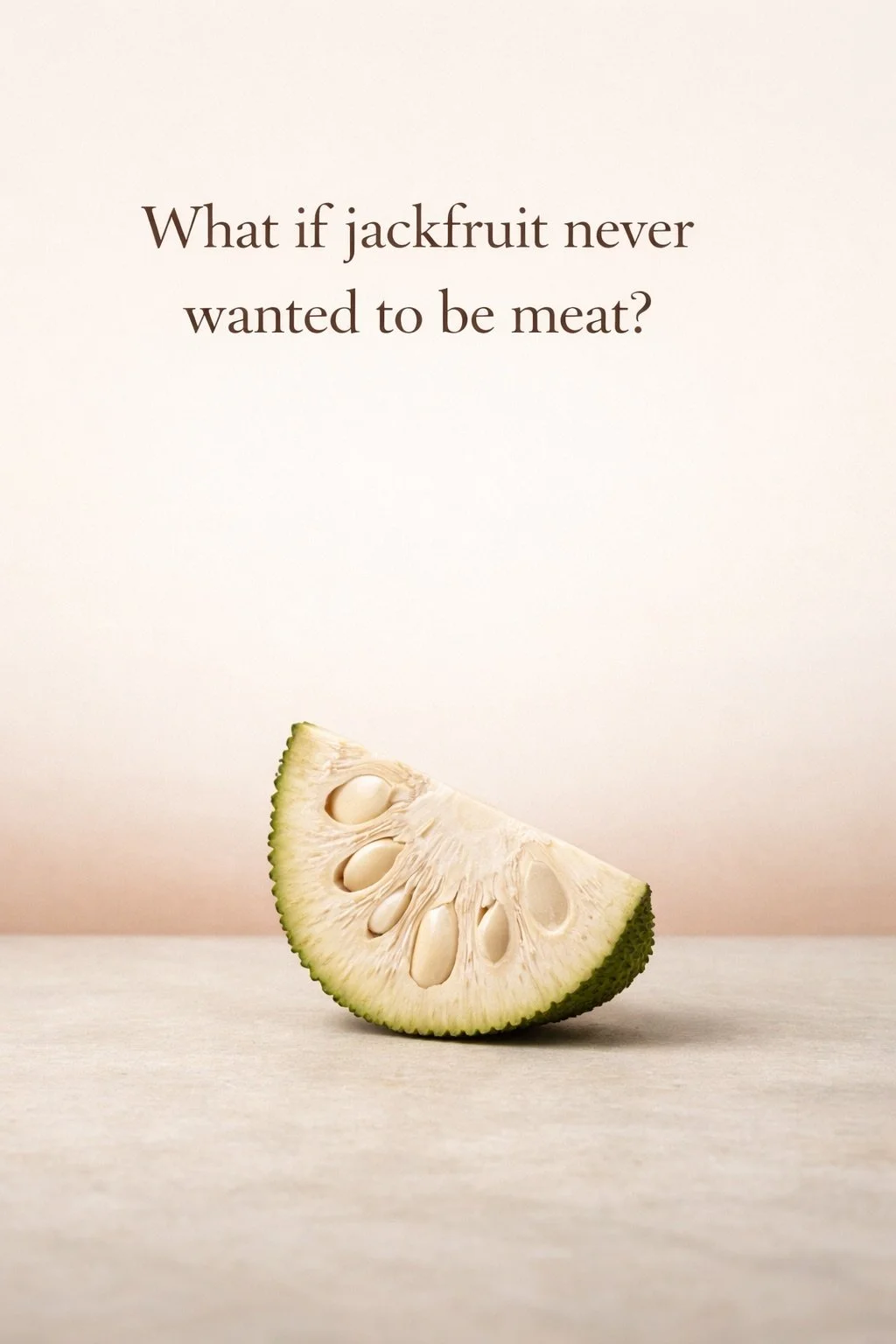
If jackfruit could speak, this is what it would say:
I was never trying to be meat.
You decided that for me.
Somewhere between menu marketing and meat anxiety, jackfruit lost its name and gained a job title it never asked for. Not an ingredient. Not a fruit. Not even a vegetable.
A substitute.
And once an ingredient is framed that way, everything about it becomes conditional:
acceptable only if it behaves
successful only if it deceives
valuable only if it replaces something else
Jackfruit deserves better than that.
Substitution Erases Identity
When we call jackfruit a meat substitute, we’re not describing what it is.
We’re describing what we want it to cover for.
That framing flattens the ingredient:
its history becomes irrelevant
its structure becomes a problem to fix
its natural behaviour becomes a flaw
Instead of asking, “What is jackfruit?”
We keep asking, “What can jackfruit stand in for?”
Those are very different questions.
Only one leads to good cooking.
Jackfruit Has Always Had a Role
Long before jackfruit was pulled, shredded, or drowned in sauce, it was already doing quiet, useful work in the kitchen.
In South and Southeast Asian cooking, young jackfruit appears in:
slow-simmered curries
coconut-based stews
spiced gravies where bulk and softness matter
It wasn’t valued because it replaced protein.
It was valued because it carried dishes.
Body. Volume. Absorption. Balance.
Jackfruit’s role was structural, not symbolic.
Why Texture Gets Mistaken for Protein
Jackfruit’s fibrous interior triggers a familiar visual shortcut: fibres = meat.
But texture and nutrition are not the same thing.
Jackfruit’s structure comes from:
cellulose and pectin
natural segmentation
water-rich plant tissue
Not from elastic muscle proteins.
That’s why jackfruit softens over time instead of firming.
Why it absorbs flavour instead of generating it.
Why it supports a dish instead of anchoring it.
Confusing texture for protein is how jackfruit ends up misunderstood—and unfairly judged.
The Cost of Forcing Disguises
When jackfruit is forced into meat roles, a few things always happen:
flavour expectations rise unrealistically
nutritional comparisons become misleading
disappointment gets blamed on the ingredient
The irony?
Jackfruit only “fails” when we ask it to lie.
The moment we stop demanding mimicry, jackfruit becomes reliable again—because it’s finally allowed to behave like itself.
Ingredient Dignity Changes Cooking
Respecting ingredient identity doesn’t limit creativity.
It focuses it.
Once jackfruit is understood on its own terms, we stop trying to:
brown it like steak
chew it like muscle
justify it nutritionally
And start using it where it actually excels:
as a volume builder
as a texture softener
as a flavour carrier
This is not a compromise.
It’s alignment.
Let Jackfruit Be Jackfruit
Plants don’t exist to replace anything.
They exist to be cooked well.
Jackfruit doesn’t need a disguise to belong on the plate.
It needs understanding.
In the next part of this series, we’ll move beyond identity and into possibility—exploring where jackfruit truly shines once imitation is off the table.
Because when we stop asking plants to pretend, they finally start making sense.
Up Next in the Series
Jackfruit Beyond BBQ – Unlocking Its True Culinary Soul
From limitation to liberation: where jackfruit actually belongs.
