
Lentil Tofu – A High-Protein, Fibre-Packed Soy-Free Block
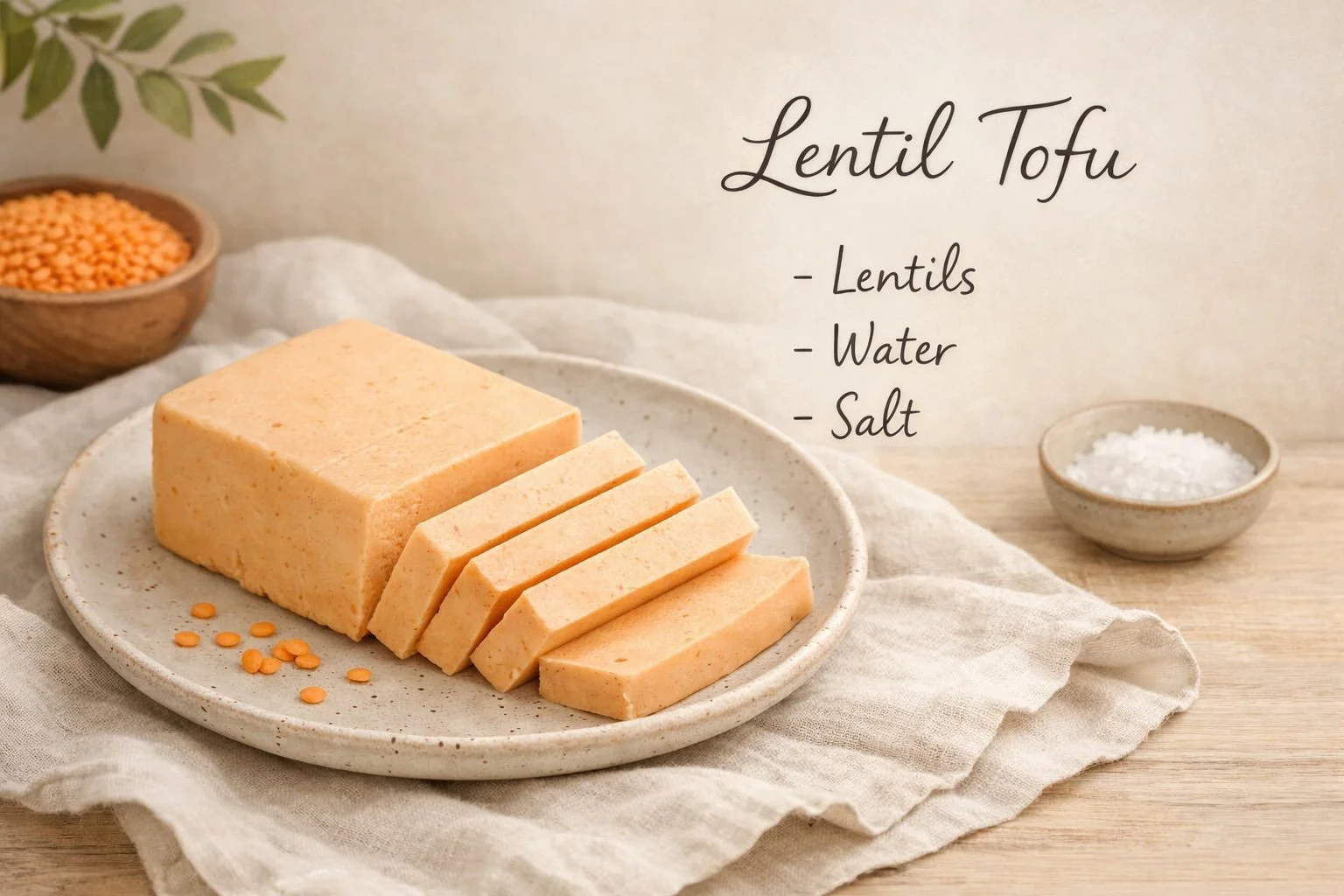
Lentil Tofu, Explained Simply
Lentil tofu isn’t tofu in the traditional sense. There’s no soy milk, no coagulant, and no curdling step. Instead, it relies on the natural starches and proteins in lentils, blended with water and gently cooked until they set into a sliceable block.
The result?
A soy-free, gluten-free, legume-based protein with a soft but structured bite—somewhere between silken tofu and a firm savoury custard.
For anyone avoiding soy, increasing fibre intake, or simply curious about plant-based innovation, lentil tofu is one of the most elegant answers.
Why Lentil Tofu Works (The Food Science Bit)
When lentils are soaked, blended, and heated:
Starches gelatinise, creating structure
Proteins denature, adding body
Water is trapped in a stable matrix
No chemicals. No additives. Just controlled heat and time.
This is why lentil tofu:
Sets without agar or coagulants
Holds its shape when sliced
Softens gently when reheated rather than crumbling
It’s simple food science doing beautiful things.
Nutritional Strengths: More Than Just Protein
Lentil tofu isn’t trying to mimic meat. It stands on its own nutritionally.
What makes it special:
High protein from lentils themselves
Naturally high in fibre (depending on preparation)
Low in fat
Slow-digesting carbohydrates for steady energy
A brief note on fibre: for an ultra-smooth texture, some methods strain the blended lentils before cooking. This produces a silkier block but removes part of the natural fibre. Leaving the lentil pulp in creates a heartier, more fibre-forward tofu with greater satiety.
Either approach is valid—it’s a choice between refinement and robustness, not right or wrong.
Flavour & Texture: What to Expect
If you’re expecting boldness, pause. Lentil tofu is gentle by design.
Texture:
Silky when freshly set
Sliceable and stable when chilled
Creamy inside, never rubbery
Flavour:
Mildly earthy
Slightly nutty
Clean, with no beany sharpness
This makes it an ideal flavour carrier, especially for:
Aromatic oils
Light marinades
Spiced broths
Crisp outer coatings
Think of it as a calm canvas rather than a loud statement.
How to Cook Lentil Tofu (Without Ruining It)
Lentil tofu rewards restraint.
Best methods:
Pan-searing over medium heat with oil
Gentle grilling on a well-oiled surface
Steaming, then saucing for softness
What to avoid:
Aggressive high heat straight from the fridge
Deep frying without a protective coating
Heavy pressing
Unlike soy tofu, lentil tofu is a homogeneous starch-set gel, not a porous curd. Pressing doesn’t improve texture—it collapses it.
Because of its starch content, lentil tofu browns differently too: slower, softer, and more evenly, with both light caramelisation and gentle Maillard reactions at play. Patience is part of the technique.
Lentil Tofu vs Soy Tofu: A Clear Comparison
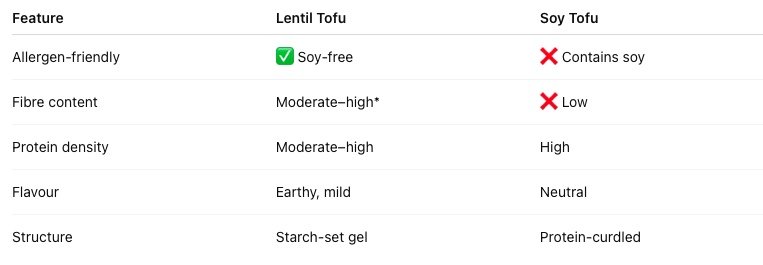
*Fibre content varies depending on whether the lentil pulp is retained.
This isn’t a replacement—it’s an expansion of what tofu can be.
Who Is Lentil Tofu For?
Lentil tofu shines for:
People with soy sensitivities
Plant-based eaters seeking fibre-rich proteins
Home cooks who enjoy making food from scratch
Anyone curious about traditional techniques applied in new ways
It’s especially powerful in kitchens looking to diversify plant proteins without relying on ultra-processed alternatives.
Final Takeaway 🌱
Lentil tofu reminds us that plant-based cooking doesn’t need to chase meat—or even tradition—to feel complete. When we respect an ingredient’s natural structure and choose texture with intention, nourishment follows naturally. Sometimes, the gentlest foods are the most quietly powerful.
