
Almond Tofu – A Deliciously Creamy, Soy-Free Dessert
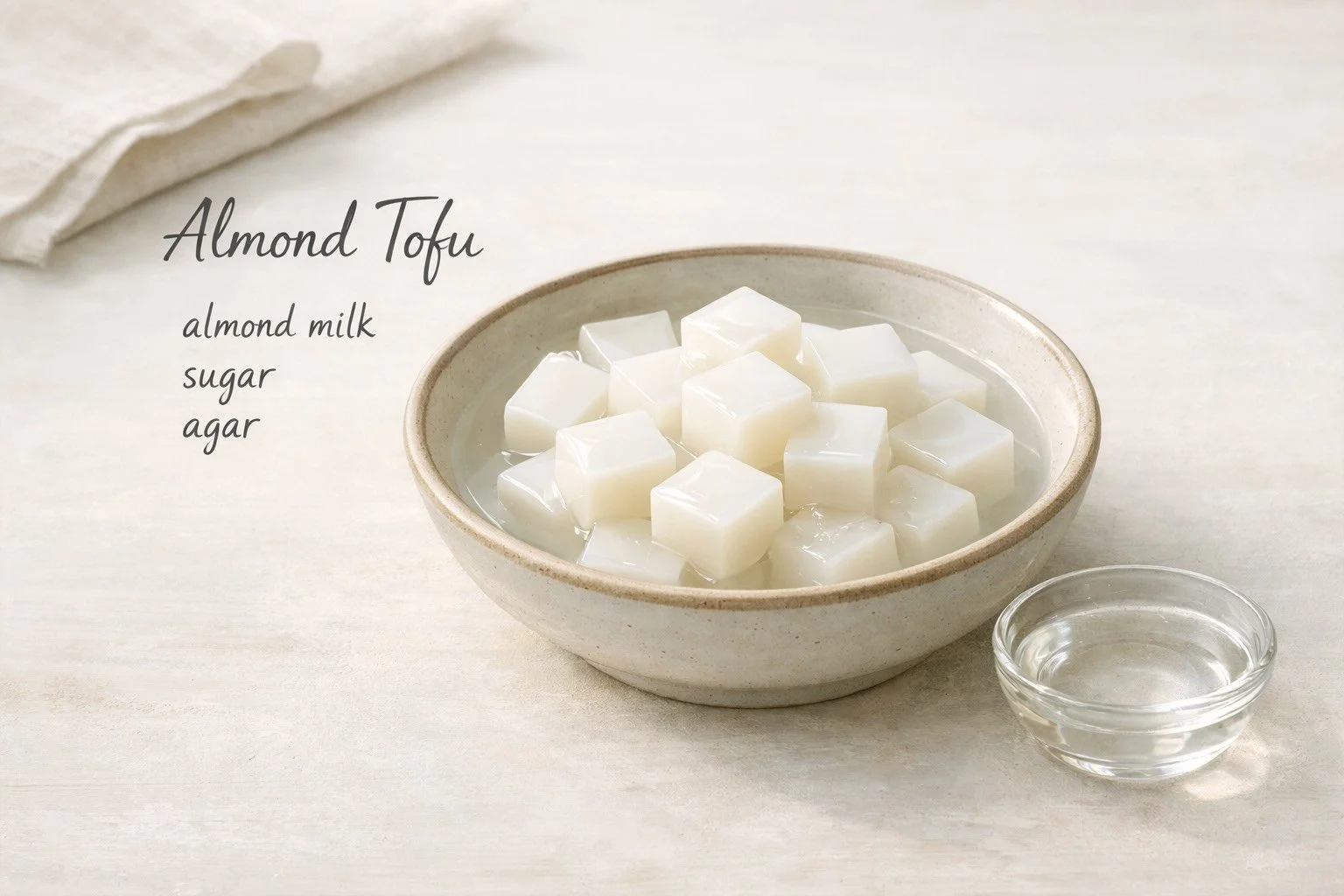
Almond Tofu, Explained Simply
Despite its name, almond tofu isn’t tofu in the conventional sense. There’s no soy, no curdling, and no pressing involved. Instead, it’s a delicately set almond-style jelly, served cold as a dessert.
Across East Asia, almond tofu has long been valued for what it is—not what it replaces. It sits somewhere between:
A light custard
A soft jelly
A cooling palate cleanser
Its appeal lies in restraint. Almond tofu isn’t rich or heavy. It’s calm, clean, and intentionally mild.
At Tofu World, this matters. Almond tofu reminds us that “tofu” is not just an ingredient category—it’s a way of thinking about texture.
A Gentle Note on the Name “Almond”
Traditionally, the dish known as xìngrén dòufu was made using apricot kernels. Over time, this was loosely translated as “almond,” and the name stayed—even as ingredients evolved.
Today, most modern versions use almond milk or almond flavouring, creating a dessert that’s familiar, accessible, and consistent in texture. This shift isn’t a loss of tradition—it’s an adaptation that reflects how food naturally travels and changes.
What matters most is not strict historical replication, but understanding what kind of dessert almond tofu is meant to be: light, cooling, and gentle.
How Almond Tofu Sets (The Food Science Bit)
Almond tofu is a hydrocolloid-set dessert, not a protein-based tofu.
Its structure comes from setting agents such as:
Agar-agar – clean, firm slices
Gelatin – softer, melt-in-the-mouth texture
Gellan gum – modern precision and clarity
When heated with almond milk and sugar:
The setting agent dissolves
The mixture is poured and cooled
A tender gel forms as it sets
Unlike savoury tofu, the structure here comes entirely from the gelling agent, which is why almond tofu feels silky rather than springy.
Flavour & Texture: What to Expect
Almond tofu is deliberately understated.
Texture:
Smooth and silky
Softly set, never bouncy
Clean-cut yet delicate
Flavour:
Gentle almond aroma
Mild sweetness
Clean, cooling finish
Because the flavour is quiet, almond tofu pairs best with:
Light fruit syrups
Citrus or stone fruit
Lychee, peach, or berries
Subtle floral notes
It works best when nothing competes for attention.
Nutritional Perspective (In Context)
Almond tofu is a dessert—and it behaves like one.
What it offers:
Naturally soy-free
Dairy-free when made with plant milk
Light and easy to digest
What it isn’t:
A protein-forward food
A fibre-rich dish
A functional or fortified product
Its role is balance, not nutrition optimisation. Almond tofu finishes a meal—it doesn’t anchor one.
Ingredient Awareness
A brief note for clarity:
Almond tofu made with almond milk may not suit those with tree nut allergies
Some instant mixes can include additional ingredients beyond almond flavour
As with any dessert, checking labels and choosing simple ingredient lists helps keep the experience comfortable and enjoyable.
How to Serve Almond Tofu Beautifully
Almond tofu rewards minimal handling.
Classic serving ideas:
Cubed with light syrup
Sliced with fresh fruit
Gently spooned into a chilled bowl
Small details that matter:
Chill fully before cutting
Use a thin, sharp knife
Rinse the blade between cuts
Heavy sauces or bold toppings tend to overpower what almond tofu does best.
Almond Tofu vs Savoury Tofu: A Quiet Distinction
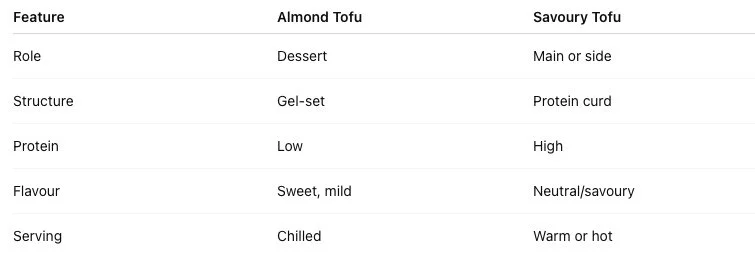
They share a name—but not an intention.
Final Takeaway 🌱
Almond tofu shows us that gentleness can be intentional. When dessert is allowed to be light, simple, and unhurried, it creates space—for comfort, clarity, and quiet enjoyment.
