
Are You Overcooking Veggies? Get Perfect Texture Every Time
Introduction: When Vegetables Lose Their Voice
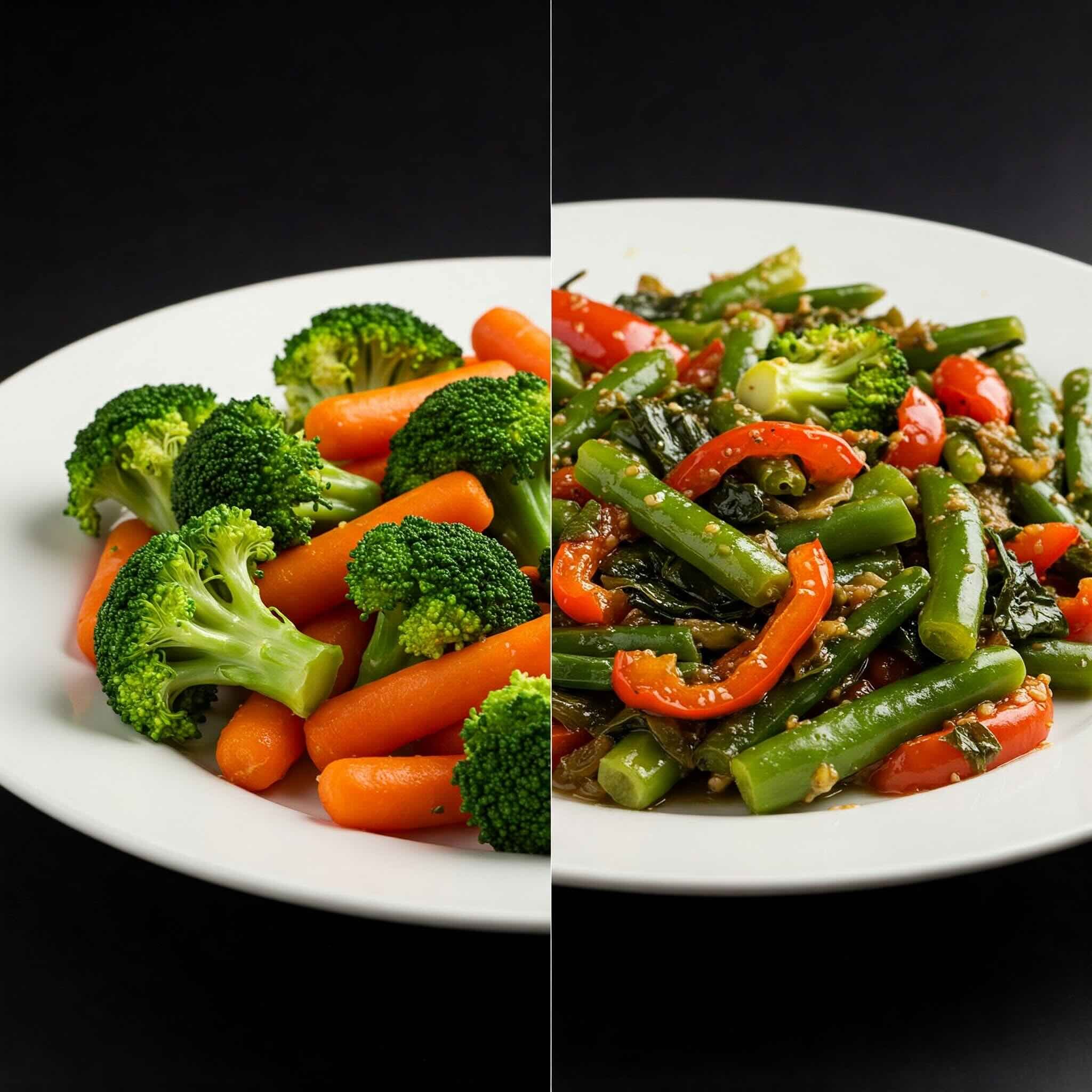
Vegetables are often blamed for being boring, soggy, or bland—but more often than not, they’ve simply been overcooked into silence.
Perfect vegetable cooking isn’t about fancy techniques or expensive equipment. It’s about understanding what vegetables are made of, how they respond to heat and water, and when to stop.
Once you understand that, texture stops being a mystery—and vegetables start tasting alive again.
The Hidden Structure Inside Vegetables
Vegetables aren’t just “plants”. They’re cellular structures built from:
Cell walls (mostly cellulose and pectin)
Water trapped inside cells
Natural sugars and flavour compounds
When you apply heat, two things happen:
Cell walls soften (good—up to a point)
Water escapes (bad—if uncontrolled)
Overcook them, and the structure collapses.
Cook them just enough, and you get vegetables that are tender, juicy, and full of flavour.
The Three Most Common Ways Veggies Get Overcooked
1. Too Much Water
Boiling is the fastest way to lose texture and flavour.
Water leaches out sugars and minerals
Cells burst instead of gently softening
Vegetables become waterlogged, then limp
This is why boiled vegetables often taste dull—even with salt.
2. Too Low Heat
Gentle heat for too long is just as damaging as aggressive boiling.
Cell walls break down slowly
Moisture seeps out gradually
Vegetables turn soft without browning
This is the classic path to mush.
3. No Clear End Point
Many vegetables only need minutes, not half an hour.
Cooking “until soft” without a texture goal usually means cooking past the ideal point.
What Perfect Vegetable Texture Actually Means
Perfect texture isn’t one thing—it depends on the vegetable.
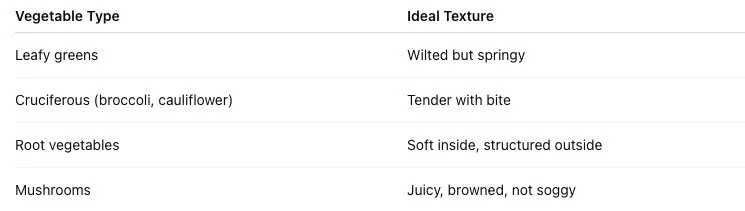
The common thread?
Structure remains.
Heat Is a Tool—Use It on Purpose
Steaming: Control Without Dilution
Steaming softens vegetables without flooding them.
Best for greens, broccoli, beans
Preserves colour and nutrients
Stop as soon as a knife meets light resistance
Tip: Steam uncovered at the end to let excess moisture escape.
Stir-Frying: High Heat, Short Time
Fast, hot cooking keeps structure intact.
Vegetables cook before collapsing
Surface browns while interiors stay juicy
Requires dry vegetables and a hot pan
Crowding the pan drops the temperature—steam is the enemy here.
Roasting: Texture Through Dry Heat
Roasting drives off surface moisture, allowing caramelisation.
Sweetness intensifies
Edges crisp, centres soften
Ideal for root vegetables and squash
Use enough oil to coat—not drown.
Blanching: A Reset Button
Quick boiling followed by ice water sounds aggressive, but it works.
Heat sets colour
Ice bath halts cooking instantly
Texture stays snappy
This is especially effective for green vegetables before stir-frying or salads.
Timing Matters More Than Recipes
Here’s a simple rule:
Cook vegetables until they resist slightly, then stop.
If a vegetable feels completely soft, it’s already gone too far.
Approximate guides (not rules):
Leafy greens: 30 seconds–2 minutes
Broccoli florets: 3–4 minutes
Carrots (sliced): 4–6 minutes
Roasted vegetables: check at 20 minutes, not 40
Always taste. Texture is felt, not measured.
Salt Earlier Than You Think
Salt doesn’t just season—it changes texture.
Light salting helps draw out surface moisture
Encourages browning instead of steaming
Enhances natural sweetness
For watery vegetables, salting before cooking can make the difference between crisp and limp.
Why This Matters for Plant-Based Cooking
In plant-forward meals, vegetables aren’t a side—they’re the centre.
Texture is what makes vegetables:
Feel satisfying
Taste complete
Hold their place next to proteins like tofu, legumes, or grains
When vegetables have structure, the whole plate feels intentional—not like a compromise.
Common Signs You’ve Gone Too Far
Dull or greyed-out colour
Strong sulphur smell
Water pooling on the plate
Vegetables collapsing under their own weight
If you see these, it’s not a seasoning problem—it’s a heat problem.
Final Takeaway: Let Vegetables Keep Their Shape
Cooking vegetables well isn’t about doing more.
It’s about stopping sooner.
When you respect structure, vegetables stay vibrant, satisfying, and full of character. And when vegetables taste good on their own, choosing plant-forward meals feels natural—not forced.
A kinder world doesn’t start with perfection.
It starts with paying attention—one vegetable at a time. 🌱
