
Rice Vinegar: The Mild Acid That Lifts Every Dish!
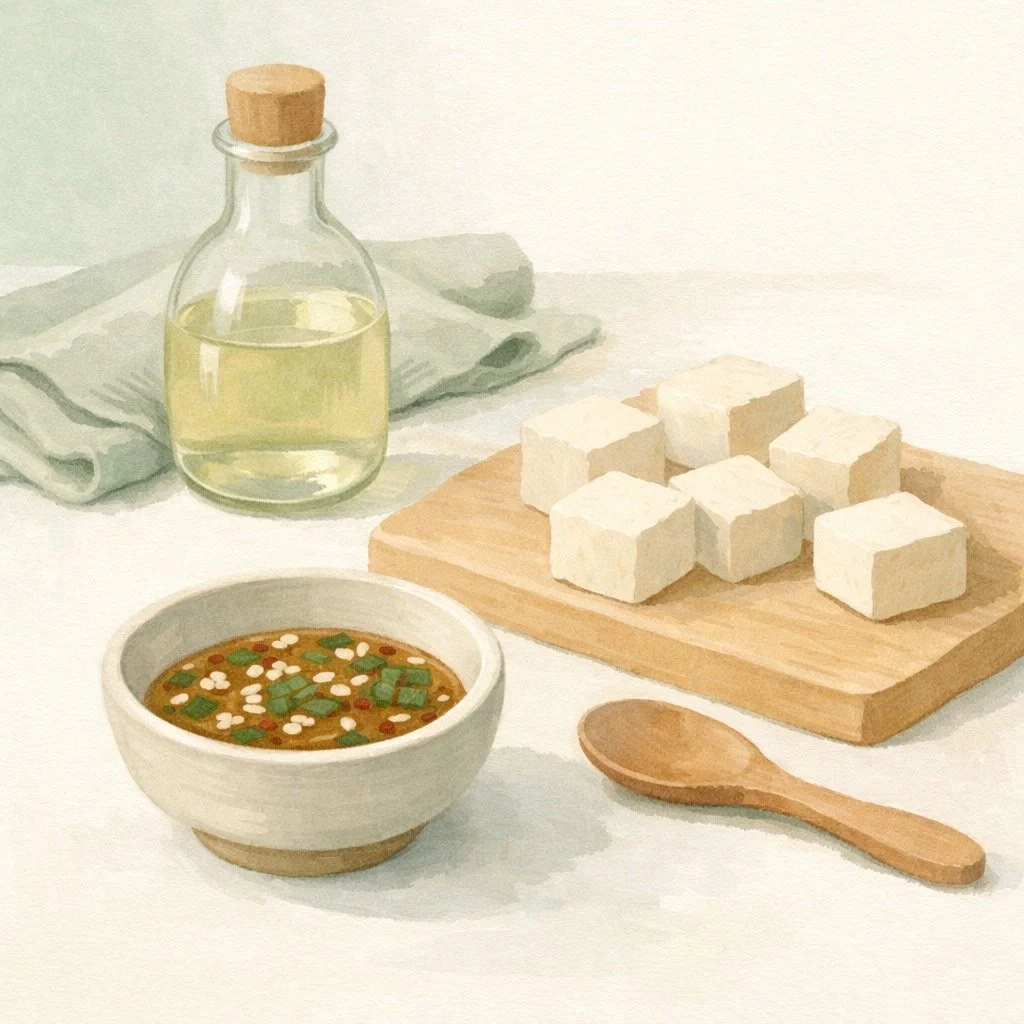
The Softest Acid in the Pantry
Not all acids shout.
Some whisper.
Rice vinegar doesn’t cut through food the way lemon or distilled vinegar does. It settles into it. It lifts flavours instead of slicing them open. That’s why, across East Asia, it became the acid of everyday cooking—not just for brightness, but for balance.
For tofu especially, rice vinegar is transformative. It cleans up richness, softens oiliness, and lets savoury notes breathe—without ever stealing the spotlight.
What Makes Rice Vinegar Different?
Rice vinegar is made by fermenting rice wine into acetic acid. But compared to wine or spirit vinegars, its acidity is lower and its flavour rounder.
Typical characteristics:
Mild acidity (usually 4–5%)
Subtle sweetness
No sharp alcoholic edge
Gentle aroma
That softness is precisely why it pairs so beautifully with delicate foods—silken tofu, steamed vegetables, lightly seasoned grains.
Types of Rice Vinegar (Quick Guide)
White rice vinegar
Clean, neutral, lightly sweet. Most versatile and ideal for tofu dishes.
Seasoned rice vinegar
Pre-sweetened and salted. Best for sushi rice, not general cooking.
Black rice vinegar
Malty, smoky, complex. Better for braises and dipping sauces than subtle dishes.
Japanese rice vinegar (komezu)
Often the softest and most refined—excellent for dressings and tofu sauces.
Why Rice Vinegar Loves Tofu
Tofu is sensitive. It absorbs everything—good and bad. Strong acids can dominate it, turning balance into aggression.
Rice vinegar works with tofu, not against it.
What it does to tofu dishes:
Cuts oiliness in pan-fried or crispy tofu
Brightens soy-based sauces without sharpness
Enhances savoury depth instead of masking it
Keeps silken tofu tasting clean and fresh
A teaspoon too much of lemon can ruin tofu. A teaspoon extra of rice vinegar usually just makes it taste better.
Where Rice Vinegar Shines Most
1. Sushi Rice (The Classic)
Rice vinegar doesn’t just season sushi rice—it defines it. The gentle acidity balances starch, sweetness, and salt without making rice taste sour.
Why it works:
Rice + rice vinegar = harmony. Same grain, same language.
2. Dipping Sauces for Tofu
A splash of rice vinegar in soy sauce, chilli oil, or sesame dressing wakes everything up.
Try this base ratio:
2 tbsp soy sauce
1 tbsp rice vinegar
1 tsp sesame oil
Optional chilli or ginger
It tastes finished without feeling heavy.
3. Pickles Without Aggression
Quick cucumber, daikon, or carrot pickles made with rice vinegar stay crisp and refreshing rather than mouth-puckering.
Perfect as a contrast to fried tofu or rich peanut sauces.
4. Balancing Fatty or Fried Foods
Deep-fried or air-fried tofu benefits from acidity—but only the right kind.
Rice vinegar cuts grease without turning food sharp or vinegary. That’s why it’s often used in finishing sauces rather than marinades.
How to Use It Properly (Common Mistakes)
Mistake 1: Treating it like white vinegar
Rice vinegar is gentler—use a bit more, not less.
Mistake 2: Using seasoned vinegar everywhere
Seasoned rice vinegar contains sugar and salt. Great for sushi, confusing elsewhere.
Mistake 3: Adding it too early
For sauces and stir-fries, add rice vinegar near the end to preserve its freshness.
Rice Vinegar vs Lemon vs Apple Cider Vinegar
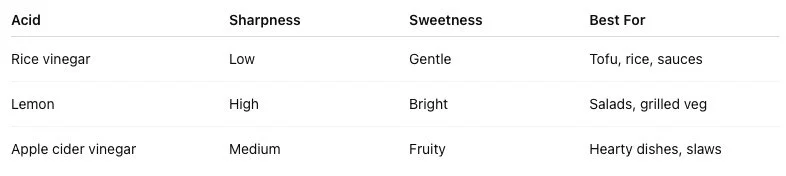
If lemon is a spotlight and apple cider vinegar is a conversation, rice vinegar is background music—steady, supportive, essential.
Choosing a Good Bottle
Look for:
Short ingredient list (rice + water)
No added sugar unless labelled “seasoned”
Clear or lightly golden colour
Mild aroma (never harsh)
Once opened, store it sealed in a cool cupboard. Refrigeration isn’t required, but freshness matters.
Final Thought: Freshness Without Force
Rice vinegar doesn’t try to impress you.
It simply makes everything else taste a little more alive.
In a world that often chases boldness, rice vinegar reminds us that subtlety can be powerful—that gentleness can still transform a dish.
If tofu is the quiet hero of the plate, rice vinegar is its closest ally. 🌱
