
Why Soy Sauce, Tamari and Miso Differ (And How to Use Them)
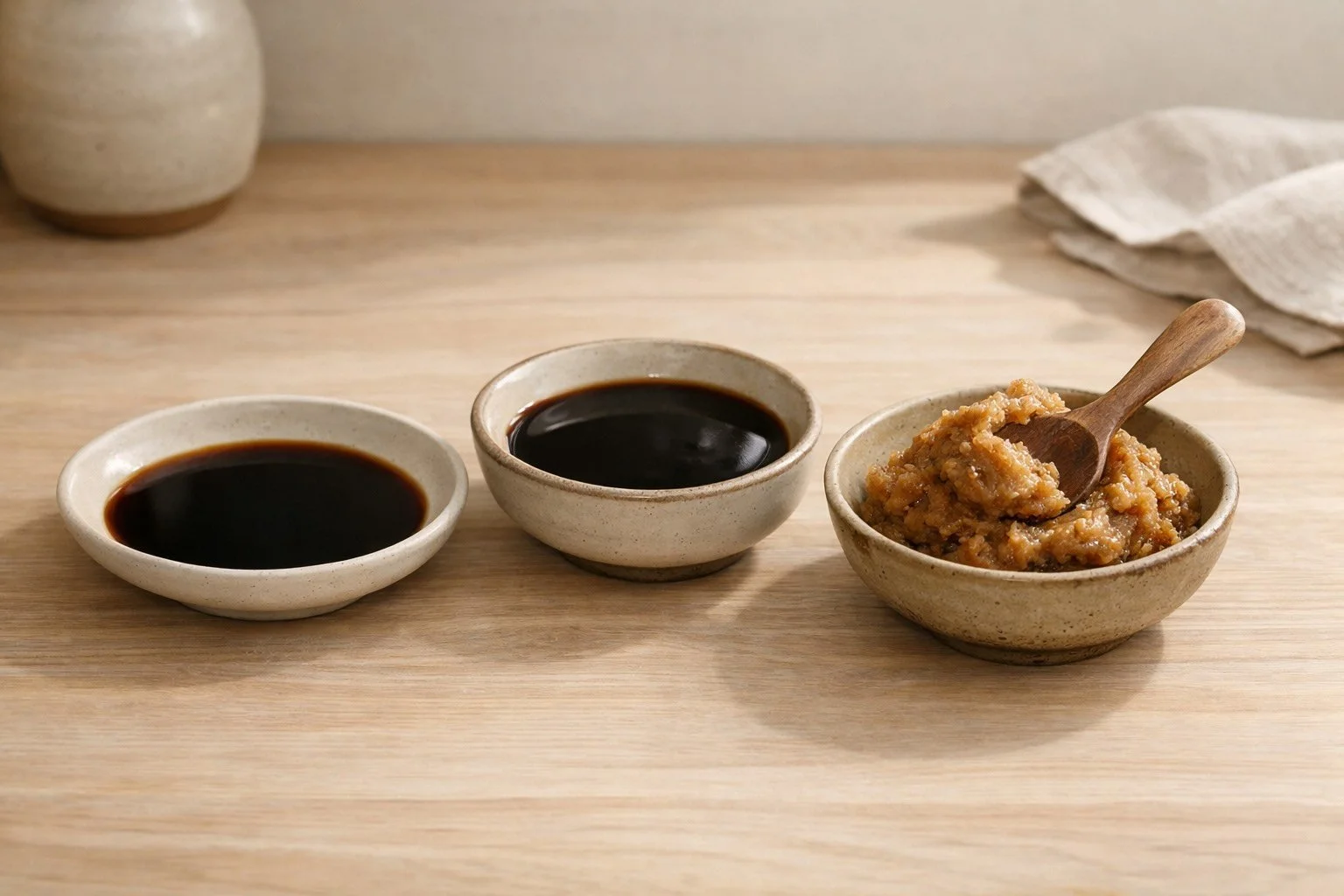
Soy sauce, tamari, and miso are often grouped together as interchangeable “soy seasonings”. But beneath the shared ingredient lies a very different logic of fermentation, salt, water, and time.
Understanding how each one is made—and what that means for flavour, texture, and cooking—can quietly transform how your food tastes. Especially when tofu is on the plate.
This isn’t about rules. It’s about choosing the right tool for the job.
Soy Sauce: Liquid Umami and Balance
How it’s made
Traditional soy sauce is brewed from soybeans + wheat + salt + water, fermented with moulds and yeasts over months (sometimes years). The mixture—called moromi—is eventually pressed, releasing a dark, aromatic liquid.
The presence of wheat matters. It softens sharpness, adds subtle sweetness, and creates balance.
What it tastes like
Salty but rounded
Deep umami without heaviness
Slight sweetness and acidity
Highly aromatic
How it behaves in cooking
Soy sauce is water-based and volatile, meaning its aroma blooms quickly with heat but can also burn if over-reduced.
Best uses:
Stir-fries and sautés
Marinades (especially short ones)
Soups and broths
Finishing splashes rather than long reductions
Tofu logic:
Soy sauce seasons the tofu on the surface. It enhances browning and savoury aroma but doesn’t deeply penetrate unless water is driven out first (by heat or frying).
Tamari: Depth, Body, and Focus
How it’s made
Tamari originated as a by-product of miso production. It is typically soy-heavy and often wheat-free, resulting in a thicker, darker sauce with a deeper, more protein-forward umami than standard soy sauce.
What it tastes like
Rich, savoury, and dense
Less sweet than soy sauce
Longer, lingering umami
Slightly less sharp saltiness
How it behaves in cooking
Tamari is less aromatic but more structural. It holds up better to heat and reduction without turning bitter.
Best uses:
Glazing tofu or vegetables
Pan-searing and grilling
Dipping sauces
When you want savoury depth without sweetness
Tofu logic:
Tamari pairs beautifully with firm or extra-firm tofu, especially when pan-fried. It supports browning, adds body, and doesn’t disappear into the pan.
Miso: Fermented Structure, Not Just Salt
How it’s made
Miso is a solid or paste-like fermented food made from soybeans, salt, and koji. Water is minimal. Fermentation can range from weeks (white miso) to years (dark red miso).
This low-water environment changes everything.
What it tastes like
Depends on the type, but generally:
Savoury and complex
Less immediately salty
Sweet, nutty, or earthy
Deeply lingering umami
How it behaves in cooking
Miso is structural, not splashy. It doesn’t perfume food the way soy sauce does. Instead, it integrates.
Best uses:
Soups (added gently, never boiled hard)
Marinades and pastes
Dressings and sauces
Desserts (yes—miso caramel, miso chocolate)
Tofu logic:
Miso bonds with tofu. When used as a paste or marinade, it adheres to the protein surface, creating a savoury crust or a deeply seasoned interior after cooking.
Choosing the Right One (At a Glance)
Soy sauce → aroma, balance, quick seasoning
Tamari → depth, browning, savoury focus
Miso → structure, complexity, long umami
They’re not substitutes. They’re different expressions of fermented soy.
The Bigger Picture
All three ingredients come from the same humble starting point—soybeans—but their differences show how process matters more than ingredients alone.
Liquid vs paste. Wheat vs no wheat. Water-rich vs water-poor fermentation.
This is the same logic that makes tofu endlessly adaptable. Small changes in method create entirely new foods.
And when you understand that, plant-based cooking stops feeling restrictive—and starts feeling expansive.
Final takeaway
Soy sauce, tamari, and miso aren’t just seasonings. They’re philosophies of flavour. When you choose the right one, you’re not just salting food—you’re shaping how it speaks.
One small decision. One kinder, more thoughtful meal. 🌱
