
How to Store and Prep Tofu for Maximum Flavour and Texture
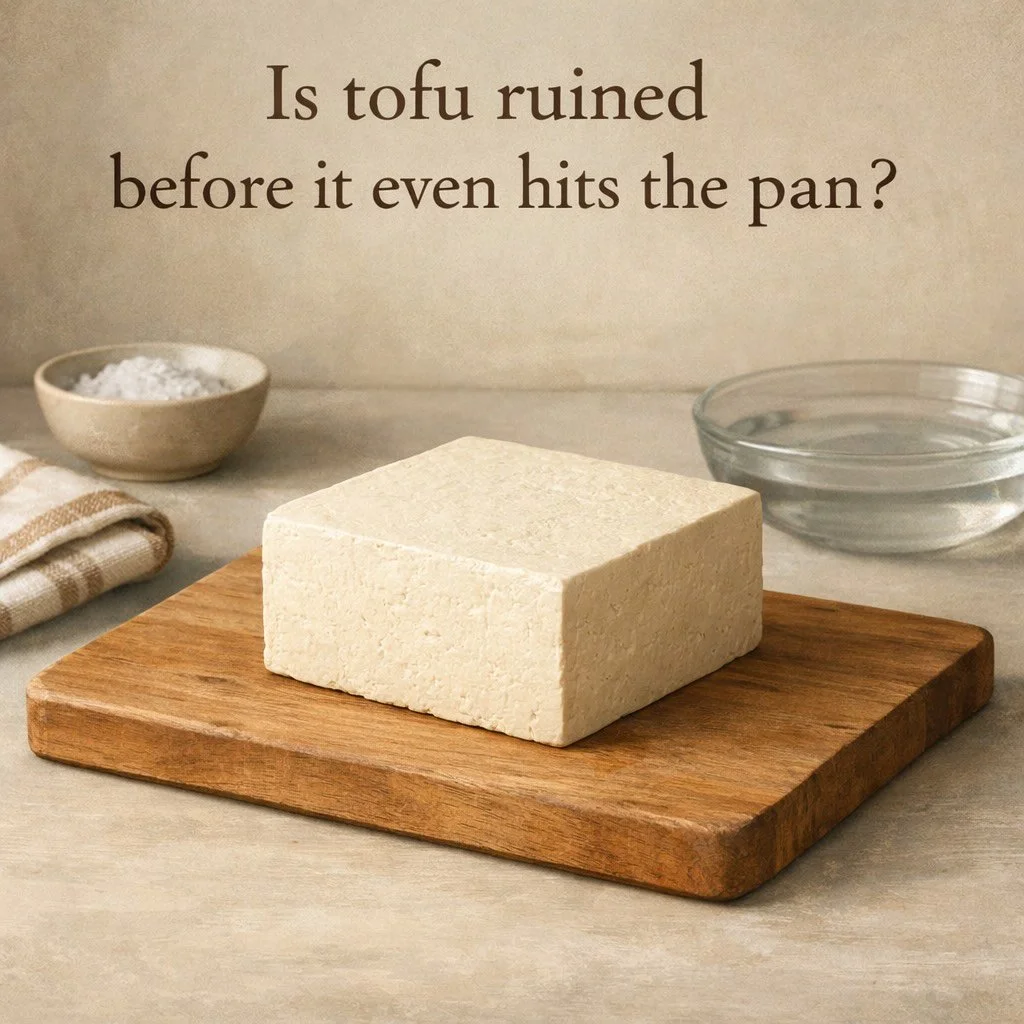
Why Tofu Prep Starts Before Cooking
Tofu rarely turns bland, watery, or soggy because of one bad recipe. More often, the problem begins before cooking: how the tofu was stored, cut, dried, pressed, salted, seasoned, or frozen.
Tofu is a protein-water gel. It holds moisture inside its structure and on its surface, so it responds clearly to water, air, salt, heat, pressure, and time. Once you understand that logic, tofu becomes much easier to control.
Good tofu prep is not about doing every technique every time. It is about choosing the right method for the texture you want.
Store Tofu Properly First
Unopened tofu should stay refrigerated in its original packaging until the expiry date. Once opened, water-packed tofu needs more care because it can dry out, absorb fridge odours, and spoil quickly.
Move leftover tofu to a clean airtight container, cover it fully with fresh water, seal it, and keep it in the fridge below 4°C. Change the water daily and use the tofu within 3–4 days. Do not leave tofu at room temperature for more than 2 hours.
The water keeps the tofu hydrated and prevents uneven drying. If the water smells sour, turns unusually cloudy, or the tofu feels slimy, discard it.
Do not leave opened tofu uncovered unless you are intentionally drying it for cooking. Do not vacuum-seal or preserve opened tofu in jars at home. Refrigeration and short storage are safer.
Cooked tofu should be stored differently. Let it cool, place it in an airtight container, and refrigerate it without extra water.
Choose the Right Firmness
Preparation starts with choosing the right tofu.
Silken tofu is delicate, smooth, and custard-like, best for soups, sauces, desserts, smoothies, and gentle steaming. Soft tofu suits broths, mapo tofu, and spoonable dishes where tenderness matters more than neat edges. Medium tofu gives a tender centre and works well in curries, braises, and gentle pan-frying.
Firm tofu is the most versatile choice for stir-fries, baking, pan-frying, and crisp cubes. Extra-firm tofu holds its shape best when you want clean edges, chew, grilling, or high-heat cooking.
Before asking, “Should I press this tofu?”, ask first: “What texture do I want?”
Press When Structure Matters
Pressing is useful when structure matters more than tenderness. By removing some of the more loosely held water, it helps firm or extra-firm tofu brown more evenly and hold its shape during cooking.
Use pressing for pan-frying, baking, skewers, crumbed tofu, grilling, and stir-fries where neat cubes matter. Place firm or extra-firm tofu between clean towels, top with a moderate weight, and press for 15–30 minutes.
Pressing slightly compresses the tofu, but it does not make marinades penetrate deeply into the centre. Its main benefits are texture, handling, and surface control.
Do not press silken tofu. Avoid heavy pressing when you want a soft, juicy, or custard-like result.
Use Hot Salt-Water Prep for Faster Firming
Pressing is not the only way to prepare tofu. A hot salt-water soak can quickly firm the surface while helping loose moisture move outward.
Slice or cube firm or extra-firm tofu. Dissolve about 1–2 tablespoons of salt in 500 mL of hot water, pour it over the tofu, and leave it for 10–15 minutes. Drain well, then let the steam evaporate before cooking.
The exact salt amount is not critical. The goal is to expose the tofu to hot salted water long enough for the surface to tighten slightly. This method is especially useful for stir-fries, crisp cubes, and saucy tofu that needs to hold together without becoming dense.
Cut With Intention
Tofu does not absorb flavour evenly through the whole block. Much of the seasoning stays near the surface, so shape matters.
Thin slabs maximise browning and work well for sandwiches, rice bowls, and pan-frying. Cubes balance crisp edges with a soft centre. Triangles hold together nicely for frying or glazing. Large steaks give contrast: browned outside, tender inside. Crumbled tofu creates the most surface area, making it ideal for scrambles, fillings, and mince-style dishes.
If tofu browns unevenly, breaks apart, or tastes bland in the middle, the shape may be part of the problem.
Dry the Surface Before Browning
Crisp tofu starts with a dry surface.
Water keeps tofu close to 100°C until it evaporates. Browning only begins properly once the surface is dry enough to rise above that point.
After draining, pressing, or hot-brining, pat the tofu gently with a clean towel. For better results, place it on a rack for 10–20 minutes so air can reach all sides. After hot salt-water prep, let the steam evaporate before adding oil, starch, or sauce.
Wet tofu in hot oil will sputter, steam, stick, and brown slowly. Dry tofu has a much better chance of turning golden and crisp.
Season in Layers
Cold marinades are often misunderstood. They can season tofu’s surface, but they rarely penetrate deeply. If the marinade is thin and watery, it may simply make tofu wetter and slow browning.
For better flavour, build in layers. Prepare the texture first, dry the surface, brown the tofu, then add coatings, aromatics, sauces, glazes, or reduced liquids.
Soy sauce, miso, garlic, ginger, chilli, spices, sesame oil, mushroom sauces, and fermented pastes work well because they cling, concentrate, and build savoury depth during cooking.
Tofu becomes flavourful not because it soaked for hours, but because seasoning, heat, fat, and reduction work together.
Freeze Tofu When You Want Chewier Texture
Freezing tofu is not just storage. It is a deliberate texture technique.
When tofu freezes, ice crystals form inside the gel. After thawing, those crystals leave small pores, creating a chewier, more fibrous structure that holds sauces well.
Freeze firm or extra-firm tofu for braises, stews, curries, hot pots, or saucy dishes. Thaw it fully in the fridge, then squeeze gently to remove excess water.
Do not freeze tofu if you want a silky, smooth, or delicate result. Freezing is not better or worse than pressing; it simply creates a different texture.
Common Prep Mistakes
If tofu tastes watery, it may need better draining, pressing, brining, drying, or cooking. Remove surface moisture before seasoning and give the tofu enough time over heat.
If tofu stays pale, it may be too wet or crowded in the pan. Cook in batches and let moisture evaporate before adding sauce.
If tofu sticks, wait longer before turning it. Tofu releases more easily once a crust begins to form.
If tofu falls apart, choose firmer tofu, cut larger pieces, press lightly, or use hot salt-water prep.
If tofu tastes bland, do not rely only on soaking. Add flavour through browning, sauce reduction, aromatics, and glazes.
If tofu turns rubbery, it may have been over-pressed, overcooked, or cut too small for the cooking method.
Final Takeaway: Tofu Rewards Intention
Tofu is not difficult. It is responsive.
Store it properly. Choose the right firmness. Press when structure matters. Use hot salt-water prep when you want fast firming. Cut with intention. Dry before browning. Season in layers. Freeze only when you want a chewier texture.
Small changes before cooking can guide tofu toward crisp, chewy, silky, tender, sponge-like, or deeply savoury results.
And when tofu tastes better, it becomes easier to place it at the centre of the plate—one thoughtful, kinder meal at a time. 🌱✨
