
Tofu’s Green Journey: From Sustainable Farm to Tasty Plate
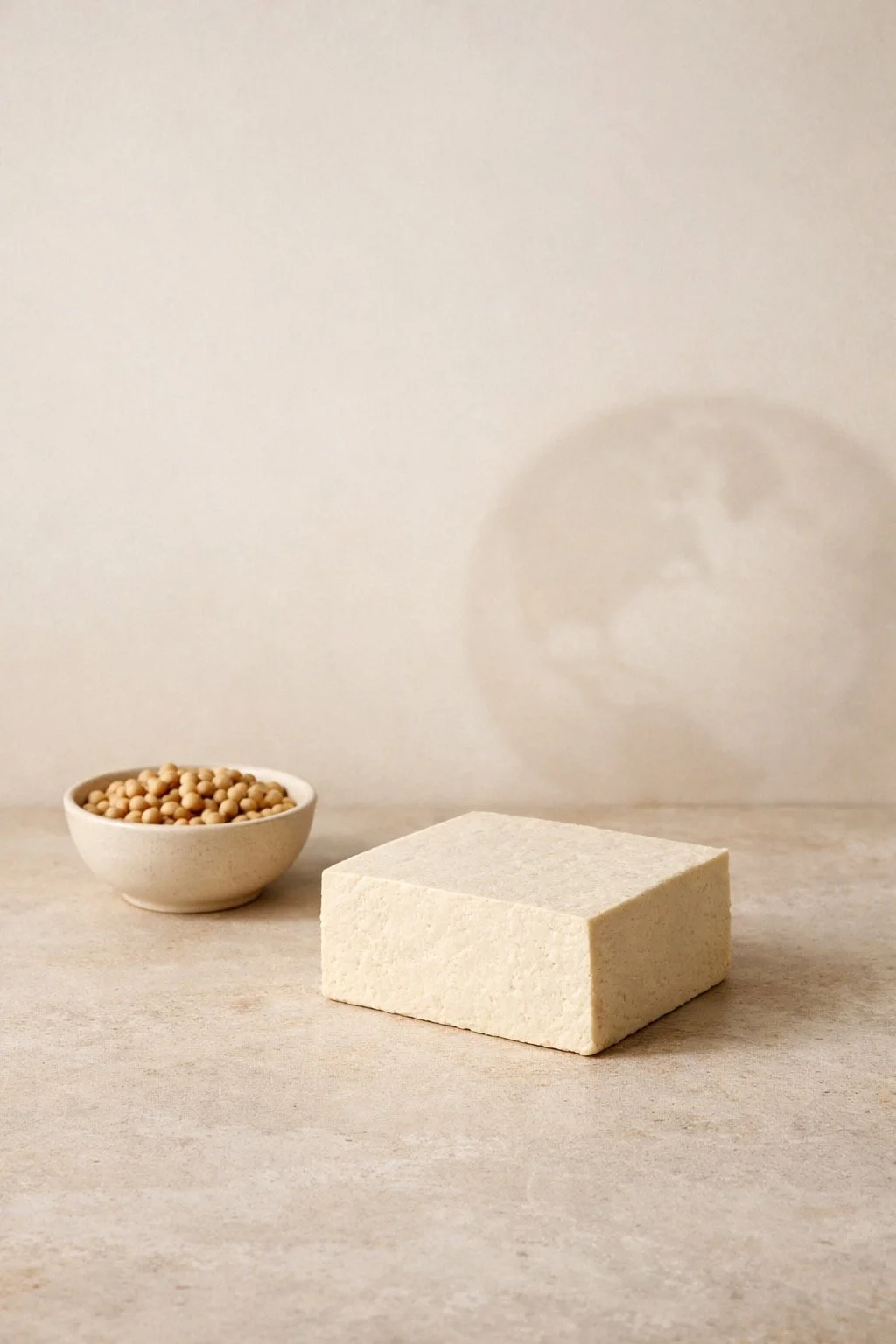
Tofu doesn’t begin in a factory.
It begins in a field.
A quiet stretch of soy plants growing under open sky — drawing sunlight, rain, and nutrients from the soil. What makes tofu remarkable isn’t just its versatility in the kitchen. It’s the efficiency of its entire journey.
Let’s follow that path — from farm to plate — and see why tofu represents more than a meal.
1. The Beginning: Soybeans in the Field
Soybeans are legumes. And legumes are natural soil allies.
Why that matters:
Nitrogen fixation: Soy plants partner with soil bacteria to pull nitrogen from the air into the soil. This reduces the need for synthetic fertilisers.
Lower input farming: Compared to many livestock systems, soy requires far less land and water.
Crop rotation benefits: Soy improves soil health when rotated with grains.
Importantly, most global soy is not grown for tofu.
According to the Food and Agriculture Organisation, roughly 77–80% of global soy production goes to animal feed, while only a small percentage is used directly for human foods like tofu and soy milk.
That distinction matters.
When we eat tofu directly, we’re choosing the more efficient path.
2. The Efficiency Advantage: Plants vs Livestock
Here’s the biological reality:
Livestock are converters.
They consume large quantities of plant protein to produce a smaller amount of meat protein.
Estimates show it can take 7–25 kg of plant protein to produce just 1 kg of meat protein.
Tofu skips that conversion step.
It delivers plant protein directly — a biological shortcut.
And that shortcut has a measurable impact.
Research published in journals such as Science has shown that beef production can generate between 60–99 kg CO₂e per kilogram of product, while tofu produces roughly 3 kg CO₂e per kilogram.
That’s not a small difference.
It’s structural.
3. Water and Land: The Quiet Savings
Sustainability isn’t only about carbon.
It’s also about:
Land use
Water consumption
Habitat pressure
Beef production can require around 15,000 litres of water per kilogram, while tofu averages closer to 2,000–2,500 litres per kilogram.
Tofu also requires dramatically less land per kilogram of protein produced.
Less land pressure means:
Fewer incentives for deforestation
Reduced biodiversity loss
More resilient ecosystems
When we choose tofu, we reduce demand for the most resource-intensive systems.
Quietly. Consistently.
4. From Bean to Block: Minimal Processing, Maximum Versatility
Tofu’s production process is surprisingly simple:
Soak soybeans
Blend with water
Heat and strain to make soy milk
Add a coagulant (like calcium sulfate or nigari)
Press into blocks
That’s it.
No complex feed cycles.
No multi-year growth period.
No methane emissions from ruminants.
Just plant protein transformed into a stable, versatile form.
And from there?
It adapts to almost any cuisine — grilled, baked, crumbled, blended, marinated.
A single ingredient. Endless applications.
5. The Plate: Small Choices, Large Ripples
Sustainability doesn’t require perfection.
It requires direction.
Swapping one or two meals per week from meat to tofu:
Reduces cumulative emissions
Lowers water demand
Lightens land pressure
Supports a shift toward more efficient food systems
You don’t need to change everything.
You just need to start somewhere.
Tofu makes that start easy.
The Bigger Picture
Tofu represents a simple idea:
Eat closer to the source.
The shorter the chain between sunlight and plate, the lower the cost to the planet.
That doesn’t mean eliminating all animal foods overnight.
It means recognising efficiency when we see it.
And tofu is efficiency — nutritionally, environmentally, structurally.
Final Reflection: A Kinder Journey
Every block of tofu carries a quiet story:
Sunlight → Soybean → Soy milk → Tofu → Meal.
No dramatic transformation.
No excess.
No unnecessary detours.
Just plants becoming nourishment.
At Tofu World, we don’t see tofu as a substitute.
We see it as a symbol.
A symbol that food can be delicious, deeply satisfying, and lighter on the planet — all at once.
One meal at a time. 🌱✨
