
Tofu’s Nutritional Might: A Comprehensive Health Profile
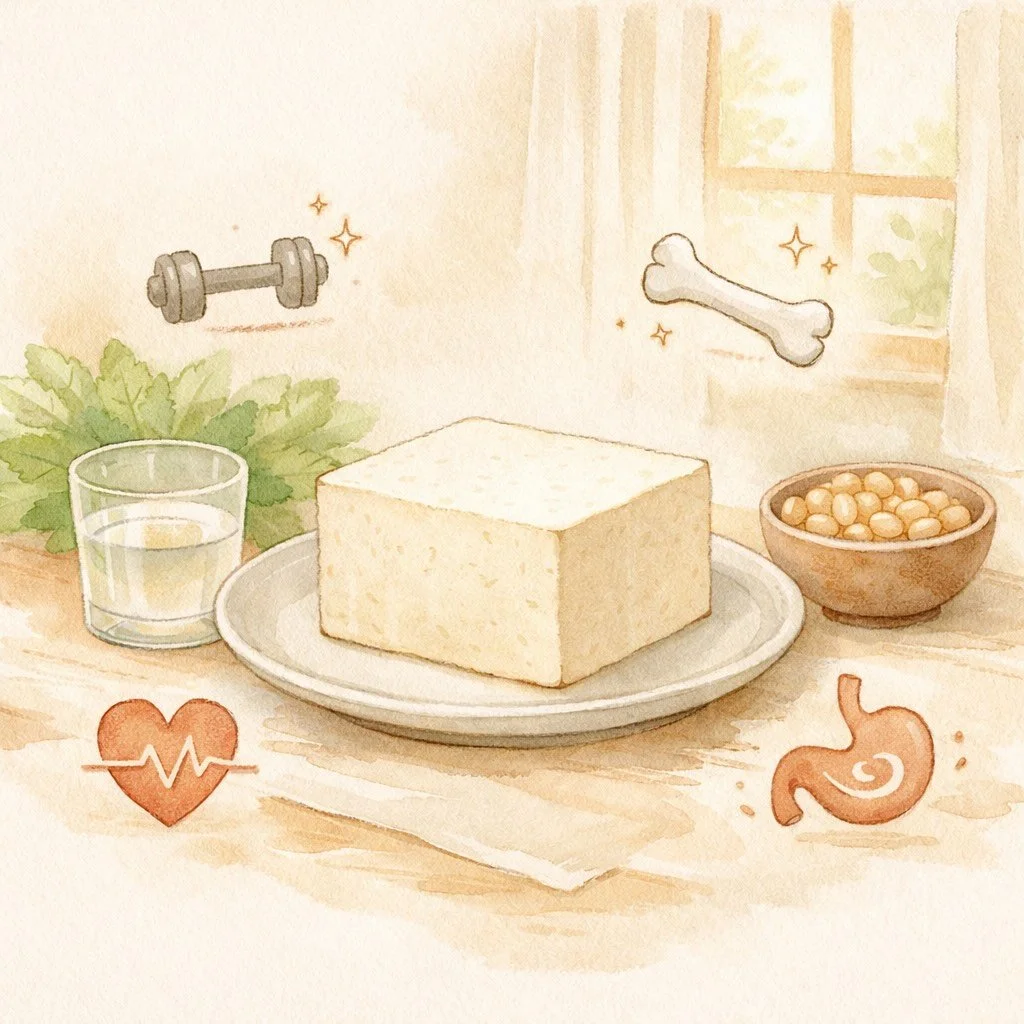
Why Tofu’s Nutrition Is So Often Misunderstood
Tofu tends to be judged by what it isn’t: not meat, not dairy, not heavily processed junk. In reality, tofu is a quietly sophisticated food—nutritionally dense, highly digestible, and remarkably well-balanced.
Unlike many plant-based foods that excel in one area but lack in others, tofu sits at a rare intersection of protein quality, mineral content, metabolic efficiency, and culinary adaptability. Understanding its health profile helps explain why tofu has endured across cultures for over two millennia—and why it remains so relevant today.
1. Complete, High-Quality Plant Protein
One of tofu’s most important credentials is that it is a complete protein, containing all nine essential amino acids required by the human body.
What makes tofu stand out is not just amino acid completeness, but digestibility. Traditional tofu production involves soaking, grinding, boiling, and coagulating soybeans—steps that dramatically reduce anti-nutritional compounds such as trypsin inhibitors. The result is a protein that is both bioavailable and gentle on digestion.
For comparison:
Many legumes are protein-rich but incomplete
Whole soybeans are nutritious but harder to digest
Tofu strikes a balance: refined enough for absorption, whole enough to retain integrity
This makes tofu particularly valuable for:
Older adults with reduced digestive efficiency
Athletes needing consistent protein intake
Plant-based eaters seeking reliable amino acid coverage
2. Calcium That Actually Counts
Not all tofu is created equal—but calcium-set tofu is a quiet nutritional powerhouse.
When tofu is coagulated with calcium sulfate (gypsum), it becomes a meaningful source of bioavailable calcium, often comparable to dairy on a per-serving basis. Unlike fortified foods, where minerals are added later, calcium in tofu is structurally integrated into the curd itself.
This matters because:
Bioavailability is higher when minerals are bound within food matrices
Calcium absorption improves when paired with protein
Tofu avoids the saturated fat burden of many calcium-rich animal foods
For individuals who are lactose intolerant, dairy-free, or reducing animal products, tofu offers bone-supporting nutrition without compromise.
3. Heart Health and Cholesterol Balance
Tofu contains zero cholesterol and minimal saturated fat—already a win for cardiovascular health. But its benefits go further.
Soy protein has been extensively studied for its ability to:
Modestly lower LDL (“bad”) cholesterol
Improve lipid profiles when replacing animal protein
Support vascular flexibility
Additionally, tofu provides:
Polyunsaturated fats, including omega-6
Isoflavones that may support endothelial function
Rather than acting as a “superfood,” tofu works through substitution power: replacing higher-impact foods with a nutritionally calm, metabolically efficient alternative.
4. Gut-Friendly by Design
Contrary to outdated myths, tofu is one of the most gut-friendly forms of soy.
Because much of the insoluble fibre and oligosaccharides are removed during processing, tofu is:
Lower in FODMAPs than whole legumes
Easier to tolerate for sensitive digestive systems
Less likely to cause bloating
At the same time, tofu retains:
Small peptides beneficial to gut lining health
Isoflavones that interact with gut microbiota
For many people who struggle with beans or lentils, tofu becomes a reliable entry point into plant-based protein.
5. Hormones, Isoflavones, and the Evidence Gap
Few foods have been as misunderstood as soy when it comes to hormones.
The reality:
Soy isoflavones are phytoestrogens, not human estrogen
They bind weakly to estrogen receptors and often have a modulating effect
Large population studies show no feminising effects in men
Moderate soy intake is associated with reduced risk of certain hormone-related cancers
In cultures with long-term tofu consumption, soy is linked not to disruption, but to dietary stability and longevity.
6. Micronutrients That Add Up
Beyond protein and calcium, tofu contributes meaningfully to daily nutrition:
Iron (non-heme, enhanced with vitamin C-rich foods)
Magnesium supports muscle and nerve function
Phosphorus, essential for energy metabolism
B-vitamins, especially folate
While tofu is not designed to “cover everything,” it forms a nutritional anchor—a food that supports balance rather than extremes.
7. Nutritional Efficiency in a Changing World
From a systems perspective, tofu delivers more nutrition with fewer resources than almost any animal protein.
It requires:
Less land
Less water
Fewer inputs per gram of usable protein
This efficiency is not just environmental—it’s nutritional. Calories from tofu are far more likely to end up feeding people directly, rather than being lost through biological conversion.
In a world facing dietary fatigue and ecological strain, tofu represents nutritional clarity.
Final Takeaway 🌱
Tofu doesn’t shout its benefits.
It earns them quietly.
It fuels bodies without excess, supports health without hype, and fits seamlessly into meals across cultures and lifestyles. Whether you’re plant-based, flexitarian, or simply curious, tofu offers something increasingly rare: nutrition that works with you, not against you.
Every block is an invitation—to eat more thoughtfully, more gently, and more sustainably.
One meal at a time.
