
From Silence to Symphony: The Art of Seasoning Tofu
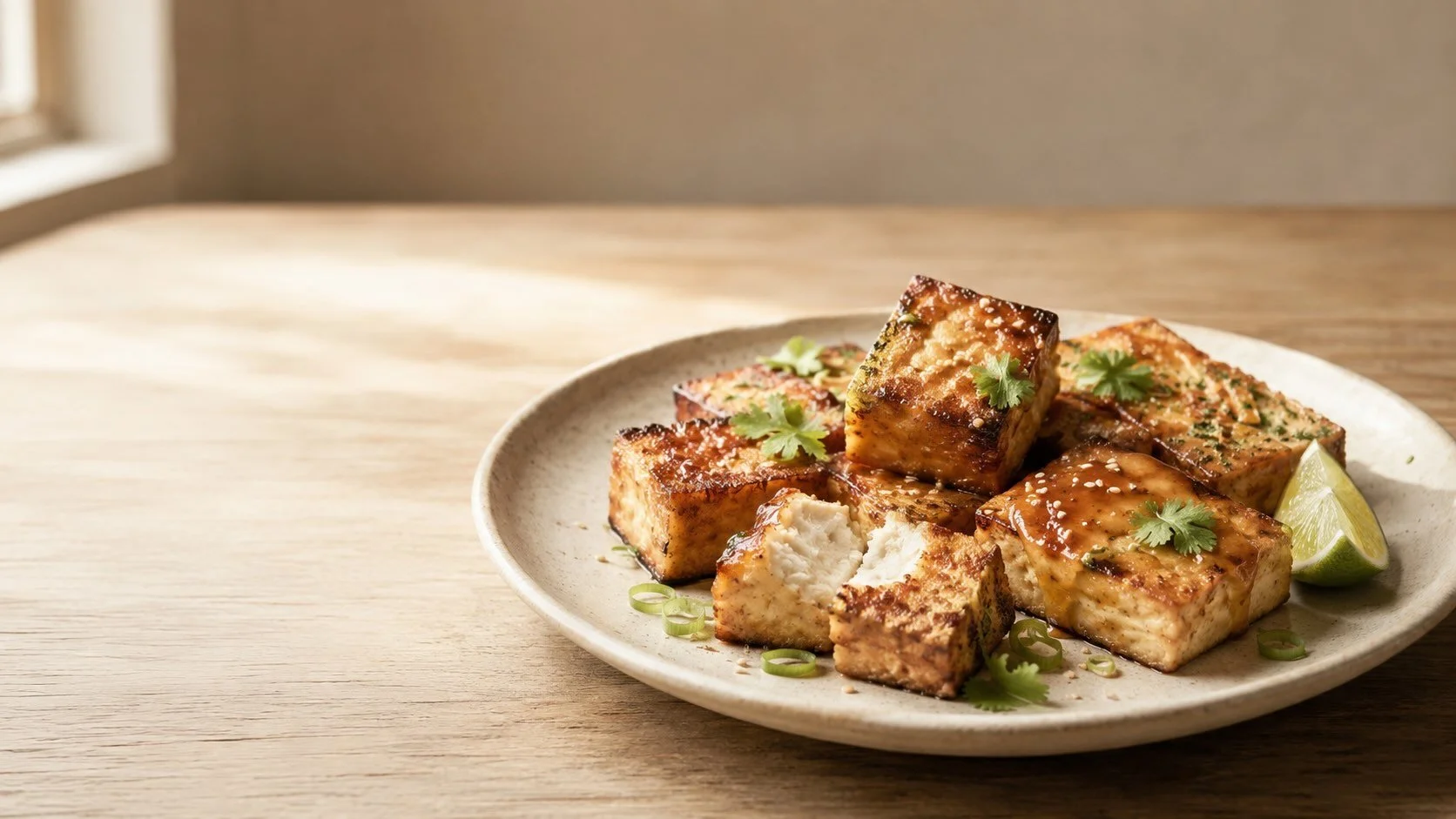
Tofu is often described as bland.
But that is like calling a blank canvas boring.
Tofu is quiet rather than empty. Its mild soy flavour leaves room for savoury depth, brightness, aroma and contrast. Yet tofu does not simply absorb everything around it. Good seasoning depends on choosing the right tofu, controlling moisture and adding flavour at the right stage.
At Tofu World, we do not overpower tofu.
We orchestrate it. 🌱
Understand the Instrument
Tofu is a water-rich soy-protein gel whose structure changes with firmness and manufacturing method.
Most short marinades mainly flavour the surface and outer layers. Salt and other small dissolved compounds can move gradually into tofu, but oils, spice particles and many aromatic ingredients do not travel deeply through a thick block. Thin slices and small pieces therefore season more evenly than large cubes.
Silken and soft tofu suit concentrated dressings, broths and spooned sauces rather than pressing. Firm tofu handles frying, baking, simmering and marinating. Extra-firm tofu suits grilling, roasting and crisp preparations. Frozen-thawed tofu develops a chewier, sponge-like structure that holds sauce well.
The first step is choosing tofu that suits the dish.
Five Ways to Season Tofu
1. Season Directly
Salt, soy sauce, miso or another savoury ingredient can be applied before cooking. Early seasoning gives salt more time to distribute, especially through thin pieces, although the centre of thick tofu will remain milder.
2. Marinate
A marinade can add salt, sweetness, aroma and surface complexity without containing every flavour category.
For one 300–450 g block of firm tofu, start with:
1–1½ tablespoons soy sauce or another salty seasoning
1 tablespoon water or stock
1–2 teaspoons oil
1 teaspoon sugar or maple syrup, if appropriate
garlic, ginger, spices or herbs to suit the dish
Oil distributes fat-soluble aromas, helps spices cling and supports browning, but does not deepen penetration.
Because salty sauces vary, taste the marinade first. Refrigerate thin slices or small pieces in it for 20–30 minutes. Longer soaking may intensify the exterior without seasoning the centre. Drain before high-heat cooking.
3. Coat the Surface
Dry seasonings create immediate flavour, but heavy coatings may taste dusty or burn.
For a crisp coating, pat away visible liquid until the tofu feels lightly tacky rather than wet. Toss one block with 1–2 tablespoons cornflour or potato starch, using only enough for a thin, even layer.
4. Simmer or Braise
Cooking tofu in seasoned liquid often integrates flavour better than a longer cold marinade.
Firm tofu can be simmered gently in stock, soy sauce, miso broth, curry, tomato sauce or fermented bean sauce. As the liquid reduces, it becomes more concentrated and clings more closely to the tofu.
A tofu braise can be soft, juicy and deeply savoury without being browned.
5. Glaze and Finish
Once tofu has browned, add a little sauce and cook until glossy. Watery sauce softens the crust; a reduced glaze preserves more texture.
Finish with herbs, citrus, spring onion, toasted sesame, chilli oil, tahini, pickles or crisp shallots. These final touches add freshness, aroma and contrast.
An Alternative to Pressing
Pressing can help tofu brown, but it is not the only option.
Cover firm tofu with 500 mL very hot water mixed with 1–2 tablespoons salt. Leave for 10–15 minutes, then drain and pat dry. This lightly seasons the tofu and helps its surface dry without compressing the interior as much as prolonged pressing.
Season in the Right Order
Timing matters as much as ingredients.
Salt can be introduced early. Sugar-rich sauces are better added later during high-heat cooking, where they are less likely to scorch. Ground spices can be applied before cooking, bloomed in oil or added to sauce. Fresh herbs, citrus and delicate oils usually belong at the end.
Think of it as a composition:
Salt establishes the bass.
Aromatics and spices build the harmony.
Fresh finishes carry the high notes.
Tofu browns best when its surface becomes dry and hot. While moisture is still evaporating, it will steam rather than form a crust. Dry the tofu well, preheat the pan or oven, leave space between pieces and allow a crust to develop before turning. Avoid adding watery sauce too early.
Dryness is not the enemy.
It is the stage on which browning develops.
Build Flavour Systems, Not Ingredient Lists
Choose a clear culinary direction rather than adding seasonings at random.
Try a Japanese-style soy–ginger glaze, a Sichuan sauce with doubanjiang and chilli oil, Vietnamese-style lemongrass with garlic and black pepper, or a Mediterranean combination of olive oil, lemon, oregano and herbs.
The question is not simply, “What goes with tofu?”
It is, “What role should the tofu play in this dish?”
Common Seasoning Problems
The tofu tastes salty outside but bland inside.
Cut it thinner, season earlier, simmer it in sauce or use frozen-thawed tofu when a porous texture suits the dish.
The starch turns gummy.
Pat away more liquid before coating.
The tofu will not brown.
Dry it better, increase the heat and avoid overcrowding.
The marinade burns.
Use less sugar or add the sweetened sauce near the end.
The sauce slides off.
Reduce or lightly thicken it before coating the tofu.
The dish tastes heavy or flat.
Add citrus, herbs, pickles or another bright finishing element.
Final Takeaway
Thoughtful seasoning makes tofu satisfying, generous and repeatable. It shows that eating with greater care for animals and the environment does not have to feel like sacrifice.
Great tofu seasoning is not about pouring on more sauce. Choose the right tofu, control surface moisture and build flavour in stages.
Season early where depth matters. Brown when you want character. Simmer when you want integration. Glaze when you want concentration. Finish when the dish needs brightness.
Tofu does not shout.
It listens.
And when salt, heat, aroma and texture come together with intention, tofu answers—not with noise, but with harmony.
That is how quiet tofu becomes a full composition.
