
Tofu and Jackfruit: Perfect Protein, Texture, and Flavour
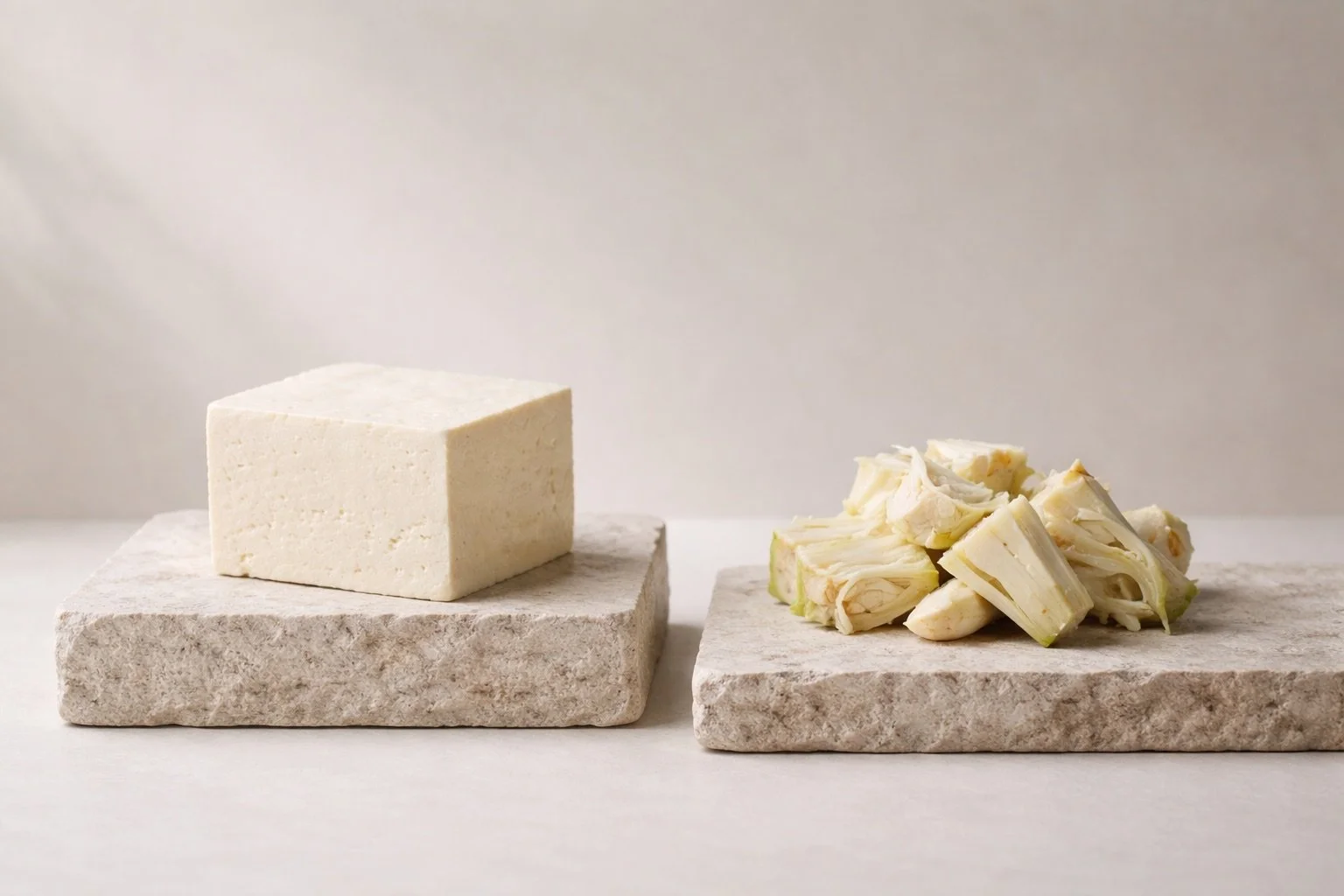
Why Tofu and Jackfruit Belong Together
On their own, tofu and jackfruit are often misunderstood. Tofu is dismissed as bland. Jackfruit is treated as a novelty meat substitute. But when paired thoughtfully, they solve each other’s limitations.
Tofu provides complete protein, structure, and satiety
Jackfruit contributes fibrous texture, moisture, and aromatic depth
This isn’t about imitation. It’s about complementarity—building a plant-based plate that feels whole, not compromised.
At Tofu World, we see this pairing as a quiet lesson in balance: nutrition doesn’t need drama, and texture doesn’t need deception.
Nutritional Architecture: Protein Meets Fibre
Tofu is a complete protein, delivering all nine essential amino acids with high digestibility. Jackfruit, by contrast, is low in protein but rich in fibre and slow-release carbohydrates.
Together, they create a meal that is:
Protein-anchored (from tofu)
Gut-supportive (from jackfruit’s fibre)
Metabolically steady, avoiding blood sugar spikes common in refined meat substitutes
Jackfruit also adds potassium, vitamin C, and polyphenols, while tofu contributes iron, calcium (when calcium-set), and isoflavones. The result is not just “plant-based,” but nutritionally intentional.
Texture Science: Structure + Shred
Jackfruit’s fame comes from its stringy, pull-apart texture—but texture alone does not satisfy. Without protein structure, jackfruit dishes can feel hollow or fleeting.
This is where tofu changes everything.
Firm or extra-firm tofu offers bite, chew, and structural integrity
Jackfruit fills the gaps with softness, moisture, and fibrous contrast
When cooked together—whether braised, pulled, or pan-seared—the textures interlock. Tofu holds the dish together. Jackfruit loosens it, lightens it, and keeps it juicy.
The result is not “fake meat,” but a layered plant texture that feels complete.
Flavour Dynamics: Absorption vs Expression
Tofu and jackfruit interact with flavour differently—and that contrast is an advantage.
Tofu carries flavour best on its surface, especially when seared, baked, or coated
Jackfruit absorbs aromatic sauces deeply due to its porous fibre structure
In practice, this means:
Season tofu boldly on the outside (spices, rubs, starch coatings)
Simmer or braise jackfruit in sauces, broths, or spice pastes
When combined, each bite delivers both anchored savouriness and sauce-rich complexity.
Think smoky tomato braises, coconut curries, peppery stir-fries, or spiced taco fillings—each component doing what it does best.
Best Ways to Cook Tofu and Jackfruit Together
This pairing shines in dishes where contrast matters:
Ideal Formats
Pulled-style fillings (wraps, bánh mì, tacos)
Slow braises and curries
Stuffed vegetables or dumpling fillings
Hearty bowls with grains and greens
Practical Tips
Use young green jackfruit in brine, not syrup
Rinse and squeeze the jackfruit gently to remove excess salt
Cook tofu separately first if you want crisp edges
Combine late for mixed textures, early for unified softness
This flexibility makes the pairing especially powerful for home cooks easing into plant-based meals.
Sustainability & Accessibility
Both tofu and jackfruit score well on sustainability metrics:
Low greenhouse gas emissions
Efficient land and water use
Widely available and affordable
More importantly, they are familiar foods in many cultures. This pairing doesn’t ask people to abandon tradition—it invites them to reinterpret it.
That’s how change sticks.
Final Takeaway: Not a Substitute, a System
Tofu and jackfruit don’t pretend to be something else. They don’t need to.
Together, they form a system: protein, texture, flavour, and nourishment working in quiet harmony. A meal that satisfies without spectacle. A plate that feels generous without excess.
If tofu is the anchor, jackfruit is the movement. And when they come together, they remind us that plant-based cooking isn’t about replacement—it’s about balance.
One thoughtful pairing at a time, we move closer to a kinder, more sustainable world. 🌱✨
