
How to Pair Tofu with Plant Proteins for Balanced Nutrition
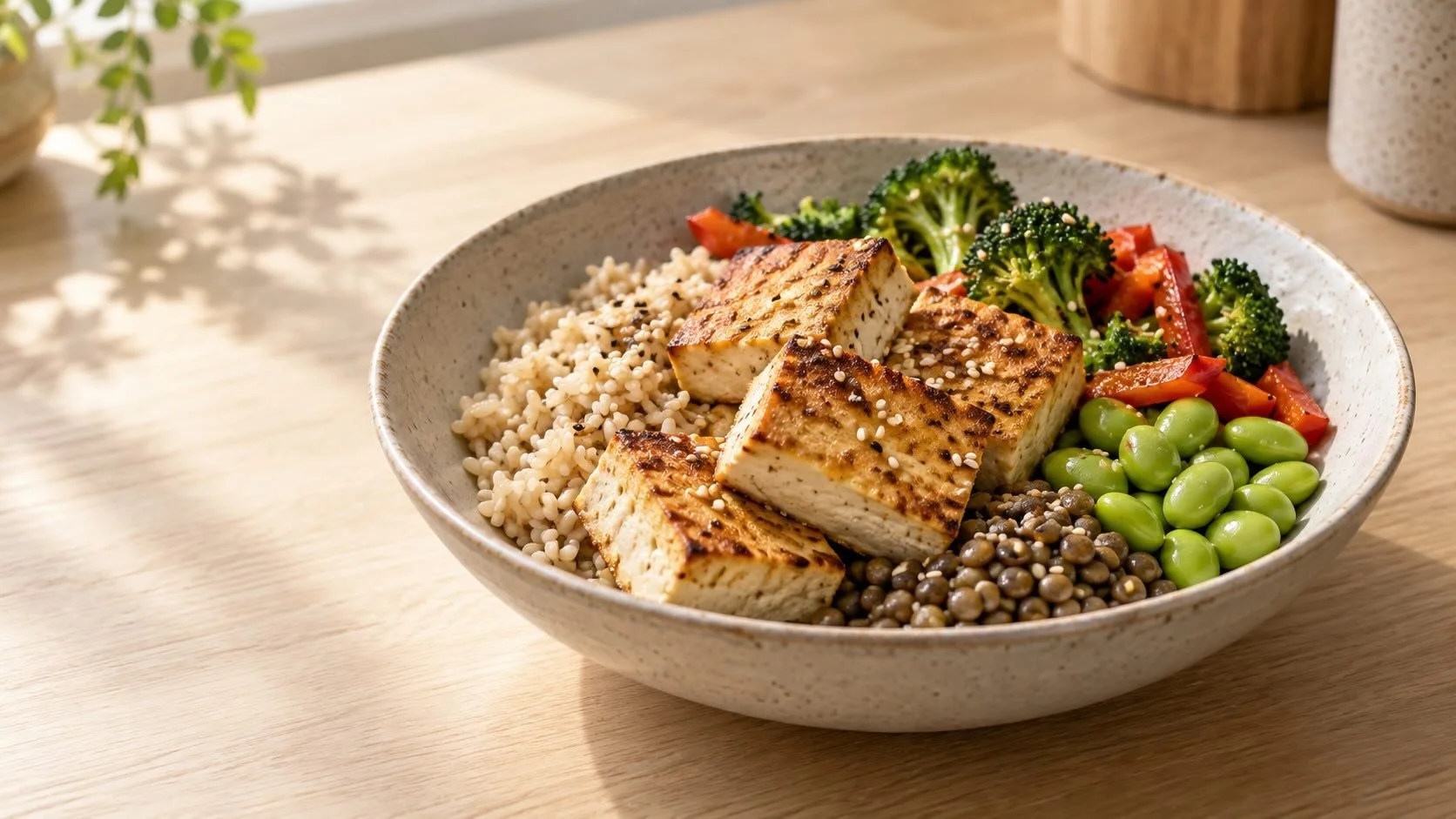
Tofu and rice. Tofu and lentils. Tofu with seeds scattered over the top. These combinations are often described as ways to make plant protein “complete”—but that is not the best reason to eat them.
Tofu already contains all nine essential amino acids. More importantly, people do not need to carefully match different plant proteins at every meal. A varied diet that provides enough food and protein across the day can supply the amino acids the body needs, according to the British Dietetic Association.
So why pair tofu with other plant proteins? Because a nourishing meal is about more than completing an amino-acid puzzle. The right partners can add fibre, lasting energy, healthy fats, minerals, colour and—just as importantly—flavour and texture.
Start with the whole meal, not just the protein
Tofu brings protein, iron and unsaturated fat. Some calcium-set tofu also provides substantial calcium, although amounts vary. Check the nutrition panel; if calcium is not listed, calcium sulphate in the ingredients is a useful clue, not a guarantee of a particular amount.
What tofu does not provide in abundance is just as relevant. It is relatively low in fibre, and it is not a reliable source of vitamin B12. A balanced plate therefore needs more than a bigger pile of tofu.
A simple pattern is:
tofu as the main protein;
a wholegrain, legume or second plant protein where it suits the dish;
plenty of vegetables;
a little nut, seed or other unsaturated fat; and
a sauce, herb, spice or fermented seasoning that makes everything worth eating.
This reflects the broader principle behind a balanced diet: different food groups contribute different nutrients.
1. Pair tofu with wholegrains for energy and substance
Brown rice, oats, barley, quinoa and wholegrain noodles give tofu a satisfying foundation. They bring carbohydrates for energy, plus more fibre than refined grains. Their contrasting amino-acid profiles add variety, but you need not calculate ratios or special proportions.
Try crisp tofu over brown rice with broccoli and a sesame–ginger dressing, or add soft tofu to savoury oats with mushrooms and spring onion. If you prefer white rice or noodles, keep them; add vegetables, beans or seeds elsewhere in the meal rather than treating balance as an all-or-nothing rule.
2. Pair tofu with beans or lentils for fibre
Tofu and legumes come from the same broad food family, yet they behave very differently. Tofu is smooth and compact; chickpeas, lentils and beans retain more of their original fibre and starch. Combining them can make a meal more filling while creating useful contrasts in texture.
Add tofu cubes to a red-lentil curry, crumble tofu into black-bean tacos, or blend silken tofu into a white-bean sauce. You do not need a full serving of both. A little lentil folded through a tofu dish may add enough body and fibre.
3. Pair tofu with nuts and seeds for richness
Peanuts, cashews, tahini, hemp, chia, linseed and pumpkin seeds contribute protein, but their greater strength is the flavour, crunch and unsaturated fat they bring. Chia, linseed and walnuts also provide the plant omega-3 fat ALA.
Think of these foods as supporting players: a spoonful of tahini in a lemon sauce, crushed peanuts over a tofu noodle bowl or ground linseed stirred into a breakfast smoothie made with silken tofu. Portions need not be large to change the meal.
4. Pair tofu with peas or edamame for freshness
Green peas and edamame add sweetness, colour and a more distinct bite. They work especially well when tofu is soft, or the rest of the dish is creamy.
Fold peas into a tofu scramble, serve seared tofu with an edamame and cucumber salad, or blend silken tofu and peas into a bright pasta sauce. This pairing is less about maximising protein and more about making a varied plate easy to enjoy.
5. Pair tofu with seitan when protein needs are higher
Seitan is made mainly from wheat protein. Alongside tofu, it can create a protein-dense meal with two very different textures—useful for people with larger appetites, active lifestyles or higher protein needs.
It is not essential, and it is unsuitable for anyone with coeliac disease or a wheat allergy. Because prepared seitan and sauces can also be salty, check the label and balance the dish with vegetables and a simple grain or potato.
Make iron a practical part of the pairing
Tofu, beans, lentils, nuts and seeds contain non-haem iron, the form found in plant foods. Adding a vitamin C-rich ingredient can help the body absorb it. Capsicum, broccoli, tomatoes, citrus, kiwi and strawberries are useful options; this relationship is supported by the US National Institutes of Health.
That can be as simple as squeezing lime over tofu and black-bean tacos, adding capsicum to a tofu stir-fry or serving lentil–tofu patties with tomato relish.
Common mistakes to avoid
Treating every meal like a protein equation. Variety across the day matters more than perfect food combining at one sitting.
Adding several proteins but few plants. Tofu, beans and seeds can share a plate, but vegetables, grains and fruit provide nutrients and fibre they cannot replace.
Assuming all tofu is calcium-rich. Calcium-set tofu can contribute meaningfully, but products vary. Read the nutrition panel and ingredients.
Relying on tofu for vitamin B12. Unfortified plant foods do not naturally provide reliable B12. People eating fully vegan diets need a dependable source from fortified foods or supplements, as the NIH explains.
Final Takeaway
Pair tofu with other plant proteins because they make meals more varied, satisfying and nourishing—not because tofu is nutritionally unfinished.
Start with the food you enjoy. Add lentils for comfort, grains for energy, seeds for richness or edamame for freshness. Then bring in colourful vegetables and bold flavour. Balanced eating is not built through one perfect combination, but through many enjoyable choices repeated over time—and tofu makes those choices wonderfully flexible.
