
Tofu Coconut Lemongrass Curry: Thai-Inspired Balance
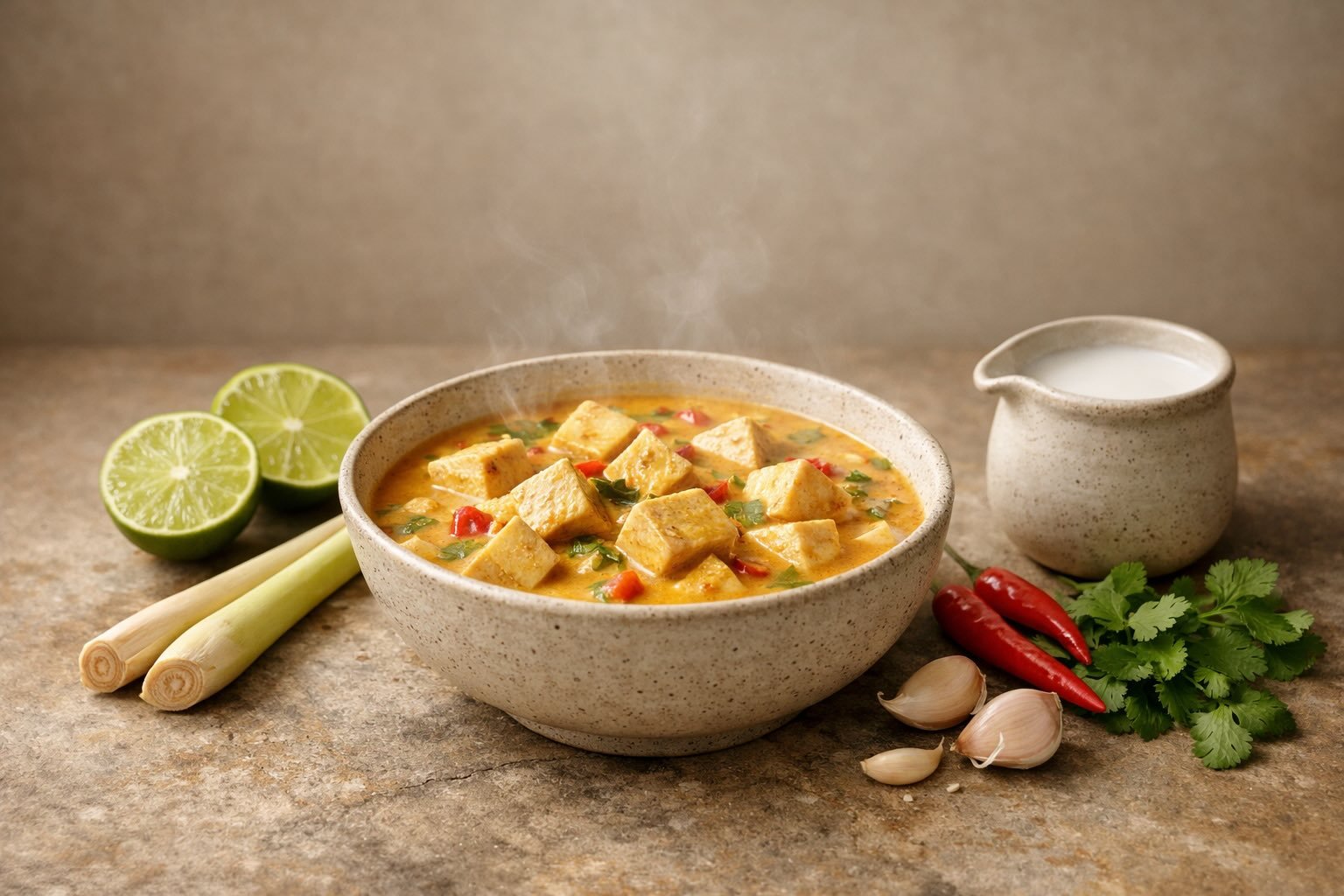
Some dishes feel rich the moment they hit the spoon.
Others feel bright the moment they reach the nose.
This one does both.
Tofu, coconut milk, and lemongrass create a curry that feels soft, fragrant, and deeply comforting — but not dull, not heavy, and not weighed down by richness alone. The coconut milk brings body. The lemongrass brings lift. The tofu sits quietly in the middle, absorbing flavour and giving the dish shape.
That balance is what makes this combination so enduring.
It reflects a principle often found across Thai cooking: richness is rarely left alone. It is paired with herbs, aromatics, acidity, heat, or sweetness so the dish stays alive on the palate. Even in a creamy curry, the goal is not thickness for its own sake. It is movement, contrast, and harmony.
This is where tofu fits beautifully.
Because tofu is mild, it does not compete with the coconut or the lemongrass. Instead, it gives those flavours somewhere to settle. It carries the sauce, holds the aromatics, and turns what could have been a loose curry into something complete.
Why This Combination Works
Coconut milk brings softness
Coconut milk gives the curry its creamy body. It also provides fat, which helps carry the aromatic compounds released by lemongrass, garlic, ginger, and chilli. The result is not only richness, but fragrance that lingers.
Lemongrass brings aroma, not sourness
Lemongrass is often read as citrusy, but it does not work like lime. It adds a high, fresh aroma rather than direct acidity. That distinction matters. It brightens the curry without making it sharp.
Lime brings the final lift
If lemongrass creates aromatic freshness, lime creates actual contrast. Added at the end, it sharpens the edges of the dish and stops the coconut milk from feeling flat.
Tofu holds everything together
Tofu gives the curry substance without taking attention away from the broth. It absorbs flavour, softens gently in the sauce, and makes the dish feel satisfying without needing heaviness.
A Note on Traditional Balance
In many Thai dishes, flavour is not built from richness alone. Salt, sweetness, acidity, aromatics, and heat are often brought into relationship with one another.
That matters here, too.
Coconut milk brings roundness.
Lemongrass and herbs bring fragrance.
Lime brings brightness.
A small amount of sugar helps soften the edges and bring the whole curry into balance.
This is why a Thai-inspired curry often tastes complete even when the ingredient list is simple. It is not about piling on flavours. It is about giving each one a role.
Coconut Milk and Coconut Cream
Because this blog centres on coconut milk, it is worth keeping the distinction clear.
Coconut milk is lighter and more fluid
Coconut cream is thicker and higher in fat
For a smooth, gentle curry like this, coconut milk works beautifully. It keeps the broth creamy but lighter.
In some traditional Thai methods, cooks begin with coconut cream and heat it until it separates, allowing the released fat to fry the aromatics. That creates a deeper and richer base.
This version stays on the softer side. It uses coconut milk for a smoother feel, while still borrowing the same flavour logic: richness balanced by fragrance, brightness, and restraint.
How to Build the Curry
This is best understood as a structure rather than a strict recipe.
1. Start with aromatics
Gently cook garlic, ginger, chilli, and bruised lemongrass in a little oil until fragrant. Do not rush this step. You are opening the dish, not browning it heavily.
2. Add the coconut milk
Pour in the coconut milk and let it warm into the aromatics. A gentle simmer is enough. This keeps the texture smooth and prevents the curry from feeling split or greasy.
3. Season the base
Add soy sauce or a light seasoning sauce for savoury depth. Add a small amount of sugar to round the flavour. The curry should taste full, but still soft.
4. Add the tofu
Place the tofu into the broth and let it simmer gently. Firm or medium tofu works especially well here. The goal is not aggressive reduction, but quiet absorption.
5. Finish at the end
Add lime juice only once the curry is nearly done. Then finish with herbs such as Thai basil or coriander.
That last step matters. It keeps the brightness fresh and the aroma clear.
Small Choices That Change the Dish
Use seared tofu for a more structured, slightly firmer result
Use plain simmered tofu for a softer, more delicate curry
Add mushrooms or eggplant for extra depth
Add curry paste if you want a bolder and more assertive version
The structure remains the same: creamy base, fragrant lift, final brightness.
What Makes It Feel Complete
A good curry not only tastes rich.
It feels balanced.
The coconut milk should feel calming, not heavy.
The lemongrass should feel fragrant, not perfumed.
The lime should wake the dish up, not dominate it.
The sugar should soften the edges, not turn them sweet.
And the tofu should make all of it feel held together.
That is the real appeal of this combination. It is not trying to overwhelm. It is trying to settle into harmony.
Final Takeaway
Tofu works especially well in dishes that depend on balance.
Here, it meets coconut milk at its softest and lemongrass at its brightest. One brings body. One brings lift. Tofu gives them both somewhere to land.
That is why this curry feels so comforting.
Not because it is rich.
But because it is balanced.
And once you understand that, you can carry the same logic into countless other dishes — one gentle, fragrant bowl at a time.
