
Tofu and Ethical Eating: A Solution to Food Challenges?
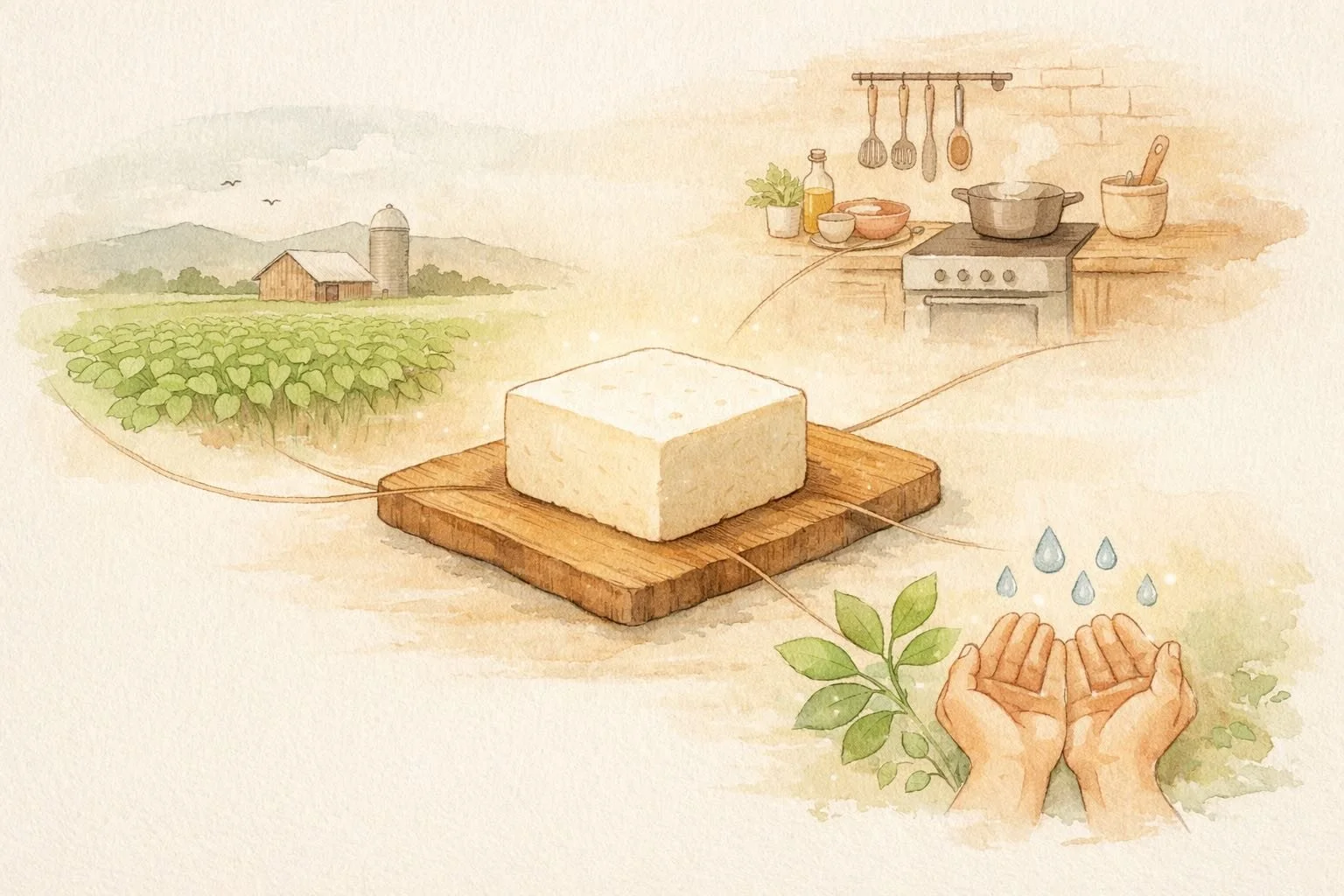
The Food Challenge Is Not Only Shortage — It Is Choice
The world produces an enormous amount of food, yet hunger, environmental damage, animal suffering, and diet-related disease still exist side by side.
The problem is not only how much food we grow. It is also how we use it.
Large amounts of crops are fed to animals, lost through waste, or channelled into food systems that require more land, water, energy, and suffering than necessary. Ethical eating begins by asking a simple question:
Can we nourish people with less harm?
That question does not require perfection. It asks for better everyday choices: foods that are affordable, adaptable, nutritious, culturally flexible, and easier on the planet.
This is where tofu quietly matters.
Why Ethical Eating Needs Practical Foods
Ethical ideals collapse quickly if the food itself is too expensive, difficult, unfamiliar, or joyless.
For ethical eating to work in real homes, it needs foods people can actually buy, cook, repeat, and enjoy. It needs foods that fit into busy weeknights, family meals, cultural traditions, and ordinary budgets.
Tofu is not a miracle food. It is not perfect. But it comes unusually close to what ethical eating needs: useful nutrition, modest resource demands, broad affordability, and remarkable culinary flexibility.
That combination is rare.
It means tofu does not have to rely on guilt. It can earn its place through practicality.
Protein Without the Livestock Detour
One of tofu’s strongest ethical advantages is simple: it lets people eat soy directly.
Animal agriculture often turns edible crops into feed first, then meat later. Along the way, much of the original energy and protein is used by the animal to live, move, grow bones, maintain body heat, and support organs. Only a fraction becomes edible meat.
Tofu skips that biological detour.
Soybeans are soaked, ground, heated, and set into a protein-rich food for people. More of the crop becomes human nourishment instead of being lost through an extra conversion step.
From an ethical standpoint, this is not only ideology. It is efficiency.
When more food reaches people directly, fewer crops are needed for feed, less pressure is placed on ecosystems, and fewer animals need to be bred, confined, transported, and slaughtered.
Lower Impact, Repeated Often
Compared with most animal proteins, tofu generally requires less land, less freshwater, and produces fewer greenhouse gas emissions per meal.
That does not mean tofu has no footprint. Soy still needs land, water, transport, and processing. Poor farming systems can damage forests, soil, and biodiversity. The best version of tofu is made from responsibly grown soy, especially soy not linked to deforestation.
But the comparison still matters.
Raising animals for food usually adds extra layers of resource use: growing feed, housing animals, managing manure, transporting livestock, and processing meat. Tofu avoids much of that chain by turning soy into food more directly.
This is why tofu works as a climate-conscious choice. Not because one tofu meal changes everything, but because a repeatable habit can reduce demand for higher-impact foods over time.
Ethical eating succeeds through repetition, not extremes.
Nutrition Without Slaughter
Ethical food still has to nourish people well.
Tofu can.
It provides complete plant protein, meaning it contains all essential amino acids. It also offers iron and useful minerals, and depending on how it is made, can be a good source of calcium. For calcium-rich tofu, look for calcium sulfate or gypsum in the ingredient list.
Because soy milk is heated during tofu production, tofu is generally easier to digest than raw soybeans and many minimally cooked legumes. Heating reduces natural compounds that interfere with protein digestion, making the protein more accessible to the body.
Tofu is naturally cholesterol-free and usually low in saturated fat.
That makes it more than a symbolic replacement for meat. It can genuinely anchor a meal: in stir-fries, curries, soups, noodle bowls, scrambles, salads, braises, skewers, and rice dishes.
For many eaters, this is where tofu becomes more than a substitute. It becomes a reliable staple.
If you are new to tofu, firm or extra-firm tofu is usually the easiest place to start because it holds its shape well in many everyday recipes. Silken tofu is better when you want something delicate to blend into smooth dressings, sauces, smoothies, or desserts.
The Misunderstood Role of Soy
Soy is often criticised for deforestation, monocropping, and industrial agriculture. Those concerns are real, but tofu is often blamed for a system it does not mainly drive.
Most of the world's soy is not eaten directly as tofu, tempeh, soy milk, or edamame. Instead, most soybeans are crushed into soybean meal and oil. The meal is used primarily for feeding livestock, while the oil is used in cooking, food manufacturing, and other products.
Only a small share of global soy ends up in whole foods such as tofu and other traditional soy foods.
That distinction matters because if the problem is industrial feed production, then blaming tofu misses the larger issue: the enormous demand for animal products that drives much of that feed system.
Traditional tofu is also relatively simple as a food. It is made by soaking soybeans, grinding them with water, heating the mixture, filtering the soy milk, and setting it into curds with mineral salts such as calcium sulfate or nigari.
It is processed, yes — but not in the same way as ultra-processed snack foods. It is closer to bread, cheese, or yoghurt: a basic food shaped by water, heat, minerals, and technique.
Why Tofu Works Across Cultures
Ethical eating often fails when it feels culturally narrow or imposed.
Tofu avoids this problem because it has never belonged to only one dish, one diet, or one identity.
For centuries, tofu has adapted across Chinese home cooking, Japanese temple cuisine, Korean stews, Vietnamese dishes, Indonesian street food, Thai curries, and modern Western kitchens.
It can be steamed until delicate, fried until crisp, simmered in sauce, grilled on skewers, blended into dressings, crumbled into scrambles, or served chilled with soy sauce, ginger, herbs, and chilli oil.
That adaptability is part of its ethical strength.
Tofu does not need to erase food traditions. It can enter them gently. A tofu curry can still taste like curry. A tofu stir-fry can still taste bold and familiar. A tofu noodle bowl can still carry the sauces, aromatics, textures, and memories people already love.
Change lasts longer when it feels like addition, not punishment.
Better, Not Perfect
Tofu alone will not solve global hunger, climate change, animal suffering, or public health challenges.
No single food can.
And tofu does not demand an identity shift. You do not have to become vegan overnight. You do not have to reject family recipes, cultural food memories, or every food you grew up with.
You can simply start with one meal: a tofu stir-fry instead of beef, a tofu curry instead of chicken, a tofu rice bowl instead of processed meat, or a tofu soup instead of a meat-heavy broth.
Each swap reduces pressure on animals, land, water, and climate. Not dramatically in one moment, but quietly and cumulatively.
That is the real power of tofu. It makes ethical eating feel possible.
Scalable change is built from repeatable habits. Tofu sits at a rare intersection: it is nutritious, versatile, relatively efficient, affordable in many markets, and able to reduce reliance on higher-impact animal foods.
It does not need to dominate the plate with a loud message. It simply gives people another way to eat well — with less harm and more care.
Final Takeaway 🌱
Ethical eating does not begin with sacrifice.
It begins with choosing foods that make care easier.
Tofu is not asking to change the world on its own. It is offering something more realistic: a better meal, repeated often enough to matter.
One tofu dish will not fix the food system.
But one tofu dish can begin a habit.
And sometimes, that is where meaningful change starts.
