
The Mind-Gut Connection: Tofu’s Role in Digestive Health
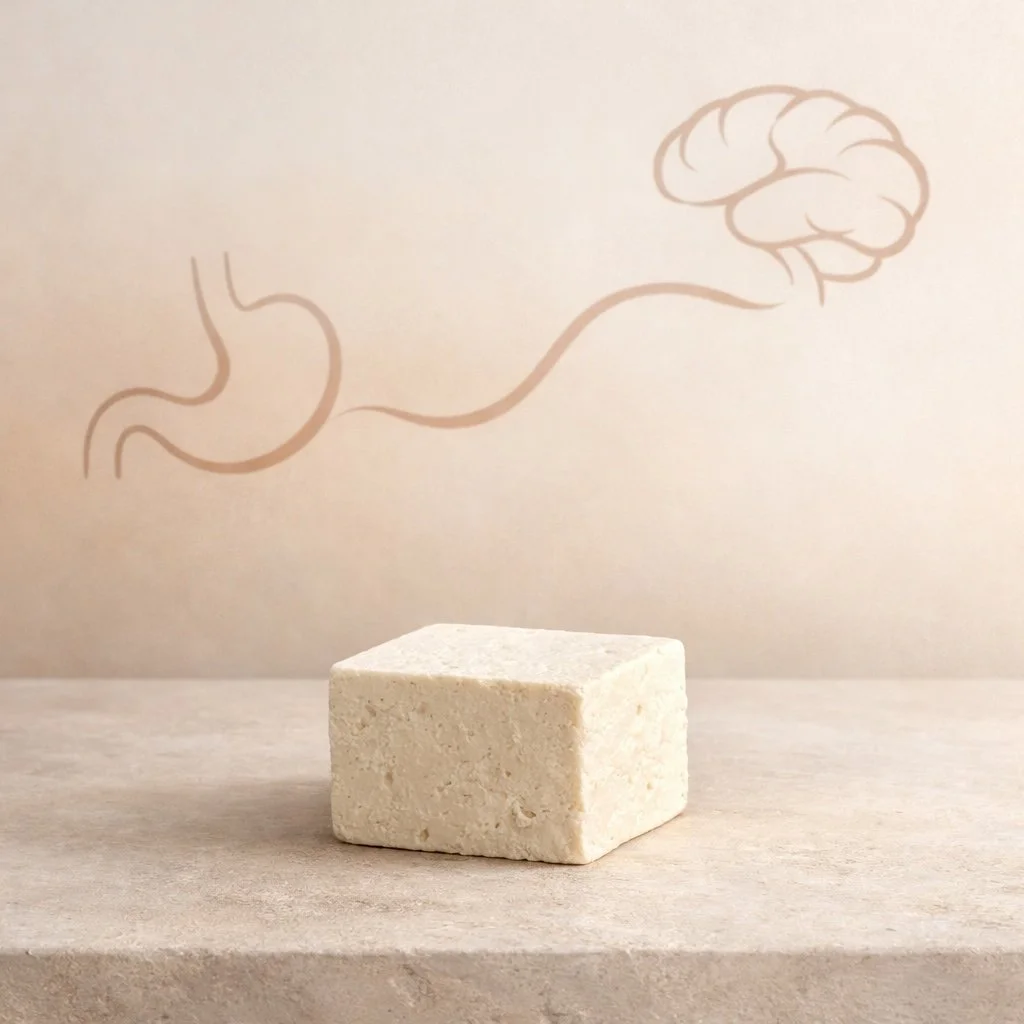
Introduction: Digestion Is Never Just Physical
Digestion is often treated as a background task — something the body handles while the mind moves on.
But in reality, digestion and mental state are tightly linked. When digestion feels heavy or strained, it often shows up elsewhere: sluggish thinking, irritability, low energy, or a subtle sense of tension that lingers after eating.
This relationship between the gut and the mind is not abstract. It’s lived, daily, and deeply influenced by what — and how — we eat.
Tofu enters this picture not as a solution to fix anything, but as a food that tends to cooperate with the body rather than challenge it.
The Quiet Conversation Between Gut and Mind
The gut and the brain are in constant communication. Signals travel back and forth, shaping appetite, mood, and stress response.
When meals are hard to digest, that internal conversation becomes louder. The body diverts energy inward, attention narrows, and the nervous system stays slightly on edge.
When digestion is smooth, the opposite happens. The body settles. The mind has space.
Foods that digest gently don’t just nourish the gut — they support mental ease as a downstream effect.
Why Protein Often Feels “Heavy”
Protein is essential, but it’s also one of the most demanding nutrients for the body to process.
Dense, dry, or highly compact proteins can:
linger in the stomach
require more effort to break down
create a sense of post-meal heaviness
Tofu behaves differently.
Because of its soft, hydrated structure, tofu tends to break down steadily and predictably. It doesn’t rush digestion, and it doesn’t stall it either.
For many people, that translates into a feeling that’s hard to name but easy to recognise: eating without friction.
Tofu as a Gentle, Steady Food
Tofu isn’t stimulating.
It isn’t aggressive.
It doesn’t demand attention.
Its value lies in what it doesn’t do.
Meals built around tofu often feel:
grounding rather than energising
steady rather than spiky
satisfying without tipping into fullness
This makes tofu especially useful during periods of stress, fatigue, or mental overload — times when the body benefits from predictability more than intensity.
A Small but Important Nuance
Like most foods, tofu isn’t a single, fixed experience.
How it’s made and prepared shapes how it feels in the body.
Firm and extra-firm tofu, which has more water pressed out, tends to feel lighter and more settled for many people. Softer styles can feel richer or heavier, especially when eaten in large amounts.
There’s no rule here — just awareness.
Gentle eating isn’t about restriction. It’s about choosing forms that feel supportive in the moment.
Tofu, the Gut Environment, and Balance
Whole soy foods like tofu interact calmly with the digestive environment.
They provide nourishment not only for the body, but for the ecosystem inside it — supporting balance rather than disruption. Over time, this contributes to digestion that feels more regular, more settled, and less reactive.
When the gut environment is stable, mental clarity often follows. Not dramatically. Just quietly.
Cooking as Guidance, Not Force
The way tofu is cooked matters as much as the tofu itself.
Gentler methods — steaming, baking, light pan-searing — tend to preserve tofu’s easygoing nature. Overly aggressive cooking can tighten its structure and make digestion feel less smooth.
At Tofu World, cooking isn’t about control. It’s about listening — adjusting heat, time, and texture to support how food is meant to be received.
Familiar Foods Calm the Nervous System
There’s another, often overlooked aspect of digestion: familiarity.
The nervous system relaxes when meals are:
predictable
familiar
consistently well tolerated
Tofu works well as a repeat food — something the body learns to trust. Over time, that trust reduces subtle stress around eating, which itself supports digestion.
Food doesn’t just nourish tissues.
It teaches the body what safety feels like.
Final Takeaway
The mind–gut connection isn’t something to optimise.
It’s something to respect.
Tofu doesn’t promise transformation.
It offers steadiness.
And in a food culture that often celebrates intensity, steadiness is quietly powerful.
One calm meal at a time. 🌱
