
Tofu, Kimchi and Gochujang: The Ultimate Plant-Based Trio
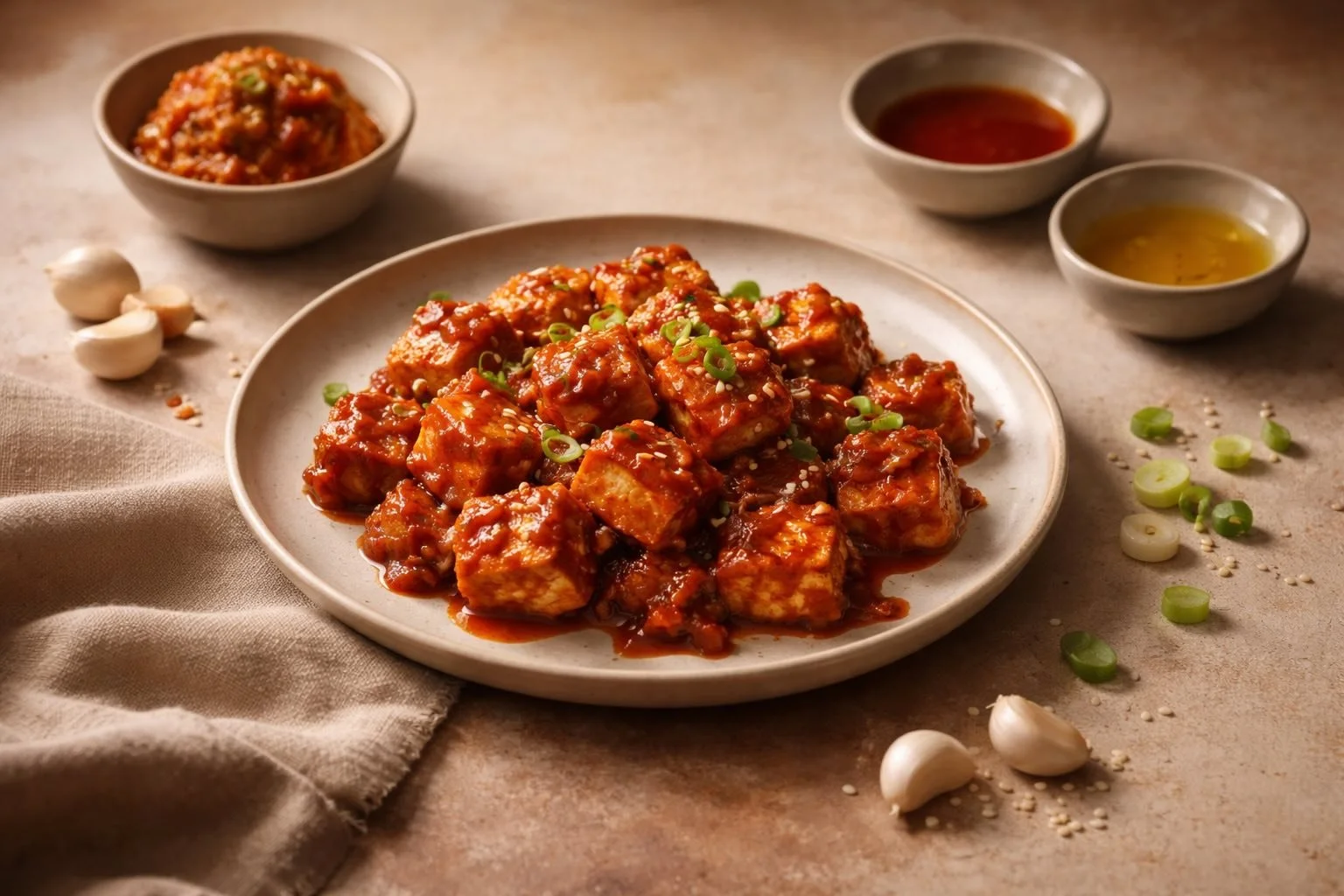
How to Use This Dish
This is not a fixed recipe.
It’s a structure you can return to:
Stir-fry
Stew (jjigae-style)
Rice bowl
Wrapped in lettuce
Tossed with noodles
Once you understand the roles, the dish builds itself.
Dish Identity
This trio works because nothing overlaps.
Each element has a clear function:
Tofu → neutral structure, absorbs and holds
Kimchi → acid, fermentation, brightness
Gochujang → depth, heat, and binding
Together, they form a complete system—not just a combination.
Cultural & Historical Roots
This pairing draws from the foundations of Korean cooking, where fermentation and balance are central.
Kimchi has long been a daily staple—aged, sour, alive with lactic fermentation.
Gochujang brings depth through fermented soybeans, glutinous rice, and chilli.
Tofu enters not as a replacement, but as a quiet companion—seen in dishes like dubu kimchi and soondubu jjigae.
This is not fusion.
It’s alignment.
Ingredient Logic (Depth, Brightness, Carry)
This trio fits naturally into the Depth–Brightness–Carry framework.
Depth (Umami + Heat)
Gochujang
Soy sauce (optional reinforcement)
Gochujang provides more than spice—it delivers layered umami from fermentation, with a slow-building warmth.
Brightness (Acid + Fermentation)
Kimchi
A touch of kimchi juice
Kimchi cuts through everything.
Its acidity sharpens flavour perception and prevents the dish from feeling heavy.
Carry (Fat + Aromatics)
Oil (sesame or neutral)
Garlic, spring onion
Fat dissolves aromatic compounds and spreads them across the palate.
Without it, the dish feels fragmented.
Structure (The Silent Role)
Tofu (firm or medium)
Tofu is not there to compete.
It stabilises the system—holding sauce, absorbing flavour, and providing contrast to the intensity around it.
A Small Note on Ingredients
Traditional Kimchi often includes fish sauce or fermented seafood, and many Gochujang contain wheat-based ingredients.
If you’re cooking fully plant-based or gluten-free, look for versions made without these additions.
The structure remains the same—the roles do not change.
The Science Behind the Trio
This combination works because it solves three core problems in plant-based cooking:
1. Tofu’s Neutral Matrix
Tofu is a protein–water gel.
It doesn’t naturally pull in flavour deeply—but it excels at surface adsorption.
That’s why this trio works:
Gochujang clings
Kimchi juices coat
Oil distributes
The flavour sits where it matters—on the surface.
2. Fermentation as a Flavour Multiplier
Both kimchi and gochujang are fermented.
They contain:
Organic acids → brightness
Amino acids → umami
Aromatic compounds → complexity
This creates depth without needing long cooking or multiple ingredients.
3. Acid vs Fat Balance
Kimchi introduces acid.
Gochujang and oil introduce richness.
Without acid → the dish feels heavy.
Without fat → the dish feels sharp and incomplete.
Balance is not optional here—it’s structural.
How to Build It (Method, Not Recipe)
1. Prepare the tofu
Press lightly or pat dry
Tear or cube for surface variation
Rough edges hold more sauce.
2. Sear with intent
Use medium-high heat
Add oil, then tofu
Let it sit before turning
You are overcoming the moisture barrier to allow browning.
3. Build the base
Add garlic and spring onion
Let them bloom in the oil
This is where aroma begins.
4. Add kimchi
Stir-fry briefly
Let it warm and release its juices
Do not overcook—preserve its brightness.
5. Add gochujang
Stir into the oil
Let it loosen and coat everything
Heat activates its aroma.
6. Adjust balance
Splash of water or stock if too thick
Taste → adjust salt, acid, heat
The goal is cohesion, not intensity.
Optional Variations
Once you understand the structure:
Add mushrooms → deepen umami
Add sugar or maple → soften sharpness
Add silken tofu → shift toward stew
Add noodles → transform into a full meal
The trio remains stable.
Final Takeaway 🌱
Not every combination works.
This one does—because nothing overlaps.
Each part holds its place.
Tofu carries.
Kimchi sharpens.
Gochujang binds.
And when each element does only what it needs to—the dish becomes complete, without trying to be more than it is.
