
Tofu and Mindful Eating: Finding Gratitude on Your Plate
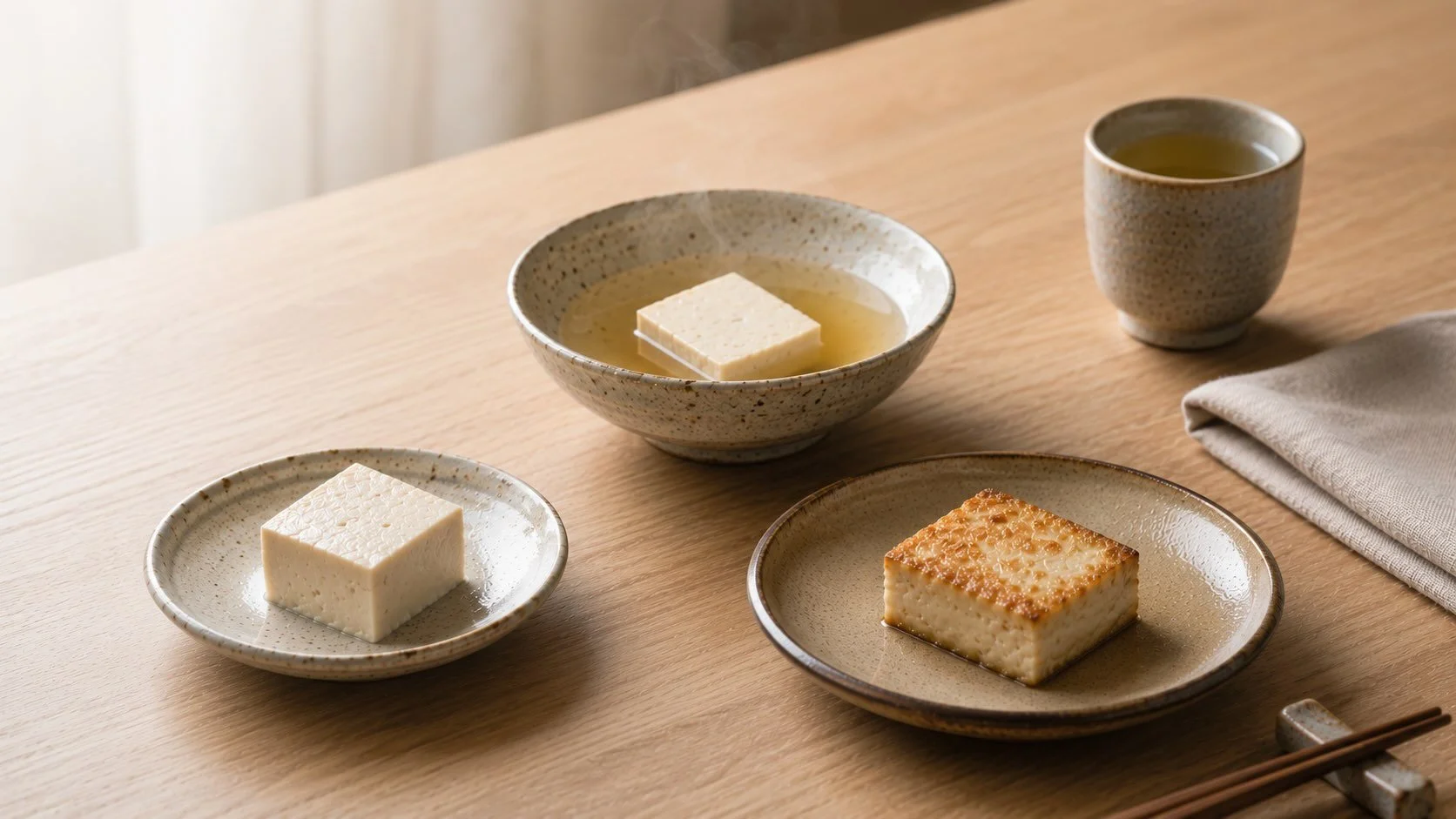
Mindful eating does not require a silent kitchen, an elaborate ritual or an unusually slow meal. At its simplest, it means paying attention: to the food in front of you, the signals from your senses and the choices being made as you cook and eat.
Tofu rewards this kind of attention. Its differences can seem subtle at first, but look more closely and each variety reveals its own soybean aroma, moisture, density and texture. Silken tofu may feel cool and custard-like; firm tofu can develop a crisp exterior while remaining tender within; frozen and thawed tofu becomes porous and readily takes up seasoned liquid.
Cooking tofu mindfully, then, is not about forcing yourself to slow down. It is about noticing what the ingredient is telling you—and responding with intention.
Mindfulness Without the Wellness Promises
Mindful eating is sometimes presented as a route to reduced stress, fewer cravings or effortless control over appetite. Evidence for such outcomes is not strong or consistent enough to make those promises.
A more grounded practice is simply to observe without immediately judging. Is the tofu satisfying? Does the meal need more acidity, aroma or texture? Are you still hungry, comfortably full or eating because the food is there?
These observations may help you understand your preferences, but there is no correct emotional response to a meal. Mindfulness is an invitation to pay attention, not another standard you must meet.
Tofu Is More Than a Blank Canvas
Tofu is often described as flavourless or merely a sponge for sauces. That framing overlooks both its character and its long culinary history across China and other parts of East and Southeast Asia.
Fresh tofu can carry a gentle soybean sweetness, a clean dairy-like aroma or a faint mineral note from its coagulant. Texture may range from delicate and quivering to dense, chewy, porous or fermented. The differences depend on the soybeans, production method, coagulant, water content and freshness—not only the seasoning added later.
Before covering tofu with a strong marinade, taste a small piece as it is. This establishes a baseline. Experienced cooks do this instinctively: they learn the ingredient before deciding how much transformation it needs.
Choose the Tofu Before the Technique
Mindful cooking begins with matching the tofu to the intended result.
Silken and soft tofu suit dishes that celebrate delicacy: chilled preparations, smooth sauces, gentle soups and softly set desserts. They should not normally be pressed.
Firm or extra-firm tofu is better suited to pan-frying, grilling, baking and stir-frying. If a dry surface is needed for browning, drain it and pat it thoroughly. Light pressing may help some water-packed products, but vacuum-packed tofu may need little or none.
Frozen and thawed tofu develops larger cavities as ice crystals alter its internal structure. After gently squeezing out the water, it becomes particularly effective in broths, braises and strongly seasoned dishes.
Pressing is therefore not a compulsory first step. Preparation should follow purpose.
Five Signals to Notice While Cooking
1. Surface moisture
When wet tofu enters a pan, much of the initial energy goes into evaporating water. Listen for the change from a soft hiss to a sharper sizzle. That shift often signals that browning can begin.
2. Contact with the pan
Moving tofu constantly can interrupt crust formation. Once the surface is dry and the heat is controlled, allow each side enough contact time to colour before turning it.
3. Aroma
Notice the progression from the mild scent of warm soybean curd to toasted, nutty aromas as the surface browns. Aromatics such as garlic can burn before wet tofu colours, so staged cooking may be wiser than adding everything at once.
4. Texture
A browned exterior does not guarantee a dry centre. Compare the resistance of the crust with the softer interior. The contrast may be more satisfying than uniformly crisp tofu.
5. Sauce consistency
Watch how a sauce moves. At first, it may collect thinly at the bottom of the pan. As water evaporates, it begins to cling and leave a brief trail behind the spoon. This is often a better guide than an exact number of minutes.
Attention does not mean cooking slowly. A stir-fry still depends on preparation, high heat and quick decisions. Mindfulness means remaining responsive while the cooking moves quickly.
Try a Simple Tofu Tasting
To explore tofu’s character, compare three pieces from the same block:
Taste one plain at room temperature.
Warm one gently in lightly salted water or broth.
Pat one dry, brown it in a small amount of oil and finish it with a restrained seasoning.
Notice the aroma, moisture, density, soybean flavour, surface texture and aftertaste of each sample. Does warming make the tofu seem sweeter or more aromatic? Does browning add desirable contrast? Does seasoning complement the tofu or overwhelm it?
There are no prescribed answers. The value lies in building a more precise sensory vocabulary. Beginners gain confidence, while experienced cooks can use the same exercise to compare brands, batches, coagulants and production styles.
Gratitude Without Perfection
A tofu meal can also prompt reflection on the people and resources behind it: soybean growers, tofu makers, cooks, water, soil, transport and energy. Life-cycle studies generally place tofu below beef and many other animal proteins for greenhouse-gas emissions and land use, although its exact footprint varies with farming, processing, packaging and transport.
Choosing tofu can therefore be one practical way to reduce the impact of a meal. It does not make the eater morally perfect, nor does one different choice make someone uncaring. Gratitude is most meaningful when it creates connection rather than judgement.
Tofu can contribute protein, iron and other nutrients to a varied diet. Calcium levels, however, vary considerably between products and coagulants, so check the nutrition information panel if calcium is important to you.
A Five-Minute Practice for an Ordinary Meal
Before eating, pause long enough to notice the meal’s temperature, colours and aroma. Take the first bite without distraction and identify one flavour and one textural contrast. Halfway through, ask whether anything has changed: Has the tofu cooled? Has the sauce intensified? Are you still enjoying the same balance?
Afterwards, remember one thing you would repeat and one thing you might adjust next time. That small act turns eating into practical culinary learning.
Final Takeaway
Mindful tofu cooking is not about compulsory slowness, wellness promises or creating a perfect atmosphere. It is the practice of observing moisture, aroma, sound, temperature, flavour and texture—and allowing those signals to guide your decisions.
When we pay closer attention, tofu stops being an anonymous substitute. It becomes an ingredient with history, character and possibilities of its own. Gratitude then arises not from idealising a meal, but from understanding it more fully—one thoughtful bite at a time.
