
From Seed to Tofu: Why Soybean Diversity Matters
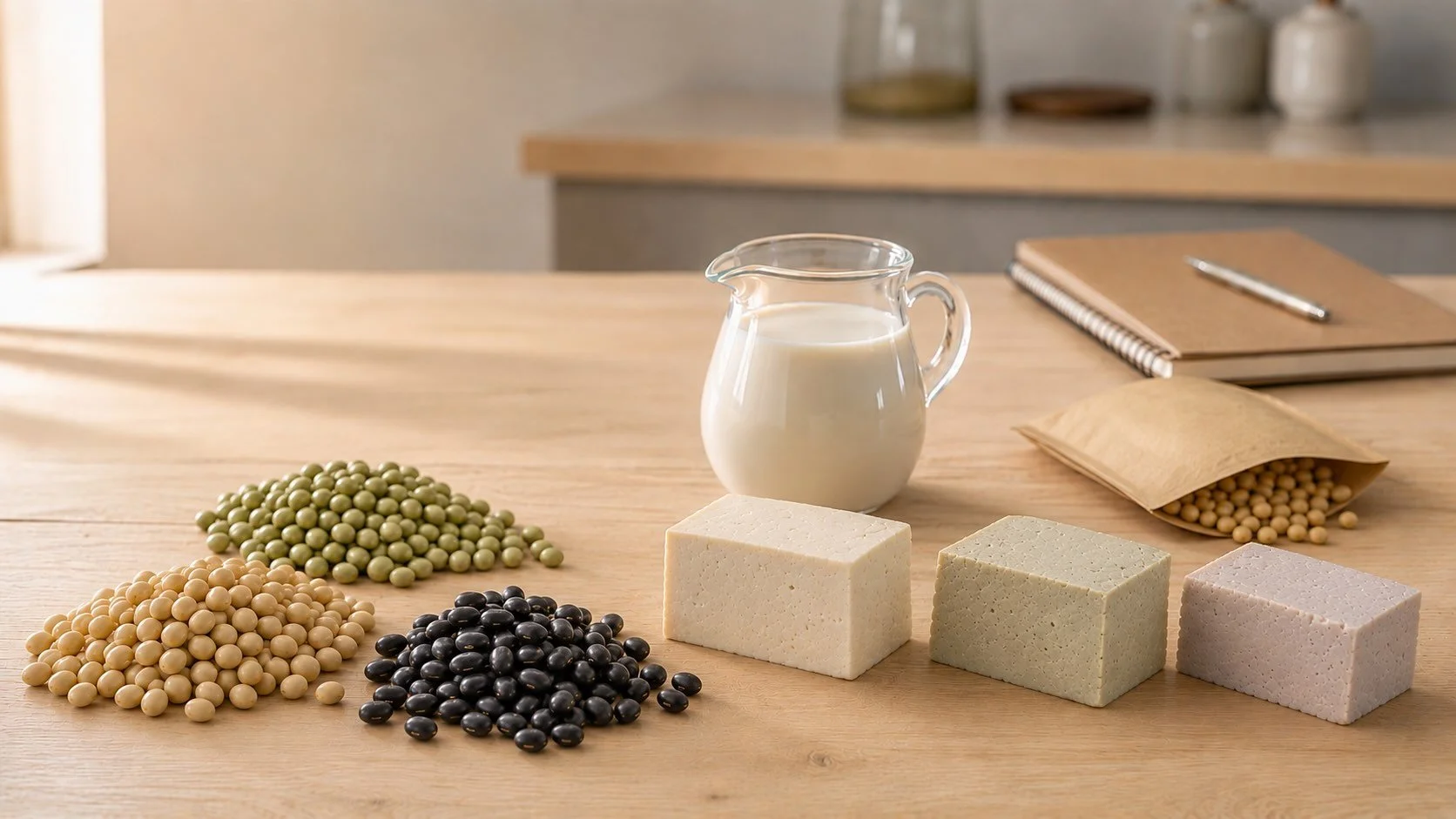
A block of tofu may look simple, but it begins with a variable ingredient.
Soybeans differ in protein composition, colour and flavour. They can behave differently when heated and coagulated, influencing tofu yield, firmness and character.
The bean is only part of the recipe. Growing conditions and tofu-making choices—from grinding and heating to coagulation and pressing—shape the result. Understanding this relationship reveals why soybean diversity matters to farmers, producers and cooks.
The Soybean Is Part of Tofu’s Recipe
Tofu packaging usually identifies firmness and ingredients but rarely names the soybean variety, making tofu appear more uniform than it is.
Much of soybean protein belongs to two storage-protein groups: glycinin and β-conglycinin. Their proportions and structures vary among varieties, affecting how soymilk responds to heat and coagulants. Protein extractability and soluble solids may influence yield, water retention and texture.
More protein does not automatically mean better tofu. Protein composition and processing behaviour matter, and no single measurement predicts every aspect of quality.
The same bean can produce different results depending on soymilk concentration, heating, coagulant, curd handling and pressing. Tofu’s character emerges through the interaction of genetics, growing environment and production.
Heirloom, Landrace or Speciality Soybean?
These terms are sometimes treated as interchangeable, but they mean different things.
An heirloom soybean generally means an older variety maintained across generations, although no universal definition exists. A landrace is a locally adapted population that may contain genetic variation. A cultivar is a selected, named variety and may be old or modern. Germplasm is genetic material conserved or studied for breeding.
Many beans valued by tofu makers are modern food-grade cultivars selected for clean flavour, efficient extraction or reliable gel formation.
Soybean diversity therefore extends beyond heirlooms. Landraces, wild relatives, breeding lines and modern speciality cultivars can all carry valuable traits.
What Soybean Diversity Can Change
Flavour and aroma
Some varieties produce mild soymilk; others have sweet, nutty, grassy or earthy notes. Processing may strengthen or suppress these differences. Fresh, lightly seasoned tofu usually reveals more of the bean’s character than smoked, marinated or heavily sauced tofu.
Colour
Seed colour may affect appearance. Black soybeans can produce grey, purple or speckled tofu, depending on whether their pigmented hulls remain during processing. Mature green-seeded soybeans may create a subtle green tint. They should not automatically be called edamame, which generally means vegetable soybeans harvested while immature.
An unfamiliar colour is not necessarily a defect, but speciality tofu should still be stored correctly and checked for signs of spoilage.
Texture and yield
Varieties may form gels with different strength, smoothness and water-holding ability. A bean may suit delicate tofu, while another performs better in a pressed product. Nevertheless, colour, seed size or heritage status alone cannot predict texture; the bean and production method matter more.
Composition
Nutritional composition can vary, but heirloom status does not guarantee superiority. Final protein concentration depends on moisture, while calcium content may reflect calcium sulphate used as a coagulant. Compare products through their nutrition panels rather than heritage claims.
A Simple Tofu Tasting
Choose two unflavoured tofus of similar firmness. If possible, select products that identify their soybean origin, growing region or production method.
Take them from the refrigerator about 15 minutes before tasting, because very cold tofu can mute flavour and aroma. Cut equal pieces and compare:
aroma;
sweetness and bean intensity;
nuttiness, earthiness or bitterness;
smoothness, graininess and moisture;
firmness and how each piece breaks;
the flavour that remains after swallowing.
Next, warm equal pieces gently in unsalted water and taste again. Mild heat can make aroma and sweetness more noticeable. Finally, season both with the same small amount of salt or light soy sauce.
For a clearer comparison, avoid strong marinades. Try the tofu chilled with restrained garnishes, gently warmed in a light broth or pan-seared with minimal seasoning.
Freshness, coagulants and manufacturing methods may differ, so this is not a controlled test. It is still a useful way for home cooks and chefs to taste tofu more attentively.
Why Genetic Diversity Matters
Agricultural diversity gives breeders more traits for responding to future challenges. Conserved landraces, wild relatives and other germplasm may carry resistance to diseases or pests and tolerance of environmental stresses.
Genetic diversity does not automatically eliminate pesticides, protect soil or make farming sustainable. Those outcomes depend on crop rotation, soil cover, tillage, irrigation, fertiliser use and pest management. A resistant variety may reduce the need to control one threat, but no seed replaces responsible farming.
Seed banks, public breeding programs and farmer-led conservation keep useful genetic material available. Conserved traits can also contribute to new cultivars suited to changing conditions.
Choosing Tofu with Greater Transparency
Tofu labelled “heirloom” can be difficult to find, so look for information that reveals more about the product:
a named cultivar;
a farm or growing region;
locally grown or single-origin beans;
a heritage or coloured soybean;
the coagulant and production method.
At farmers’ markets or independent tofu shops, ask where the beans were grown and why they were chosen. Producers may select them for flavour, supply or tofu-making performance even when the packaging does not tell that story.
Speciality beans are not automatically the most sustainable. Farming methods, irrigation, yield, processing, transport and packaging matter. Responsibly produced conventional tofu can still support a kinder food system.
Final Takeaway
Tofu does not begin as a uniform white block. It begins with a seed carrying distinct qualities, then takes shape through its growing environment and the judgement of its maker.
Protecting soybean diversity expands the possibilities available to farmers, breeders and tofu producers. For cooks, it encourages more attentive tasting—recognising tofu not merely as a blank canvas, but as a food with agricultural origins and character.
Not every rare soybean will make better tofu. Preserving diversity does, however, keep more flavours, textures and valuable traits available for the future.
