
The Science Behind Tofu Pairings: How Flavour Works
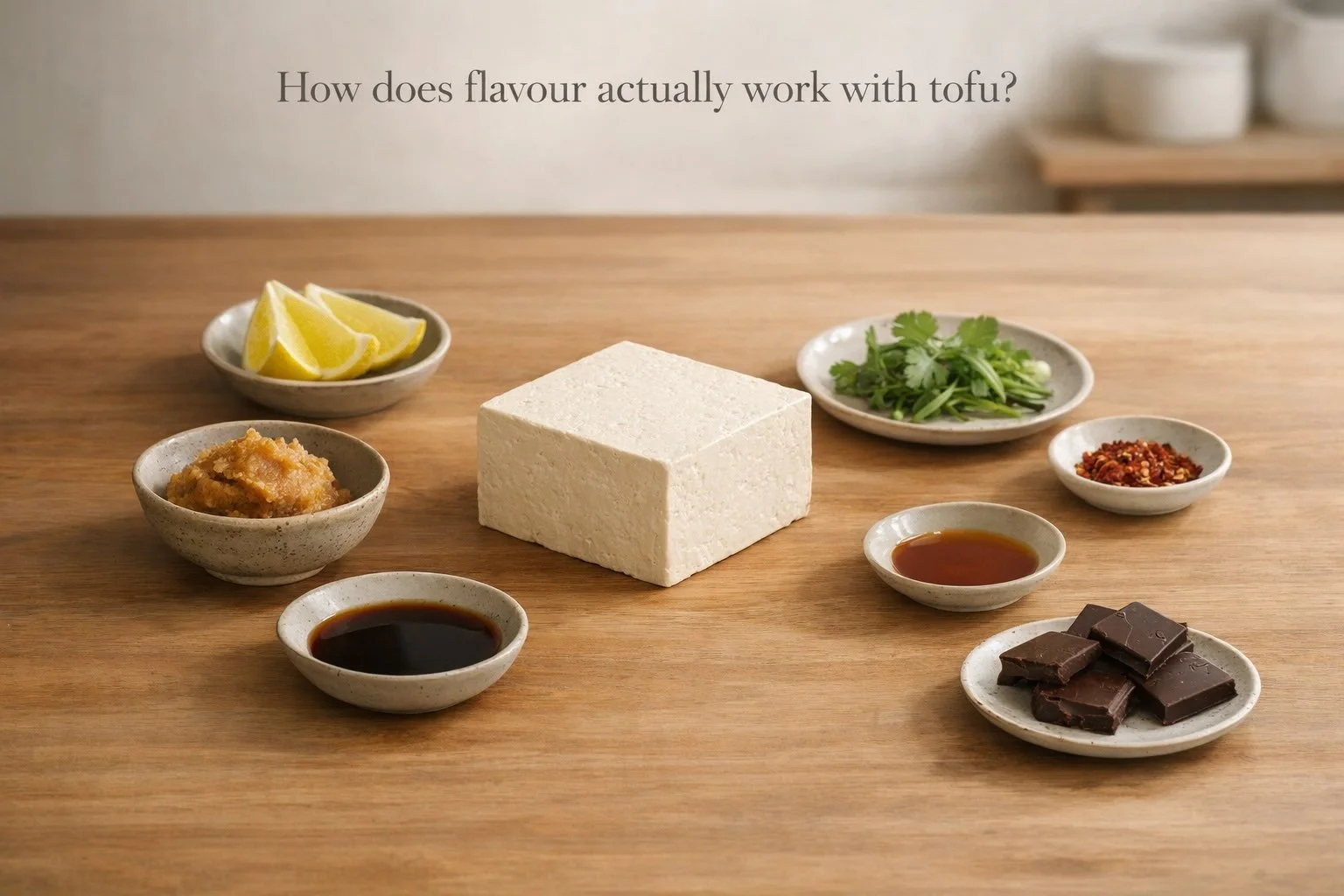
Introduction: Tofu Isn’t Flavourless — It’s Honest
If tofu has ever tasted dull, it wasn’t because tofu failed.
It was because the pairing did.
Tofu is often misunderstood as a blank slate. In reality, it’s more like a responsive material — one that amplifies, softens, absorbs, or contrasts whatever you bring to it.
Flavour doesn’t come from ingredients alone. It emerges from interactions: fat carrying aroma, acid sharpening perception, salt unlocking depth, heat reshaping structure.
This guide explores the science behind tofu pairings — not recipes, not marinades, but the why that makes pairings work.
Once you understand that, tofu stops being confusing — and starts becoming powerful.
1. Flavour Is Not Taste — It’s a System
What we call “flavour” is actually a combination of:
Taste (sweet, salty, sour, bitter, umami)
Aroma (volatile compounds sensed by the nose)
Mouthfeel (fat, water, texture, temperature)
Contrast (soft vs crisp, rich vs sharp)
Tofu contributes structure and moisture, not dominance.
That’s why pairing tofu successfully isn’t about adding more flavour — it’s about adding the right type of flavour.
2. Why Tofu Loves Fat (But Not Grease)
Tofu is mostly water held inside a protein network.
That means many aroma compounds — which are fat-soluble — simply pass it by unless fat is present.
Fat’s role in tofu pairings:
Carries aroma compounds (sesame oil, olive oil, coconut fat)
Adds lubrication, improving mouthfeel
Slows flavour release, making dishes feel “rounder”
What works best:
Light oil coatings
Nut and seed pastes (tahini, peanut butter)
Emulsified sauces (miso + oil + water)
What doesn’t:
Excess oil without structure (it slides off)
Deep fat without contrast (can mute tofu’s texture)
Tofu doesn’t want to swim — it wants to be coated.
3. Acid Is the Wake-Up Call
Because tofu is mild and moist, the palate adapts to it quickly.
Acid resets attention.
A small amount of acid:
Brightens perception
Cuts through richness
Defines edges in otherwise soft dishes
Effective acids for tofu:
Citrus juice or zest
Rice vinegar or black vinegar
Pickled vegetables
Fermented acids (kimchi, sauerkraut brine)
Acid doesn’t make tofu sour.
It makes tofu legible.
4. Salt Unlocks Structure — Not Just Taste
Salt doesn’t just season tofu.
It changes how it behaves.
At the molecular level, salt:
Enhances umami perception
Tightens surface proteins slightly
Helps sauces cling rather than slide
This is why:
Salted tofu browns better
Miso feels “deeper” than soy sauce alone
Light brining improves chew without drying
Salt should be present early, sauces later.
5. Texture Pairing Matters More Than Flavour Pairing
Tofu’s greatest strength is texture — but only if you contrast it.
Soft tofu paired with softness feels flat.
Firm tofu paired with firmness feels heavy.
Successful texture pairings include:
Soft tofu + crunch (fried shallots, nuts)
Crisp tofu + silk (sauces, purées)
Dense tofu + freshness (herbs, raw vegetables)
Texture contrast keeps the brain engaged — even before flavour registers.
6. Aroma Is Where Magic Happens
Tofu has very little aroma of its own, which makes it an ideal aroma carrier.
Aromatic compounds bind to fat and moisture, then release slowly as you chew.
This is why tofu pairs beautifully with:
Toasted spices
Ginger, garlic, lemongrass
Fermented pastes
Smoked elements
Aromatic ingredients should be activated (toasted, bloomed, heated) before meeting tofu.
Raw spices won’t speak.
Bloomed spices sing.
7. Why Marinades Are Often the Wrong Tool
Most marinades are water-based.
But tofu is already full of water.
What happens?
Flavour stays on the surface
Texture softens further
Browning becomes difficult
Better alternatives:
Dry seasoning + oil coating
Thick pastes
Post-sear glazing
Layered sauces added after cooking
Tofu responds better to sequencing than soaking.
8. Pairing by Role, Not Ingredient
Instead of asking:
“What flavours go with tofu?”
Ask:
“What role does tofu play here?”
Tofu can be:
A protein anchor
A texture contrast
A flavour sponge
A neutral base
A creamy element
Once the role is clear, pairing becomes logical — not experimental.
Final Takeaway: Tofu Is Not Empty — It’s Precise
Tofu doesn’t shout.
It listens.
It reflects the fat you choose, sharpens with acid, deepens with salt, and comes alive through texture and aroma.
When tofu tastes bland, it’s not because it lacks flavour — it’s because the system around it is incomplete.
And once you understand how flavour actually works, tofu stops asking for help — and starts rewarding intention.
One thoughtful pairing at a time, we make kinder, smarter meals — and a more sustainable world. 🌱
