
50 Tofu Pairings That Will Change the Way You Cook
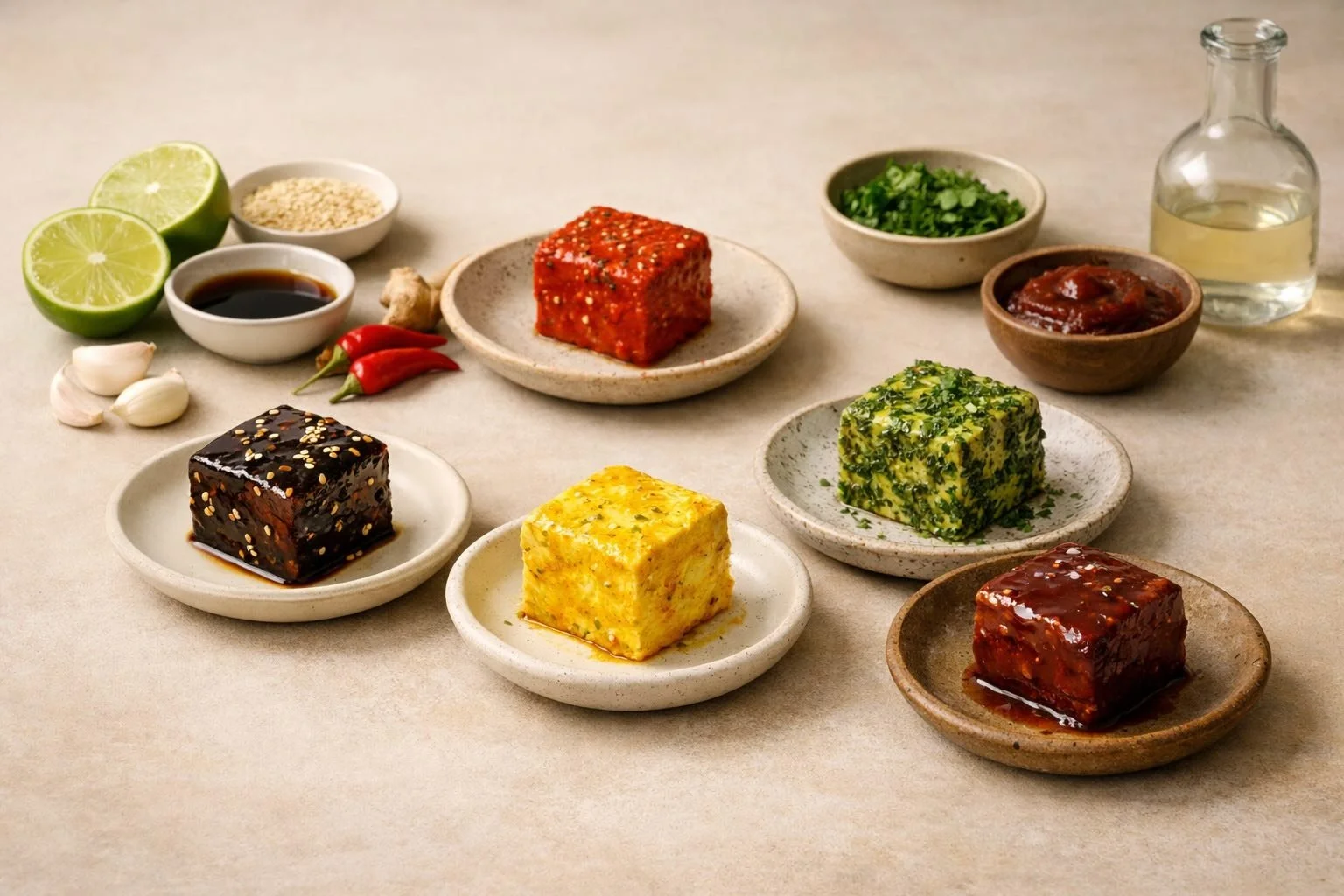
Tofu is often treated like an ingredient waiting to be rescued.
But that misses the point.
Tofu is not empty. It is receptive.
Its strength lies in how beautifully it carries balance — especially when flavour is built with intention.
The best tofu pairings are not random mixtures. They are small flavour systems. Across different cuisines, they may look completely different on the surface, but underneath they often follow the same quiet logic: something savoury, something bright, something aromatic, something rich, and something that gives the dish character.
Once you understand that pattern, you stop asking:
“What should I add to tofu?”
And start asking:
“What is this pairing trying to do?”
That shift changes everything.
The 50 pairings below are inspired by flavours from around the world. They are not strict traditional recipes. Think of them as flexible frameworks — starting points you can adapt, simplify, or build into your own marinades, glazes, sauces, and dressings.
First, Understand What Tofu Does Well
Fresh tofu is already full of water, so most marinades do not soak deeply into the centre of a raw block.
That does not mean marinades are useless.
It means tofu flavour is usually built at the surface: through seasoning, browning, glazing, saucing, and finishing.
This is why a short, well-balanced coating often works better than hours of soaking. It is also why tofu improves so much when you dry the surface, cook it properly, and add the right sauce at the right moment.
For a chewier texture, slow-freeze and thaw tofu before cooking. Freezing in a home freezer changes the structure, creating small spaces that help the tofu hold sauce more easily after thawing.
For better browning, you can pour hot salted water over firm or extra-firm tofu for about 10 minutes, then drain and pat dry before cooking. The heat tightens the surface while the salt helps draw out excess moisture, preparing the tofu for better browning.
For extra crisp tofu, dust the dry pieces lightly with cornstarch before cooking, then toss with sauce at the end.
Silken tofu is different. Instead of pressing, freezing, or rough marinating it, treat it gently: spoon sauces over it, dress it lightly, or serve it chilled with a bright, savoury topping.
How to Read a Tofu Pairing
Most good tofu pairings contain a few key roles.
A savoury base gives depth. This might be soy sauce, miso, tamari, tomato paste, capers, tahini, curry paste, or vegan Worcestershire.
A bright ingredient adds lift. This might be lemon, lime, vinegar, tamarind, sumac, or pomegranate molasses.
A carrier helps flavour spread. This might be olive oil, sesame oil, coconut milk, yoghurt, tahini, or peanut butter.
Aromatics create personality. Garlic, ginger, spring onion, chilli, herbs, spices, lemongrass, curry leaves, and shallots all change the direction of the dish.
Not every pairing needs every role. But when the roles are balanced, tofu tastes more complete.
How to Use These Pairings
Use firm or extra-firm tofu for most cooked pairings.
Pat it dry first so sauces cling instead of sliding off.
For simple surface seasoning, 15–30 minutes is usually enough.
For crisp tofu, cook the tofu first, then glaze it near the end if the pairing is wet, sweet, or sticky.
Another smart method is to cook tofu first, then toss it with sauce. This works especially well for sticky, sweet, acidic, or herb-heavy pairings because the tofu has a better surface for flavour to cling to.
For citrus, vinegar, fresh herbs, ponzu, or caper-heavy pairings, consider adding some of the sauce after cooking so the flavour stays bright.
For thicker mixtures with miso, tahini, peanut butter, tomato paste, coconut milk, yoghurt, or curry paste, use them as coatings for baking, roasting, grilling, or pan-frying.
East Asia — Savoury, Balanced, Precise
These pairings are excellent for pan-fried tofu, rice bowls, noodle dishes, stir-fries, and glazed tofu.
Soy + rice vinegar + sesame oil + garlic
Miso + rice vinegar + sesame oil + ginger
Soy + black vinegar + chilli oil + garlic
Soy + mirin + rice vinegar + sesame oil + ginger
Doubanjiang + black vinegar + chilli oil + garlic
Hoisin + rice vinegar + sesame oil + five spice
Tamari + rice vinegar + toasted sesame oil + spring onion
Gochujang + rice vinegar + sesame oil + garlic
Ponzu + sesame oil + spring onion + citrus zest
Soy + sake + rice vinegar + neutral oil + garlic
Use these when you want tofu that tastes savoury, glossy, sharp, aromatic, and deeply satisfying.
Southeast Asia — Bright, Herbal, Lively
These pairings work beautifully with grilled tofu, noodle salads, rice bowls, lettuce cups, coconut-based dishes, and quick stir-fries.
Soy + lime + oil + lemongrass + garlic
Coconut milk + lime + soy + turmeric + garlic
Peanut + lime + soy + chilli + garlic
Tamarind + soy + coconut oil + garlic
Sweet soy + lime + oil + shallot + chilli
Makrut lime leaf + soy + coconut milk + chilli + garlic
Galangal + lime + soy + oil + palm sugar
Coconut milk + red curry paste + lime + soy
Sambal + rice vinegar + soy + oil + garlic
Lemongrass + coconut milk + lime + soy + ginger
Use these when you want tofu that feels fresh, fragrant, creamy, spicy, tangy, or herbal.
South Asia — Warm, Spiced, Layered
These pairings are ideal for baked tofu, grilled tofu, skewers, wraps, curries, and grain bowls.
Yoghurt + tomato paste + lemon + ginger-garlic + spices
Garam masala + lemon + oil + tomato paste + garlic
Turmeric + cumin + lime + oil + tomato + garlic
Mustard seeds + curry leaves + tamarind + tomato + oil
Coconut milk + tamarind + coriander + chilli + garlic
Tomato + fenugreek + oil + ginger + garlic
Chaat masala + lime + tamarind + oil + mint
Cashew cream + lemon + cumin + garlic + tomato paste
Tamarind + cumin + jaggery + oil + garlic
Yoghurt + black pepper + lemon + oil + garlic
Use these when you want tofu that tastes warming, spiced, rich, tangy, and layered.
Middle East & Mediterranean — Aromatic, Grounded, Bright
These pairings suit roasted tofu, grilled tofu, salads, wraps, mezze plates, flatbreads, and warm grain bowls.
Olive oil + lemon + garlic + tomato paste + cumin
Za’atar + olive oil + lemon + tahini
Tahini + lemon + garlic + capers
Harissa + olive oil + lemon + tomato paste
Sumac + olive oil + parsley + capers + garlic
Pomegranate molasses + olive oil + garlic + tomato paste
Cumin + paprika + lemon + olive oil + tomato paste
Yoghurt + mint + lemon + olive oil + garlic
Baharat + olive oil + lemon + tomato paste
Dill + lemon + olive oil + capers
Use these when you want tofu that tastes earthy, bright, aromatic, creamy, smoky, or herbaceous.
Europe & the Americas — Bold, Rustic, Comforting
These pairings are great for baked tofu, sandwiches, tray bakes, tacos, salads, smoky bowls, and comfort-style meals.
BBQ sauce + oil + garlic
Maple + mustard + oil + soy + apple cider vinegar
Garlic + rosemary + olive oil + lemon + capers
Parsley + garlic + red wine vinegar + olive oil + soy
Lemon + thyme + olive oil + capers
Smoked paprika + sherry vinegar + olive oil + tomato paste
Chilli + vinegar + butter alternative + garlic + soy
Maple + soy + oil + apple cider vinegar + garlic
Tomato + basil + olive oil + balsamic vinegar + garlic
Apple cider vinegar + mustard + olive oil + vegan Worcestershire + thyme
Use these when you want tofu that feels smoky, tangy, herby, sticky, rustic, or comforting.
Marinade, Glaze, or Finishing Sauce?
This is where tofu cooking becomes much easier.
Thin, salty, acidic mixtures are best for quick surface seasoning or finishing, not deep raw marination.
Thicker mixtures with miso, tomato paste, tahini, peanut, yoghurt, coconut milk, or curry paste are better for baking, roasting, grilling, or pan-frying because they cling to the tofu.
Sweet pairings with maple, mirin, hoisin, BBQ sauce, sweet soy, or pomegranate molasses are often best as glazes. Cook the tofu first, then add the sauce near the end so it does not burn.
Fresh herb, citrus, ponzu, caper, and vinegar-forward pairings often work best partly or fully as finishing sauces. Add them after cooking to keep the flavour lively.
What These Pairings Teach
At first glance, these combinations seem wildly different.
But look again, and a pattern appears.
Soy sauce, miso, capers, tomato paste, peanut, yoghurt, tahini, curry paste, vinegar, citrus, herbs, chilli oil, mustard, olive oil — each one is doing a job.
The cuisines change.
The ingredients change.
The feeling of the dish changes.
But the structure remains.
That is why tofu is such a powerful teacher.
Because tofu is mild, it reveals balance clearly.
Too much acid and the flavour feels sharp but thin.
Too much richness without brightness, and it tastes heavy.
Too many aromatics without savoury depth can smell exciting but fall flat.
Tofu rewards thoughtful construction.
Smart Swaps
Once you understand the role of each ingredient, you can adapt confidently.
Try:
lime instead of lemon
rice vinegar instead of apple cider vinegar
tamari instead of soy sauce
tomato paste instead of miso for a different kind of depth
coconut milk instead of yoghurt for dairy-free richness
tahini instead of peanut butter
neutral oil with mustard seeds instead of mustard oil
parsley, mint, dill, coriander, spring onion, or curry leaves, depending on the direction you want
The goal is not exact replication.
The goal is balance.
Final Takeaway 🌱
Tofu does not need to be overwhelmed.
It needs to be balanced.
That is the real shift.
Once you understand how global flavour pairings work, tofu stops feeling like a blank block in the fridge and starts becoming one of the most flexible ingredients in your kitchen.
Not because it tastes like everything.
But because it teaches you how flavour is built.
And once you learn that, you do not just cook tofu better.
You cook everything better.
